A niche, tiny novelette about a city, or the idea of cities. The whole narrative is made up of the kind of wide-angle description of place, or of people in the collective, which in conventional novels precedes a zoom in towards named human characters. The reflex to anticipate imminent character and story throughout the book made this the reading equivalent of hearing one of those music tracks that seems to be wholly made up of introductions. The book's intense, sometimes metaphysical, involvement with city as organic entity, its use of the passive voice, and its panoramas of people as types and generalities, often reminded me of descriptive passages in the London psychogeographies of Peter Ackroyd and Iain Sinclair.
Several other posters have described Dreams and Stones as prose-poetry. To me, this is unquestionably prose, no more poetic than that of many good novelists, but there is poetic licence here in repurposing facts and ideas to transmit the feel of something, rather than making analogies which are strictly factually correct. This brought to mind the quibbles several reviewers had with inaccurate 'information' mentioned in this year's Booker International winner Flights by Tulli's fellow Pole, Olga Tokarczuk.
The first of two parts (about 1/3 of Dreams and Stones) appears to be focused on an ideal city (and the endeavours to suppress darker sides dubbed 'the countercity'), and the Soviet Communist idea of the perfectibility of man. The narrative feels orderly by comparison with the second part, and while reading it, I frequently imagined Soviet-style propaganda posters, and similar images from Andrzej Wajda's Man of Marble - although ultimately that orderliness begins to fray into chaos.
The second part seems somewhat more fluid, emotive and diffuse, and uses the imagery of the kaleidoscope and its crystals to connect scenes. Some are scenes of the book's 'home' city (evidently Warsaw - identifiable by the mentions of the letters W and A in its name, and a palace with a spire that is disliked by residents, i.e. the Soviet-built Pałac Kultury) - and there are also series of caricature images of other cities, in Western Europe and North America, and in Russia. (The well-intentioned use of regional and national stereotypes felt to me not unlike that of American children's author Richard Scarry.) Perhaps some of these arrays of foreign cities can be seen as a post-Communist opening-up to the world - the book was published in 1995 - while the places themselves still remain relatively unreal as many Poles would not yet have travelled a great deal.
These cartoonish images of cities abroad are the main source of humour in a largely serious-minded, sometimes ethereal book:
Is it possible that Paris really exists – a place with a name so pretentious it makes one laugh? Or London, which was essentially conceived as fog? Manchester and Liverpool are two soccer fields with coal tips instead of stands. Bordeaux is a mountain in the shape of a bottle; Rotterdam, Antwerp and the Hague are the names of flea-ridden sailing ships rocking against the quay, their holds filled with spices and silk. Venice is in reality a mother-of-pearl gondola in which is concealed a music box. Chicago is a place filled with suitcases of money where gangsters in felt hats live, shoot guns and die. New York crammed the tallest skyscrapers in the world into an area six inches long and four and a half wide; on the other side there is a box for a postage stamp.
Knowing less about provincial Russia, I was intrigued by the following:
They began to wander aimlessly about St. Petersburg, great in its golden frame, where beneath the shiny varnish it is dark in the winter for as much as twenty hours a day. Or Moscow, where the streets were paved with wood that may have been real or may have been made from lacquered building blocks. They even traveled as far as Tula, which was tall and had a brass tap to let out boiling water, and also to Omsk and Tomsk, where in the summertime they float wood down the river and in winter they are chilled to the marrow. And to Astrakhan – that storehouse of ice and skins – where caviar is eaten by the spoonful and champagne drunk straight from the bottle. At the feet of a good few of these lost travelers, somewhere at the meeting point of steppe and sea there opened up a dark abyss by the name of Odessa, filled with sailors, bandits, officers and femmes fatales, washed over beyond salvation by waves of epidemics and filled forever with the echo of shots. Some did not stop till Baku, where blood flows like rainwater in the streets, or Khabarovsk, where White Army soldiers without boots lie on the white snow. Or Vladivostok, that last station in the world, toward which tracks that previously ran straight as an arrow begin to describe the first loop of a spiral. The next loop rests on Harbin, where Chinese in felt shoes wade through snowdrifts..
The connections between different scenes and themes is always beautifully done, and everything flowed seamlessly. This second section sometimes toys with physics concepts prevalent in 90s pop-culture, like the butterfly effect and parallel universes, with an intent that is evidently poetic rather than scientific.
This is clearly not a book for everyone, as it has neither human characters nor plot in a remotely conventional sense, but it is very short (likely taking under 2 hours for many literary fiction readers) and if you enjoy films of time-lapse photography and panoramic scenes, or extended god's-eye-view descriptions of cities, you may like it.
This was the first book I've read by contemporary Polish author Magdalena Tulli. Archipelago Press, and top-notch translator Bill Johnson are fans of hers and have published several of her works in English. Her books appear inviting as very quick reads, given their brevity, but this one seems typical in being experimental and idea-driven (and so only quick at times when one is alert and up for reading that sort of thing).
(read and reviewed Oct 2018; the review on Goodreads)
21 October 2018

27 September 2018
Homage to Catalonia by George Orwell (audiobook)
[4.5] I listened to the UK audiobook read by Jeremy Northam.
How else could this have been written? The central narrative of Homage to Catalonia was like glimpsing a platonic ideal of non-fiction reportage: the definitive, the default - which must be because Orwell has become an (the?) exemplar of good English style, filtered into countless other things I've read, from books to below-the-line newspaper comments. (Sometimes I can see the lineage: a friend whose writing sometimes sounds like Hitchens, and Hitchens was inspired by Orwell - but mostly it's just everywhere.) I hadn't read a full book of Orwell's since my teens, either, so in that way too, it was revisiting something so familiar it must have been resident, quiescent in my subconscious.
It seemed to have the perfect balance between being about the writer, and about the 'important things' the book is supposed to be about. And of course he is a first-hand participant, by actually fighting in the war, in a way that few modern non-fiction writers are - and he was an experienced writer before he set out, unlike most memoirists. He mucks in, yet mentions human frailties: a dislike of mountains and a sensitivity to cold (linked?), and a loathing of rats that grows and, as millions will have realised before me, must have inspired Room 101. (A term which unfortunately makes me think of Paul Merton and the TV series first, and 1984 second.) He is sometimes very thoughtful - making an apology to readers who'd written to him about his last book, and whose letters had been taken during a raid on his hotel in Spain before he could reply - yet no paragon. He occasionally enjoys writing graffiti like a teenager, not a man of 33. His account of being hospitalised with a 'poisoned hand' is intriguing in its reflection of another time's attitudes and processes, in the way he doesn't consider it terribly serious, although it does require hospital, and is in outcome, a correction to those who assume that the death toll before antibiotics was 100%.
Political analysis is mostly in the long appendices at the end, about 25% of the book, which even Orwell advises skipping if you are not interested. These appendices have not stood the test of time, as explained here by a contemporary historian - and the level of detail is beyond what most readers will need now if they are not taking a course about the historiography of the Spanish Civil War. Nevertheless, I found it impossible not to respect Orwell's intention to explain, and to be loyal to the group he had fought with. (And his negative experiences of the Spanish communist party also help make sense of his writing Animal Farm at a time when many British socialists were still enamoured of the Soviets.) Even if the analysis of the Barcelona fighting has its problems, his intimations of international war turned out to be right. His sense that Spain could only have a dictatorship after the civil war, even if the republicans won, cannot be tested, but it’s eerie to read now.
The main book was more of a narrative memoir than I had assumed, with most analysis left to the end. And there was unexpected dry humour - although such may be the way of war stories, humour as coping mechanism - and Northam's reading brought this out without ever overplaying it.
They impounded all papers, including the contents of the waste-paper basket, and all our books into the bargain. They were thrown into ecstasies of suspicion by finding that we possessed a French translation of Hitler's Mein Kampf. If that had been the only book they found our doom would have been sealed. It is obvious that a person who reads Mein Kampf must be a Fascist. The next moment, however, they came upon a copy of Stalin's pamphlet, Ways of Liquidating Trotskyists and other Double Dealers, which reassured them somewhat.
During the same episode, among the driest, darkest sentences of humour I've ever encountered: This was not a round-up of criminals; it was merely a reign of terror.
Another favourite subtly gave a fascinating picture of British political alignments of 1936:
the News Chronicle-New Statesman version of the war as the defence of civilization against a maniacal outbreak by an army of Colonel Blimps in the pay of Hitler.
That harks back to a time when appeasement policy was forseeable (and in effect was already being used towards Spain, under the guise of neutrality) - but less so Winston Churchill as PM and war leader, and Powell & Pressburger's refashioning of the Colonel Blimp stereotype into a patriotic wartime drama, no longer just the military Gammon of his day.
Orwell’s first-hand experience gives the potential for humour alongside serious coverage in a way that a political book of the day, or a history book, would not. And it also means more emotional involvement. His accounts of life in the trenches were occasionally harrowing to an extent for which I was not prepared. For the first time I understood what this - admittedly sponsored – study about audiobooks and emotion was getting at. I’ve also been listening to long audiobooks about Russians under Stalin, and British women in the Second World War, both of which quote individual testimonies, but here the duration of involvement with one account gave it a different dimension. (It was good to have experienced this, but I am not looking for such an emotive experience with audiobooks, so I will be careful about whole-book first-person narratives in future.) His bursts of anger, about men he knew who had died, didn’t always flow perfectly with the rest of the narrative, but they made it all the more human, and even better for it.
Being there on the ground, and writing in book form months later rather than a news reporter’s regular dispatches, meant he could give a medium-term overview of a type rarely heard by the general public about events this long ago. Of, for instance, the changes in manners and atmosphere in Barcelona in the months either side of his frontline service: he arrives to a remarkable experiment in socialism in which formal forms of address have been dropped and the attitudes of waiters are not deferential; and only months later, in a city that had been surprisingly comfortable and insulated away from the front, more traditional ways have begun to reassert themselves. Six months earlier, looking like a proletarian was what made you respectable and kept you safe; later it could be a risk.
The contrast between England and Spain - and especially that between the life a ‘lower upper-middle class’ Englishman (as Orwell elsewhere described his social standing) had been prepared for, and the conditions of the Spanish Civil War – is a recurring theme explored with a greater self-awareness and openness than plenty of contemporary popular travel writers would manage, who wouldn’t explicitly warn: beware of my partisanship, ... and the distortion inevitably caused by my having seen only one corner of events. I wondered if to some foreign readers he seemed to go on about England and Englishness too much, but to me it seems a necessary part of his exploration of why he finds things different, and of how he works out how to behave and survive under these conditions. He refers more than once to grappling with, and learning to disregard, an underlying belief that “they couldn’t arrest you unless you broke the law”, as happened in England. (Or perhaps as applied to men like him in England. It reminded me a little of a sheltered posh student discovering that drunk and disorderly was something that could actually apply to him too – although Orwell, being rather older and wiser, twigs well before it’s too late.) This being the 1930s, one can’t entirely escape essentialism and the idea of national characteristics, but what there is of it is based on real experience and observation, explained in detail. And any disgust at ‘backwardness’ is about the conditions people have to endure, for example in jails whose conditions were, he considers, last seen in Britain in the 18th century, or for peasants having to make do with a harrow made of wooden boards and flint, like something out of the later stone age, and which makes him look more kindly on industrialism.
Something in Homage to Catalonia, perhaps this observation of conditions and necessary behaviour, and awareness of one’s own position without spending excess time on deprecating it, gave me the sense that this would have been a good book to have absorbed before going on a student gap year to some troubled part of the world. (Perhaps more so before the social media boom where one hears about everything anyway.) There is some deep sense of how to cope and how to think in here, and immersion in a book narrating thought processes can inculcate them in a way a couple of sentences of direct advice can’t - a book about things that are almost certainly far worse than what you’d ever encounter, but which, similar to Ivan Denisovich could seem like a sort of toolkit for surviving things that seem difficult after a sheltered early life. I suppose the way I keep referring to students reflect my feelings that this is a book that should have been read earlier in life. Not that it doesn’t still have a lot to interest someone older as a memoir of immersion in historic events, and of another time, 80 years ago, when it was even more the case that “You could not, as before, 'agree to differ' and have drinks with a man who was supposedly your political opponent”, but the adventure and bravado, and realism and dumb luck of it all seem not merely interesting, but actually potentially illustrative and useful for teenagers and twentysomethings.
But what a thing this is to read in autumn 2018:
And then England - southern England, probably the sleekest landscape in the world. It is difficult when you pass that way… to believe that anything is really happening anywhere. Earthquakes in Japan, famines in China, revolutions in Mexico? Don’t worry, the milk will be on the doorstep tomorrow morning, the New Statesman will come out on Friday. The industrial towns were far away, a smudge of smoke and misery hidden by the curve of the earth’s surface … all sleeping the deep, deep sleep of England, from which I sometimes fear that we shall never wake till we are jerked out of it by…
There are different concerns now about what is looming, but loom it does, and the safe, ensconced plushness, the feeling it's impossible bad things could happen, is part of why.
The reading, too, worked excellently. Northam was a recognisable name, an actor whom, in my teens, I saw in a stage play and, to stave off potential boredom rather because of any overwhelming interest, decided to fancy for the duration and a few weeks afterwards. In the past ten years or so, I'd noticed that he had been in various things on TV, but I was never interested enough to watch them. Here, like, or perhaps because of, Orwell's words, he seemed to be nothing at all to do with that actor from my teens, but a definitive/default male Radio 4 voice. (An anonymous one, rather than a recognisable classic like Brian Perkins.) A voice that could have been on there 20 or 30 years ago announcing the time and imminent programming, rather than someone you'd notice for their accent and as a mark of modernisation. It is an RP accent which does not tend towards the distractingly old-fashioned (now heard as affected) Mr Cholmondley-Warner type (which the real Orwell, for all I know, may have had, what with being born in colonial India in 1903) but which is classic and un-modern enough that it fused with the narrative until I felt I was hearing a story told by an Englishman who'd actually been in Spain the 1930s. (Really, though a voice of an actor who, when I was growing up, might have played a young man in some drama set in the 1930s.) The reading was practically faultless and strangely believeable as the voice of someone who'd written the words; the only slip I noticed was one of emphasis in mentioning Penguin Library books: the stress fell as if they had been borrowed library books, rather than purchased paperbacks, published by a particular imprint. I only really remembered I was listening to an actor when the Irish accent put on for brief conversation with a comrade was better than I think the average author would have done, and in the highly entertaining shifts of tone and volume in one scene in which a succession of people whisper to, and outright tell, Orwell that he must "get out" of a hotel where he has been staying, due to a raid. I must try and listen to Northam's reading of The Road to Wigan Pier as this is now what George Orwell sounds like in my head, and there is no good reason I never finished that book.
(listened and reviewed Sept 2018; the review on Goodreads.)
12 September 2018
The Hearing Trumpet by Leonora Carrington
A book I've been circling for years, even before I joined Goodreads: depending what I heard about it, sometimes it sounded enticing and light (a charming, funny, Alice-like fantasy with intellectual depth) sometimes depressing (about an old lady in an oppressive nursing home). I was finally induced to read it by this recent interview with Olga Tokarczuk, in which she says it influenced her newly-translated Drive your Plow over the Bones of the Dead.
Some editions of The Hearing Trumpet, including the Virago Modern Classic, include a 1991 introduction by Helen Byatt. This contains material about crones and witches in surrealism and feminism, madness, boarding schools, occultism including Gurdjieff, the Grail and Robert Graves' [book:The White Goddess|820465] (a book I'm glad I read when I was younger, before I knew people rarely bother with it these days, as it's referenced in a surprising number of things) and vaguely Margaret-Murrayish ideas of wild pre-Christian matriarchal religion, equating maleness with Christianity and authoritarian sky-gods generally. This did not make me look forward to The Hearing Trumpet itself - it made me glad the book was short - but it was interesting to have my attention drawn to the ideas about modernity and religion while in the middle of Sarah Moss' Ghost Wall, which includes the idea that modernity is better for women, and soon after reading a friend's review - of yet another book - which pointed out the contradictions between feminisms.) By the end of the book, I thought there were topics the introduction had unjustly neglected, but more of that later. If I have read the newer introduction in the Penguin edition, by Ali Smith, it would have been years ago in a bookshop and I can't remember anything about it - I'd like to read it (again?) now.
In the novel, I was surprised how good, and how instantly likeable, the narrative voice is. Marian, 92, absolutely sounds like an old lady. (And like the author, she is an English expat in Mexico.) In the early part of the novel, it reads like a really good children's book, with delightful lines like "people under seventy and over seven are very unreliable if they are not cats" on nearly every page. Her existence seems idyllic, and so one inevitably feels it is unjust that her callous, image-obsessed son and daughter-in-law decide to put her in a home. (Even if one is an age at which peers consider homes for aged parents.) Although the home turns out to be architecturally adorable (and worthy of a surrealist art exhibition) and to have intriguing fellow-residents, the management are a new-age cult who continually invalidate and refuse to listen to the people in their care. Carrington portrays them with sufficient lightness of touch that they are ridiculous caricatures at least as much as monsters. Rather than making a big deal out of the 'reality' or otherwise of what Marian says - as many contemporary authors would, creating an unreliable narrator who may have dementia, or in children's fiction, in which a child hero needs to persuade at least one adult that something is real - she is a reliable narrator of her own reality, a reality which makes up pretty much all the book and which reads as a slipstream fantastical narrative. (She is always clear other than one passage near the beginning, in a stream of consciousness mode like disjointed thoughts from the edge of sleep). Even if a reader were to bring a cold and clinical attitude that most of what happens is in Marian's imagination, it would surely make one think about the amazing worlds that a person may contain.
The humour tapers off in the second half (or perhaps becomes darker and more subtle) as the narrative approaches the story-within-a-story, an account of a covertly occult 18th-century Spanish saint and abbess. It reads, minor historical inaccuracies and all, like an early-20th century horror tale. I think it was at the end of the story of Abbess Rosalinda, when Marian remarks "I had become affectionately attached to the intrepid and energetic Abbess. The fact that the snooping priest... had done his best to portray her in a pernicious light, hardly distorted the purity of her original image. She must have been a most remarkable woman" that I first thought 'what a twentieth-century book'. Perhaps it's because of a comment I read somewhere online recently that only from a century's 20s does the character of a century start to emerge (there are counter-arguments, but in English history, the late 30s of the 16th and 19th centuries fit) and sufficient distance is established to characterise the earlier century as a whole. Approbation of the Abbess disregards her own crimes and her disregard of those committed by others. I've seen it said elsewhere, with disgust, that sexual abuse, especially of boys, by male clergy was such an open secret that it had become a running joke in 20th century British literature, and one that should no longer be funny. Perhaps that's an especially 2010s sentiment - it's far too early to tell. But in the context of fantasy literature, it feels like this is another way in which this isn't just a very 1960s-1970s book, but encompasses ideas that ran through more decades either side: the lineage from the Golden Dawn through Gardnerian Wicca to the New Age; from Kellogg's sanatorium to dodgy hippie cults; elderly people talk of the First World War and have peculiar deference to aristocracy in a world of plastic wallpaper and electric fires with glowing fake logs, and on one level it's about social liberalisation and increased human rights, and the throwing off of a stuffy old order, the big Western narrative of the whole second half. (It still seems remarkable that Carrington apparently wrote this in the early 60s - if only she'd published it then, she'd have been so ahead of her time, and I suspect the book would have been better known. It's full of stuff which feels like end-60s burnout: indictment of cults and their leaders, jumping off tall buildings and dying under the influence of hallucinogenic drugs; apocalyptic tabloid scare of the time, a new ice age, also fictionalised with flair by Anna Kavan, as well as the playful, psychedelic exuberance of a couple of years earlier, and the principles of Szasz and Laing.)
There's quite a lot of upper-middle-class Englishness here (though Leonora, is rather remarkably, nothing at all to do with Dora Carrington of the Bloomsburies) but I'd love to hear more, well, anything, about The Hearing Trumpet in the context of Latin American art & lit. (Byatt describes Carmella's repeated mentions of firearms as masculine, but I thought them more likely to relate to the prevalence of revolutions, coups and armed rebels in the region.) I haven't read enough Latin American myself to say exactly what's relevant, but it does feel like there's something connectable in The Hearing Trumpet to the magic realism and tricksiness of the Boom.
The line-drawn illustrations in this edition, by the author's son, are in a style quite different from the cover painting (hers) and are not my sort of thing, but may appeal to fans of David Shrigley and Allie Brosh.
I've rated it 4 stars rather than 5, unlike many GR friends, because I didn't find the joy in it that makes a 5-star read (due to the setting) but it is absolutely a wonderful little book that deserves to be more widely read.
(read and reviewed September 2018; the review on Goodreads.)
10 September 2018
Pan Tadeusz: The Last Foray in Lithuania by Adam Mickiewicz, tr. Bill Johnston
The new translation published in 2018 by Archipelago Books. I received a free Advance Review Copy ebook via Edelweiss.
Pan Tadeusz is the Polish classic, the ‘national epic’. In English, there isn’t a sole work with comparable stature and ubiquity.
Given my heritage, the way I'd felt about not having read Pan Tadeusz was much as if I hadn't read - or even really known the stories of - Pride and Prejudice, or Jane Eyre, or Oliver Twist as soon as I could.
But I’m also particular about translations: I didn’t want to read Tadeusz in an old translation with poor style. It was easy not even to try, given the disgraceful lack of Polish classics in UK bookshops and from major British publishers. Pre-internet, I didn’t even know of English translations, and I’ve certainly never seen one to browse in a shop or library, whereas I stumbled on the Oxford edition of the Finnish national epic The Kalevala in a bookshop round about 2002. The sing-song style of Kenneth Mackenzie’s 1964 translation - Amazon preview here, if you scroll past the introduction – was one I knew I could not enjoy, nevermind love, or recommend without apology. Long sequences of obvious line-end rhymes don’t sound good in contemporary English - worse than in some other languages. Mickiewicz’s hero and near-contemporary Byron may have used them in English, but a) twentieth-century translators aren’t Byron and b) I don’t really like the sound of them in Byron anyway.
The lack of a great new translation of Pan Tadeusz in the late 00s - 2010s had puzzled me, given the current enthusiasm for translated books in the English-speaking literary world, and the visibility of Poles in Britain (by the biggest foreign-born minority, and for some years before that, the second). It had been so long that I’d become resigned to never reading it my whole life, and just watching the Andrzej Wajda film instead. (I watched a few of his in the spring but - now, it seems, luckily - hadn’t got round to his Pan Tadeusz.)
So I don’t think I’ve ever been as delighted to see a book appear in my Goodreads feed as I was to sight this, Bill Johnston’s new translation of Pan Tadeusz, just over a week ago. Bill Johnston, who translated my favourite contemporary Polish book, Dukla by Andrzej Stasiuk, a thing of intoxicating atmosphere and exquisite descriptions. Thank you very much to Goodreads friend Lee Klein for posting about the advance review copy he’d received from Archipelago, and thereby alerting me to this translation's existence. I went straight over to Edelweiss, which I hadn’t been on for about 18 months, and was able to get an e-ARC there. Reading it has been accompanied by strange synergies: learning of a direct ancestor named Tadeusz whose lifetime overlapped the fictional one, and this morning finding the Windows Spotlight random lockscreen picture was of another, entirely different, ancestral area.
Once or twice, as I started the book, I felt foolish for not having read an earlier translation cover to cover, that I wouldn’t be writing a full-scale comparison in a review. But a quick look back at the beginning of the Mackenzie, and the Project-Gutenberg-age Noyes prose translation, made me glad - as first impressions have a stronger effect on me than they ought - that I was reading it for the first time in a version which I could love in the way that I love a few great English classics.
This is a seriously impressive feat of translation. (Johnston’s webpage indicates he’s been working on it since 2013.) I think I’ve only read two other volumes of translated poetry I found as good in themselves, Edna St Vincent Millay’s version of Baudelaire (in a class apart, and a reworking as much as a translation) and the [book:New Collected Poems|305941] of Tomas Transtromer, translated by Robin Fulton. I also loved Keith Bosley’s translation of the Kalevala – which I now hanker to re-read – but much of that was for the story and atmosphere, and I more often wondered how lines would have sounded in the original, than marvelled at the construction in English.
Mickiewicz wrote Pan Tadeusz in a characteristic Polish meter, thirteen-syllable alexandrines. Johnston has transposed it into the classic English iambic pentameter, and made wonderful use of enjambment, half-rhymes and similar devices that feel like real poetry which has stood the test of time and sound right to the contemporary reader. (The meter also augmented the quality of the multiple-wedding ending, by association with Shakespearean comedy.) The rhyming couplets do not weigh down the ends of lines as they would from a lesser pen. Johnston states in his introduction that this is also a line-by-line translation. As someone who has never been able to write so much as a decent limerick, I find that phenomenal. There is the occasional line or word that doesn’t quite work on more than a scansion level, but in such a long poem, that is only to be expected, and the great stuff by far outweighs the misfires.
I didn’t realise how little I knew (or maybe how much I’d forgotten) about Pan Tadeusz before I read it. Tadeusz himself is only nineteen. (He first appears in a wonderful scene of returning home after finishing university, one which in some respects could only have occurred so far in the past, and in a large country - he didn’t visit during his studies, nor hear much news from relatives - but which is also beautifully familiar in its evocation of how a place once known has changed, and seeing one’s old room repurposed.) He is present in many scenes, but is by no means at the centre of all the action - I can see why the poem has an alternative subtitle. It is contemporaneous with parts of War and Peace, and is another of the 19th century great works springing from the Napoleonic Wars – and of course the ominous Great Comet of 1811 is sighted:
Then hauling them north, toward the polar star.
All Lithuania, filled with dread untold,
Nightly would watch this spectacle unfold—
An evil sign, with other auguries:
Birds of ill omen gave portentous cries
And gathered in empty fields, bills sharpened, massed
As though expecting corpses for a feast.
Dogs, rooting obstinately in the earth,
Howled and howled shrilly, as if smelling death—
Betokening war or famine; foresters
Saw the Plague Maiden in the graveyard firs,
Head higher yet than where the treetops stand,
A bloodied scarf aflap in her left hand.
The portent is left hanging in the air, because, as Johnston explains in the introduction, the text largely conveys a sense of hope, by ending before battle, when the Napoleonic army might still help Poland-Lithuania free itself from the Russians. Even snapshots of historical defeat can sound victorious to the uninitiated:
Next comes Jasiński, handsome, young, unbending,
Alongside Korsak, his bosom companion, standing
On Praga’s ramparts on heaped Russian dead,
Hacking down more as Praga blazes red.
Old Maciej, one of my favourite characters, is more circumspect about the forthcoming battle, but is finally shifted aside for this opinion. Emotionally, the story’s ending feels happy, even if you know it’s not actually going to be later. It’s evident why Pan Tadeusz endured, and sustained Poles through partition and the Soviet bloc years.
A lot of the poem is made up of two types of scene. There's pastoral description, which I love - I’m one of the few people who would have liked Anna Karenina better if there were more of it – but the sheer quantity of scenery probably has a lot to do with the low rating of the book by Poles, for whom it is a permanent, national fixture on their equivalent of the A-level syllabus. And secondly, large-scale, largely drunken fighting. Most of the conflict is related in a detailed and exciting way which worked brilliantly for me as a fan of action films. I liked hearing about the characters (lots of the ‘retired badass’ trope, a favourite of mine) and their histories and weapons, and there was just the right number of them – enough to give a feeling of scale, but not so many it was confusing or that they were reduced to the sort of brief mentions that, IMO, made parts of the Iliad little more than a casualty list. A ‘foray’ here is a kind of armed raid by neighbours that took place to enforce a court decision in an area without police, and there seems to have been something of a raiding culture – although not as lawless as the Scots/English Border Reivers – which had declined through the later 18th century and which by the time Pan Tadeusz is set, had pretty much disappeared under Russian rule.
For those who love to absorb social history through fiction and poetry, especially this kind of rural setting found in Tolstoy, and as Johnston points out, Thomas Hardy (now I want to read more Hardy!), Pan Tadeusz is a feast. And boy are there feasts in this book...
Some readers may wish to be forewarned that there are hunting scenes; these occur in much the same way you’d find in Tolstoy, couched in descriptions of nature and landscape. The age of one of the female love interests may bother some English-speaking readers, although from the perspective of historical understanding, I found the way she was presented interesting. When Zosia first appeared, I read her as 16, 17 or 18 (and with her peasanty clothes and habit of using windows as doors, I imagined her looking like a slightly younger version of Malina in Wajda’s Brzezina). Throughout the story - if it hadn’t been for the one scene in which Zosia’s aunt mentions that she is 13 and now of age - I would have assumed that she was in her mid to late teens. She simply seems to be regarded by society in a way that, in an English novel of the same period, reflected a girl a few years older. (I have seen a few genealogical records of 15 year olds married in late 18th-19th century Poland, and this was a region in which the West European Marriage Pattern did not apply.)
The aunt, Telimena (probably in her 30s) may not always be so flatteringly portrayed later in the poem as she is at first, but what stuck with me most strongly was the first scene in which she appears:
So she asked about new books, and how he rated
Their authors (she spoke in French), while his replies
Led to more questions touching on his views.
And then—well, then she turned to music, dance,
Art, sculpture too. Her knowledge was immense,
Whether of canvas, score, or printed word.
Her learning left Tadeusz stunned, and scared
That he’d end up exposed to ridicule;
He stammered like a pupil quizzed in school.
This is a work that has a place for an intelligent woman, in a way that by no means all 19th century literature does, even if, it’s later indicated, she might be a bit too much of a pretentious hipster and too modern.She doesn’t meet a bad end, either, it’s a pragmatic one, even if she doesn’t remain on a pedestal.
I’m pretty sure no-one had ever told me before that Pan Tadeusz is humorous. It gives it whole layers of enjoyment I never expected. (What did I used to think it was? Probably something about a 60-year old man reminiscing about his life and travels.) This is the Romantic movement partly being itself, and partly laughing at itself. Perfect for my sensibilities. It’s epic poetry… but it also mentions things like swatting flies while preparing to cook; the epic form is sometimes mocked, sometimes used in earnest. It struck me that another classic Polish poet, Juliusz Słowacki, criticised it as 'piggish' for its low rural comedy and domesticity - this is the stuff for which I like it so much. Even calling it Pan Tadeusz after a character who isn't the centre of the action and who is neither hugely heroic nor anti-heroic, seems part of the semi-satire. Older characters and customs reflect Sarmatianism, essentially an earlier, institutionalised form of Romanticism particular to Poland-Lithuania, Hungary and some neighbouring countries. The foray happens basically because a young nobleman who’s been on the Grand Tour thinks ancient family feuds are really cool.
Pan Tadeusz was written in Polish, is seen as a Polish work, and several characters are described as ‘good Poles’ – but the action takes place in what is now Belarus, where Mickiewicz was born, and the narrative frequently hails Lithuania. This is the legacy of the Polish-Lithuanian Commonwealth, one of the greatest powers of early modern Europe (Russia’s incipient colonial expansion had not yet made it the looming great bear) but barely known to many Westerners who don’t read East European history or play historical strategy games. As Johnston relates in his introduction, its apparently progressive system of elected monarchs also led to its weakening and demise, and to the partition of Poland among neighbouring powers in the late 18th century. Pan Tadeusz is the story of Polish-speaking gentry, szlachta (some Polish by ancestry, some Lithuanian, many mixed) and their rivalry with local aristocrats – the former had some differences of status from English gentry – but it doesn’t relate what local Lithuanian-speaking peasantry (serfs) thought of all this. This mélange of nationalities spilling across borders doesn’t, again, have direct equivalents in the contemporary English speaking West, and it reflects the multicultural pre-Second World War Central and Eastern Europe, before many of those identifying as Poles, Germans etc were resettled within the current borders of those countries, and of course before the Jewish communities were destroyed. (Through the whole poem, there are 3 or 4 lines that read as antisemitic or negative stereotypes of Jews – in 2018, the notes’ description of the blood libel as a canard doesn’t look a strong enough word ... even 3 years ago these things seemed more of the past. But there are a lot more lines representing Jewishness positively, via the innkeeper Jankiel, who is shown as very popular and an all-round top bloke.)
Pan Tadeusz is a text haunted by a future its author could never have known. Look up character surnames online and there are famous people born long after Mickiewicz died, who must spring to mind for many modern Polish readers. Look up place names online and it’s massacre after hideous massacre, the repetition reinforcing horrific statistic that over 95% of Jews in Lithuania were killed, by Nazis and locals from 1941-44, to the point that I started wondering how on earth anyone descended from Lithuanian Jews made it – although of course, like Bob Dylan’s grandparents, most of their forebears would have left quite some time earlier.
This edition has good notes which stick to the directly relevant 18th-19th century history – Mickiewicz’s original notes, which he wrote because he was writing about an area and mostly-vanished customs unfamiliar even to many Polish readers of the 1830s, and more by Bill Johnston. (Johnston’s introduction is also great for historical context. One small point I’d like to respond to: he says that the only gratuitous glorification of anything Polish is of coffee; I think I noticed one more: frogs.)
It was because I was reading on desktop that I looked so much on Wikpedia and elsewhere, and took so long to read the book. (It is quite a short text, with a Kindle count of 3600.) I don’t mind the layout issues of PDF ARCs converted to Kindle when a book is in prose, but for poetry, I want to read the words on the right lines. Reading on desktop did mean, though, that I got a fuller cultural picture of references in the book when I looked things up online – which is what I wanted for such a momentous read in personal terms. It was also interesting to follow tangents such as photos of ethnographic folk museums, the disagreements between the pre-war Litvak and Galician Jewish communities and the Gefilte fish line, and the mostly-complimentary Chicago Polish stereotype, Grabowski and associated, less flattering, comedy sketches. If you don’t feel compelled to read all the history you will be fine with the endnotes in the book – only snag is they are not linked in the text, at least in the e-ARC.
If you are going to read Pan Tadeusz in English, you should read this translation, which deserves to become the definitive modern one. If you’ve read it previously in another version and didn’t like it much, but the work is important to you, re-read it in this one. I hope Johnston’s version ends up as a Penguin or Oxford Classic, because it bloody well should - though one of them bloody well should have done Pan Tadeusz a long time ago. (Random House’s buying up of Knausgård from Archipelago leads me to hope that this edition might get the distribution it deserves by a similar route.)
Sometimes it seems a shame that the best-known translation prizes, like the Booker International and the BTBA don’t accept re-translations. It's obvious why they don't, as a rule: a Pevear & Volokhonsky rendition of a popular Russian novel that’s already been translated fifteen times doesn’t need the publicity, but lesser-known classics may – and when a translation of one of those is superlatively good, as this one is, it deserves acclaim and attention.
This is a bit like when I finished War and Peace, except that then, there had been longer to get used to it: I still can’t quite believe I’ve actually read Pan Tadeusz. And I really can't believe that it was this enjoyable.
(read and reviewed September 2018; the review and comment thread on Goodreads.)
Pan Tadeusz is the Polish classic, the ‘national epic’. In English, there isn’t a sole work with comparable stature and ubiquity.
Given my heritage, the way I'd felt about not having read Pan Tadeusz was much as if I hadn't read - or even really known the stories of - Pride and Prejudice, or Jane Eyre, or Oliver Twist as soon as I could.
But I’m also particular about translations: I didn’t want to read Tadeusz in an old translation with poor style. It was easy not even to try, given the disgraceful lack of Polish classics in UK bookshops and from major British publishers. Pre-internet, I didn’t even know of English translations, and I’ve certainly never seen one to browse in a shop or library, whereas I stumbled on the Oxford edition of the Finnish national epic The Kalevala in a bookshop round about 2002. The sing-song style of Kenneth Mackenzie’s 1964 translation - Amazon preview here, if you scroll past the introduction – was one I knew I could not enjoy, nevermind love, or recommend without apology. Long sequences of obvious line-end rhymes don’t sound good in contemporary English - worse than in some other languages. Mickiewicz’s hero and near-contemporary Byron may have used them in English, but a) twentieth-century translators aren’t Byron and b) I don’t really like the sound of them in Byron anyway.
The lack of a great new translation of Pan Tadeusz in the late 00s - 2010s had puzzled me, given the current enthusiasm for translated books in the English-speaking literary world, and the visibility of Poles in Britain (by the biggest foreign-born minority, and for some years before that, the second). It had been so long that I’d become resigned to never reading it my whole life, and just watching the Andrzej Wajda film instead. (I watched a few of his in the spring but - now, it seems, luckily - hadn’t got round to his Pan Tadeusz.)
So I don’t think I’ve ever been as delighted to see a book appear in my Goodreads feed as I was to sight this, Bill Johnston’s new translation of Pan Tadeusz, just over a week ago. Bill Johnston, who translated my favourite contemporary Polish book, Dukla by Andrzej Stasiuk, a thing of intoxicating atmosphere and exquisite descriptions. Thank you very much to Goodreads friend Lee Klein for posting about the advance review copy he’d received from Archipelago, and thereby alerting me to this translation's existence. I went straight over to Edelweiss, which I hadn’t been on for about 18 months, and was able to get an e-ARC there. Reading it has been accompanied by strange synergies: learning of a direct ancestor named Tadeusz whose lifetime overlapped the fictional one, and this morning finding the Windows Spotlight random lockscreen picture was of another, entirely different, ancestral area.
Once or twice, as I started the book, I felt foolish for not having read an earlier translation cover to cover, that I wouldn’t be writing a full-scale comparison in a review. But a quick look back at the beginning of the Mackenzie, and the Project-Gutenberg-age Noyes prose translation, made me glad - as first impressions have a stronger effect on me than they ought - that I was reading it for the first time in a version which I could love in the way that I love a few great English classics.
This is a seriously impressive feat of translation. (Johnston’s webpage indicates he’s been working on it since 2013.) I think I’ve only read two other volumes of translated poetry I found as good in themselves, Edna St Vincent Millay’s version of Baudelaire (in a class apart, and a reworking as much as a translation) and the [book:New Collected Poems|305941] of Tomas Transtromer, translated by Robin Fulton. I also loved Keith Bosley’s translation of the Kalevala – which I now hanker to re-read – but much of that was for the story and atmosphere, and I more often wondered how lines would have sounded in the original, than marvelled at the construction in English.
Mickiewicz wrote Pan Tadeusz in a characteristic Polish meter, thirteen-syllable alexandrines. Johnston has transposed it into the classic English iambic pentameter, and made wonderful use of enjambment, half-rhymes and similar devices that feel like real poetry which has stood the test of time and sound right to the contemporary reader. (The meter also augmented the quality of the multiple-wedding ending, by association with Shakespearean comedy.) The rhyming couplets do not weigh down the ends of lines as they would from a lesser pen. Johnston states in his introduction that this is also a line-by-line translation. As someone who has never been able to write so much as a decent limerick, I find that phenomenal. There is the occasional line or word that doesn’t quite work on more than a scansion level, but in such a long poem, that is only to be expected, and the great stuff by far outweighs the misfires.
I didn’t realise how little I knew (or maybe how much I’d forgotten) about Pan Tadeusz before I read it. Tadeusz himself is only nineteen. (He first appears in a wonderful scene of returning home after finishing university, one which in some respects could only have occurred so far in the past, and in a large country - he didn’t visit during his studies, nor hear much news from relatives - but which is also beautifully familiar in its evocation of how a place once known has changed, and seeing one’s old room repurposed.) He is present in many scenes, but is by no means at the centre of all the action - I can see why the poem has an alternative subtitle. It is contemporaneous with parts of War and Peace, and is another of the 19th century great works springing from the Napoleonic Wars – and of course the ominous Great Comet of 1811 is sighted:
Then hauling them north, toward the polar star.
All Lithuania, filled with dread untold,
Nightly would watch this spectacle unfold—
An evil sign, with other auguries:
Birds of ill omen gave portentous cries
And gathered in empty fields, bills sharpened, massed
As though expecting corpses for a feast.
Dogs, rooting obstinately in the earth,
Howled and howled shrilly, as if smelling death—
Betokening war or famine; foresters
Saw the Plague Maiden in the graveyard firs,
Head higher yet than where the treetops stand,
A bloodied scarf aflap in her left hand.
The portent is left hanging in the air, because, as Johnston explains in the introduction, the text largely conveys a sense of hope, by ending before battle, when the Napoleonic army might still help Poland-Lithuania free itself from the Russians. Even snapshots of historical defeat can sound victorious to the uninitiated:
Next comes Jasiński, handsome, young, unbending,
Alongside Korsak, his bosom companion, standing
On Praga’s ramparts on heaped Russian dead,
Hacking down more as Praga blazes red.
Old Maciej, one of my favourite characters, is more circumspect about the forthcoming battle, but is finally shifted aside for this opinion. Emotionally, the story’s ending feels happy, even if you know it’s not actually going to be later. It’s evident why Pan Tadeusz endured, and sustained Poles through partition and the Soviet bloc years.
A lot of the poem is made up of two types of scene. There's pastoral description, which I love - I’m one of the few people who would have liked Anna Karenina better if there were more of it – but the sheer quantity of scenery probably has a lot to do with the low rating of the book by Poles, for whom it is a permanent, national fixture on their equivalent of the A-level syllabus. And secondly, large-scale, largely drunken fighting. Most of the conflict is related in a detailed and exciting way which worked brilliantly for me as a fan of action films. I liked hearing about the characters (lots of the ‘retired badass’ trope, a favourite of mine) and their histories and weapons, and there was just the right number of them – enough to give a feeling of scale, but not so many it was confusing or that they were reduced to the sort of brief mentions that, IMO, made parts of the Iliad little more than a casualty list. A ‘foray’ here is a kind of armed raid by neighbours that took place to enforce a court decision in an area without police, and there seems to have been something of a raiding culture – although not as lawless as the Scots/English Border Reivers – which had declined through the later 18th century and which by the time Pan Tadeusz is set, had pretty much disappeared under Russian rule.
For those who love to absorb social history through fiction and poetry, especially this kind of rural setting found in Tolstoy, and as Johnston points out, Thomas Hardy (now I want to read more Hardy!), Pan Tadeusz is a feast. And boy are there feasts in this book...
Some readers may wish to be forewarned that there are hunting scenes; these occur in much the same way you’d find in Tolstoy, couched in descriptions of nature and landscape. The age of one of the female love interests may bother some English-speaking readers, although from the perspective of historical understanding, I found the way she was presented interesting. When Zosia first appeared, I read her as 16, 17 or 18 (and with her peasanty clothes and habit of using windows as doors, I imagined her looking like a slightly younger version of Malina in Wajda’s Brzezina). Throughout the story - if it hadn’t been for the one scene in which Zosia’s aunt mentions that she is 13 and now of age - I would have assumed that she was in her mid to late teens. She simply seems to be regarded by society in a way that, in an English novel of the same period, reflected a girl a few years older. (I have seen a few genealogical records of 15 year olds married in late 18th-19th century Poland, and this was a region in which the West European Marriage Pattern did not apply.)
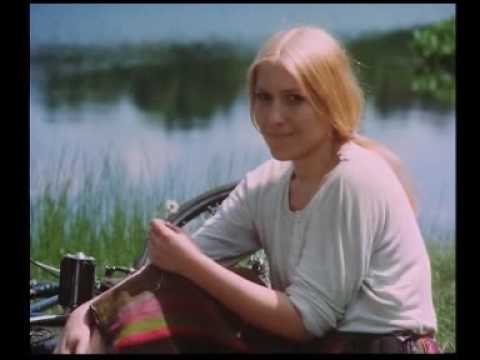
The aunt, Telimena (probably in her 30s) may not always be so flatteringly portrayed later in the poem as she is at first, but what stuck with me most strongly was the first scene in which she appears:
So she asked about new books, and how he rated
Their authors (she spoke in French), while his replies
Led to more questions touching on his views.
And then—well, then she turned to music, dance,
Art, sculpture too. Her knowledge was immense,
Whether of canvas, score, or printed word.
Her learning left Tadeusz stunned, and scared
That he’d end up exposed to ridicule;
He stammered like a pupil quizzed in school.
This is a work that has a place for an intelligent woman, in a way that by no means all 19th century literature does, even if, it’s later indicated, she might be a bit too much of a pretentious hipster and too modern.
I’m pretty sure no-one had ever told me before that Pan Tadeusz is humorous. It gives it whole layers of enjoyment I never expected. (What did I used to think it was? Probably something about a 60-year old man reminiscing about his life and travels.) This is the Romantic movement partly being itself, and partly laughing at itself. Perfect for my sensibilities. It’s epic poetry… but it also mentions things like swatting flies while preparing to cook; the epic form is sometimes mocked, sometimes used in earnest. It struck me that another classic Polish poet, Juliusz Słowacki, criticised it as 'piggish' for its low rural comedy and domesticity - this is the stuff for which I like it so much. Even calling it Pan Tadeusz after a character who isn't the centre of the action and who is neither hugely heroic nor anti-heroic, seems part of the semi-satire. Older characters and customs reflect Sarmatianism, essentially an earlier, institutionalised form of Romanticism particular to Poland-Lithuania, Hungary and some neighbouring countries. The foray happens basically because a young nobleman who’s been on the Grand Tour thinks ancient family feuds are really cool.
Pan Tadeusz was written in Polish, is seen as a Polish work, and several characters are described as ‘good Poles’ – but the action takes place in what is now Belarus, where Mickiewicz was born, and the narrative frequently hails Lithuania. This is the legacy of the Polish-Lithuanian Commonwealth, one of the greatest powers of early modern Europe (Russia’s incipient colonial expansion had not yet made it the looming great bear) but barely known to many Westerners who don’t read East European history or play historical strategy games. As Johnston relates in his introduction, its apparently progressive system of elected monarchs also led to its weakening and demise, and to the partition of Poland among neighbouring powers in the late 18th century. Pan Tadeusz is the story of Polish-speaking gentry, szlachta (some Polish by ancestry, some Lithuanian, many mixed) and their rivalry with local aristocrats – the former had some differences of status from English gentry – but it doesn’t relate what local Lithuanian-speaking peasantry (serfs) thought of all this. This mélange of nationalities spilling across borders doesn’t, again, have direct equivalents in the contemporary English speaking West, and it reflects the multicultural pre-Second World War Central and Eastern Europe, before many of those identifying as Poles, Germans etc were resettled within the current borders of those countries, and of course before the Jewish communities were destroyed. (Through the whole poem, there are 3 or 4 lines that read as antisemitic or negative stereotypes of Jews – in 2018, the notes’ description of the blood libel as a canard doesn’t look a strong enough word ... even 3 years ago these things seemed more of the past. But there are a lot more lines representing Jewishness positively, via the innkeeper Jankiel, who is shown as very popular and an all-round top bloke.)
Pan Tadeusz is a text haunted by a future its author could never have known. Look up character surnames online and there are famous people born long after Mickiewicz died, who must spring to mind for many modern Polish readers. Look up place names online and it’s massacre after hideous massacre, the repetition reinforcing horrific statistic that over 95% of Jews in Lithuania were killed, by Nazis and locals from 1941-44, to the point that I started wondering how on earth anyone descended from Lithuanian Jews made it – although of course, like Bob Dylan’s grandparents, most of their forebears would have left quite some time earlier.
This edition has good notes which stick to the directly relevant 18th-19th century history – Mickiewicz’s original notes, which he wrote because he was writing about an area and mostly-vanished customs unfamiliar even to many Polish readers of the 1830s, and more by Bill Johnston. (Johnston’s introduction is also great for historical context. One small point I’d like to respond to: he says that the only gratuitous glorification of anything Polish is of coffee; I think I noticed one more: frogs.)
It was because I was reading on desktop that I looked so much on Wikpedia and elsewhere, and took so long to read the book. (It is quite a short text, with a Kindle count of 3600.) I don’t mind the layout issues of PDF ARCs converted to Kindle when a book is in prose, but for poetry, I want to read the words on the right lines. Reading on desktop did mean, though, that I got a fuller cultural picture of references in the book when I looked things up online – which is what I wanted for such a momentous read in personal terms. It was also interesting to follow tangents such as photos of ethnographic folk museums, the disagreements between the pre-war Litvak and Galician Jewish communities and the Gefilte fish line, and the mostly-complimentary Chicago Polish stereotype, Grabowski and associated, less flattering, comedy sketches. If you don’t feel compelled to read all the history you will be fine with the endnotes in the book – only snag is they are not linked in the text, at least in the e-ARC.
If you are going to read Pan Tadeusz in English, you should read this translation, which deserves to become the definitive modern one. If you’ve read it previously in another version and didn’t like it much, but the work is important to you, re-read it in this one. I hope Johnston’s version ends up as a Penguin or Oxford Classic, because it bloody well should - though one of them bloody well should have done Pan Tadeusz a long time ago. (Random House’s buying up of Knausgård from Archipelago leads me to hope that this edition might get the distribution it deserves by a similar route.)
Sometimes it seems a shame that the best-known translation prizes, like the Booker International and the BTBA don’t accept re-translations. It's obvious why they don't, as a rule: a Pevear & Volokhonsky rendition of a popular Russian novel that’s already been translated fifteen times doesn’t need the publicity, but lesser-known classics may – and when a translation of one of those is superlatively good, as this one is, it deserves acclaim and attention.
This is a bit like when I finished War and Peace, except that then, there had been longer to get used to it: I still can’t quite believe I’ve actually read Pan Tadeusz. And I really can't believe that it was this enjoyable.
(read and reviewed September 2018; the review and comment thread on Goodreads.)
3 September 2018
A Hero of Our Time by Mikhail Lermontov, tr. Natasha Randall
[4.5] Each time I've started reading A Hero of Our Time - and there have been three or four - it's been tremendous fun. This is partly due to the playful self-awareness and utterly modern attitude of the second and third sentences, which shine through in every translation I've tried, and in this version mention:
one valise of average size, half-filled with my travel notes about Georgia. The majority of these luckily for you, were lost; but the valise with the rest of my things, luckily for me, remained intact.
I know these days that 'postmodernity' is about as old as the novel itself (a look at reviews of [author:Steven Moore|16001]'s histories of the novel will help), but meeting phrases like these, sparkling out from the dust of 200 years, still brings nearly the same surprise and delight as I got twenty years ago from discovering [book:The Private Memoirs and Confessions of a Justified Sinner|87580].
Despite my enthusiasm, each previous time I began to read A Hero of Our Time, I was waylaid by things I can no longer remember, and got nowhere near finishing the book. But now I have finished it, and straight away went back to re-read various bits and pieces. (There are few books I like enough to bother doing this. It's also a testament to it that I started again from the beginning so many times. I usually avoid doing this when picking up a book after a gap, so I don't have to read the same chapters again and can get to the end more quickly.)
Hero isn't like the typical Anglophone idea of a Russian classic: a giant, complex opera or symphony (i.e. a Tolstoy doorstopper). It's short, immediate, and full of escapades and scrapes: an old-fashioned boys' own adventure. (Neil LaBute's foreword to this Penguin Classics edition rightly compares Pechorin to Flashman, and dreams up a meeting for the two characters during the Crimean War, which I, for one, would really like to read.) Bring the expectations you'd bring to Verne or Conan Doyle, rather than those for high literature, and you'll get more out of it.
The British boys' own adventure isn't just an adventure story, though, it's a document of Empire, colonialism and imperialist attitudes, and the same goes for A Hero of Our Time in the Russian context. For some reason, it's very unusual in mass media to hear Russia (or the Soviets) described as a colonial and imperial power in the same way that Western European countries are - this understanding of the country seems mostly confined to academic works. Perhaps, because Russia was appropriating territories contiguous to its own borders - many of which it still rules - while Britain was spreading pink over the global map to the Americas, Asia and Africa, it just isn't as obvious to the general public. A few months ago, I was browsing [book:Russian Literature and Empire: Conquest of the Caucasus from Pushkin to Tolstoy|1181367]; I thought reading fiction would be an enjoyable and inexpensive way to learn a bit more about Imperial Russian colonialism - and there among the most significant works was Lermontov and A Hero of Our Time, so I picked up the book again, and found myself noticing sentences I would once not have looked at so intently: all these characterisations of 'Asiatics', Cossacks, warlords and their families. I might otherwise have read them with the same well-it's-not-great-but-it's-old resignation as I'd have brought to a 19th-century Londoner's stereotyping of locals during his journey to the north of England, and not filed alongside British Empire-builders' depictions of India with the Said-Orientalism toolkit etc. (Not that one couldn't also apply that to regional and class snobbery, actually.) My desire to hear more about the place and time, and the relative unfamiliarity (only, for comparison, having the memory of a few documentaries and newspaper articles from and about the 1990s-present) meant it was fascinating to an extent that similar stuff about the British Raj - a backdrop to dozens of novels, films and TV series since childhood - wouldn't be now.
(An interesting-looking book of stories about Russian colonialism from the Georgian side: [book:The Prose of the Mountains|28089291] )
As in British Imperialist literature, there are colonising protagonists who partly identify themselves with the colonised region and go native when it suits them (of course Pechorin can be mistaken for a Circassian), and there is a great aesthetic love of the landscape they've been sent to tame. Lermontov was also a painter, and it shows in the gorgeous extended descriptions of scenery. Natasha Randall's introduction says these can occasionally be repetitive, but I was enjoying wandering around in them way too much to notice.
In the last few years, I've read too many articles by women who identify with female supporting characters in fiction that has sexist male protagonists, and it's too current a subject to ignore in 2018 - so I should mention that the reader who identifies primarily with them here is unlikely to enjoy A Hero of Our Time so much. I'm not sure it would even be possible to identify with them in the first half - they are not so much characters as dolls or pets exemplifying desirable qualities of the era (there's also a Bond Girl), and the average contemporary Western reader has such a different background and emotional history that they are unlikely to truly fathom Bela, the kidnapped daughter of a Circassian warlord, and who has lived all her life in a culture in which such snatchings are commonplace, any more than Lermontov/Pechorin did. In the second half of the book (about social intrigue rather than derring-do), aristocratic Russian ladies from Moscow and St. Petersburg get more page time, and are evidently trying to negotiate their own emotions, and the double standards and conflicting expectations of their milieu and the Romantic period, where medieval courtly love style tendencies and expectations of respectable marriage coexist with a fashion for Byronic bad boys, and behaviours like pickup-artist style negging. I would guess that much ink has been spilled already on the similarities between Vera, Pechorin's former lover, and Anna Karenina.
LaBute - famous in the late 90s for his films about what's now called toxic masculinity - considers Pechorin to be a sociopath. And I have to say that certain of Pechorin's social manipulations, his nerve, and his occasional moments of introspection and doubt, closely resemble someone I used to know who described himself as a sociopath. I'm not talking serial killer bad (nor gloating at length over destroying people in the manner of Valmont in [book:Les Liaisons Dangereuses|49540], another character LaBute mentions) - more like Tony in Skins: an arrogant, clever, socially connected, player of games, sometimes very hurtful, and sometimes also useful and supportive when it suits. Given Pechorin's level of reflectiveness, you wonder how much of this arsery he might grow out of: possibly some, but not 100%. The energy and likeability with which Pechorin is presented shows realistically how such a person seems to acquaintances (of which they have a great many) until they do something too awful - and how they get on in life, in a way that the later tendency to present such personalities as sinister unreliable narrators really doesn't. (LaBute also does that thing, pretty much universal in New Lad-era media and later 20th century litfic, of presenting highly egotistical and difficult characters as universally, typically male, as if men's personalities did not, in fact, vary as much as women's.)
Randall, drawing attention to the psychological realism rather than to labels, compares A Hero of Our Time with [book:The Confession of a Child of the Century|16282313], another personal favourite of mine - although very different in its emotional intensity and not such an easy read - which is again remarkable in presenting the inner world of a difficult character without judgement, to an extent that modern works rarely do. The period when both books were written, the cusp between Romanticism and the fashion for realist fiction (a time also, importantly, before the codification of psychology and the rise of psychology-as-morality) seems to have been especially productive for this.
The lightness with which Pechorin's games are presented makes it clearer how he experiences them - they are not related with that heavy-handed insinuation that characterises later fiction about questionable individuals - and the narrative sometimes bestowed strange flashes of insight beyond the words on the page. I suddenly understood how hunting would be exciting because it would be different every time, moving through the landscape on different routes decided by another creature, different weather and sounds, not knowing where the quarry would go, different from the relatively fixed possibilities in, for example, gaming. Passages which could have been commonplace are elevated: something that in the hands of many later writers would have been a dyspeptic, predictable rant against astrology is here a poetic consideration of how 'we' see ourselves compared with how our ancestors saw themselves and their lives.
The structure is odd - the book ends abruptly, inside a framed narrative, and it's understandable that some readers would knock a star off for this, but the aytypicality of this in a 19th century novel felt interesting in itself. It helped to understand that this is actually a collection of short stories about one character and his world, previously published separately - it was even suggested that Lermontov might have written more about Pechorin had he lived longer - and the introduction's listing of the sequence in which the episodes happen prompted me to look over them again in that order for an altered perspective.
Even the title has more to give than I expected. A hero as in a (potential) war hero; a hero as in a Byronic hero (not necessarily approved of by those in the 19th century establishment who esteemed of the former), the implied question mark at the end - these could be obvious from reading the blurb. A facet added by contemporary Western life (especially outside the US) where warfare has not been part of most people's lives for a couple of generations, is the suspicion in some quarters of those who have killed or are prepared to kill repeatedly in the armed services: might it actually require a dark-triad sort of antisocial personality? Is that what a lot of 'heroes', especially old-fashioned heroes, really are?
A Hero of Our Time is a classic partly because of its place in the history of the Russian novel, as a bridge from Pushkin to Tolstoy, Dostoevsky and the Golden Age - and I admit that a bit of my enjoyment was from seeing it in this light (it was probably good to read it after W&P, AK, C&P and EO) and in relation to English literature (having seen it argued that Constance Garnett's translations of later Russian greats effectively prompted the incorporation of the country's major writers into the English canon). But mostly I found it to be something which, having read most of the 'easy' English classics a long time ago, I don't really expect any more from books of this age: an enjoyable, light adventure story with intriguing character portrait.
(finished & reviewed Sept 2018; the review on Goodreads.)
27 August 2018
Kiffe Kiffe Tomorrow by Faïza Guène, tr. Sarah Adams
aka Just Like Tomorrow. This novella about a Paris-based teenager of Moroccan heritage is taught in schools (as another Goodreads reviewer notes, it's a French A-Level text in England), and could be seen as gritty YA. But unusually - perhaps uniquely - for a YA book, it was longlisted, back in 2007, for the Independent Foreign Fiction Prize, the precursor to the current format of the Booker International.
----
[3.5] In translation, it's a very easy read, though for someone recently finished French GCSE (the exam for 16 year olds which is followed by A-level), the slang will take some getting used to. Subject-wise, it technically has that realist 'worthiness' characteristic of the IFFP - it's narrated by an impoverished French-Moroccan teenage girl living on a tough estate on the outskirts of Paris - but it's not in the least dry, so 'worthy' wasn't an adjective that occurred to me while I was reading. This book didn't exist when I was doing A-levels, but Kiffe Kiffe plus an older classic would be a better choice than two of the latter, and certainly gives a less rarefied, and more modern view of France than the likes of Marcel Pagnol.
It's also potentially educational in that there's a lot to look up about French pop culture of the late 90s and early 00s, the sort of casual references you might get IRL: e.g. saying someone looks like a certain daytime TV presenter. (The book makes sense without knowing all these references, but I enjoy finding out this sort of stuff. If you like to look things up as you go, it means that this otherwise very straightforward book might not be the most convenient read for public transport.)
Narrator Doria's voice may grate for some readers (and the ending is perhaps a bit too neat in that YA way). I have never understood why so many older child and teenage narrators pepper their stories with "I wish [really bad thing] would happen to [so and so]". I don't remember thinking this about more than one or two people (and it's not like I was having a great time socially or at home), and I can't ever remember other kids saying it. In books I've read in adulthood, I've usually thought of it as lazy shorthand for a more inchoate childish and youthful dissatisfaction, but as Faïza Guène wrote this when she was still a teenager herself, and she grew up on an estate like Doria's, where many people have far greater material hardship than most of my old classmates, I'll give her the benefit of the doubt in the way that I wouldn't to a well-meaning middle-class 45 year old trying to write the same character.
Some contemporary readers may feel that a certain plot point needs more exploration and discussion, especially for teen readers:when Doria decides she fancies a boy who, a few weeks / months earlier kissed her without her consent, and whom she had previously found quite repellent - and it's clearly presented as a good thing by the end of the book. It struck me how this wouldn't have seemed anything remarkable in fiction, or a magazine anecdote, 20 or even 10 years ago - although by then a similar reaction to being 'ravished' would have been considered off, and bad writing, by many. One could now consider it as a reaction shaped by Doria's dysfunctional family background - which must have been pretty bad as the family had a social worker (although perhaps France allocates them when things are less bad than UK threshholds) - or a lingering subconscious effect of the patriarchal culture she is in many other ways managing to shake off. It's also an example of a popular trope of the 90s and 00s, the nerd gets the girl. But to make it just about the character neglects changing general norms - which have possibly changed more among the young and among Anglo-American liberals than elsewhere. And I find it very interesting as an example of inner emotions changing rapidly - seeing in action the stuff covered by the scholarly field of the history of emotions I referred to the other day in reviewing Lucy Worsley's Jane Austen at Home. It was sad to see how often Doria referred to commercial women's magazines as ways she and others learned about life and relationships (and to shape their views of what was and was not appropriate to feel and do) but also sadly accurate for pre-www girls who had negligible useful support from people they knew. I was kind of glad magazines have waned, but on the consumerism and fashion front, they seemed quite benign compared with what you hear about Instagram and teens now.
I found Kiffe Kiffe really interesting. Contemporary fiction about immigrants, and about poorer people (who aren't struggling creatives) in other European countries is something I've long wanted to read more of, but not much is translated. (And when it is, it's rarely as approachable as this.)
(read and reviewed August 2018, the review on Goodreads.)
----
[3.5] In translation, it's a very easy read, though for someone recently finished French GCSE (the exam for 16 year olds which is followed by A-level), the slang will take some getting used to. Subject-wise, it technically has that realist 'worthiness' characteristic of the IFFP - it's narrated by an impoverished French-Moroccan teenage girl living on a tough estate on the outskirts of Paris - but it's not in the least dry, so 'worthy' wasn't an adjective that occurred to me while I was reading. This book didn't exist when I was doing A-levels, but Kiffe Kiffe plus an older classic would be a better choice than two of the latter, and certainly gives a less rarefied, and more modern view of France than the likes of Marcel Pagnol.
It's also potentially educational in that there's a lot to look up about French pop culture of the late 90s and early 00s, the sort of casual references you might get IRL: e.g. saying someone looks like a certain daytime TV presenter. (The book makes sense without knowing all these references, but I enjoy finding out this sort of stuff. If you like to look things up as you go, it means that this otherwise very straightforward book might not be the most convenient read for public transport.)
Narrator Doria's voice may grate for some readers (and the ending is perhaps a bit too neat in that YA way). I have never understood why so many older child and teenage narrators pepper their stories with "I wish [really bad thing] would happen to [so and so]". I don't remember thinking this about more than one or two people (and it's not like I was having a great time socially or at home), and I can't ever remember other kids saying it. In books I've read in adulthood, I've usually thought of it as lazy shorthand for a more inchoate childish and youthful dissatisfaction, but as Faïza Guène wrote this when she was still a teenager herself, and she grew up on an estate like Doria's, where many people have far greater material hardship than most of my old classmates, I'll give her the benefit of the doubt in the way that I wouldn't to a well-meaning middle-class 45 year old trying to write the same character.
Some contemporary readers may feel that a certain plot point needs more exploration and discussion, especially for teen readers:
I found Kiffe Kiffe really interesting. Contemporary fiction about immigrants, and about poorer people (who aren't struggling creatives) in other European countries is something I've long wanted to read more of, but not much is translated. (And when it is, it's rarely as approachable as this.)
(read and reviewed August 2018, the review on Goodreads.)
18 August 2018
Elefant by Martin Suter, tr. Jamie Bulloch
New in English in 2018, in translation from Swiss German, this light speculative fiction adventure - about a genetically engineered miniature pink elephant and the homeless man who stumbles on him - may appeal to fans of Jonas Jonasson and Frederik Backman. I received a free Advance Review Copy ebook from Netgalley and the publisher, Fourth Estate, an imprint of HarperCollins UK.
[3.5] A light read narrated in a tone similar to The Hundred Year Old Man and A Man Called Ove. The first protagonist on the scene, Schoch, a middle-aged alcoholic homeless on the streets of Zurich, is from the same curmudgeonly stable of characters, who, in their real life incarnations, might not be so likeable - but are made sympathetic, and sometimes endearingly comic, by that children's-book-for-adults authorial voice.
As is typical with novels like these, Elefant takes the reader on a caper through various locations, situations and occupations many people have hardly ever thought about - although here several of them have to do with elephants and/or genetic engineering. (I don't think I've read such detail about the collection of semen from domesticated animals for artificial insemination since James Herriot books - but here the tone isn't laugh-out-loud awkwardness; now, it's decades later and a different species. A matter-of-fact clinical tone subtly communicates a sense of it and other artificial reproduction procedures as demeaning and tragic for the animals.) Seriousness is generally offset soon enough, though, by likeable or picaresque characters, or the outright endearing. (I've had to watch videos of baby elephants to try and see some of the cutest behaviours described - I particularly like this one.) And there are bumbling chases and stakeouts that wouldn't be out of place in a 1970s British farce. Perhaps the cosiest, most escapist aspect of the novel is in the first two thirds, where several chapters evoke the joy of living alone in a big comfortable house with a sociable pet, and reading a lot. These are scenes to revel in and to curl up in. A nice detail was that we don't get lovely descriptions of snow scenes in winter - I wondered where they were in December chapters, as I'd been looking forward to them - but using that old friend of the Eng Lit student, pathetic fallacy, 'unnatural' out-of-season blizzards, and the longed-for Christmas-card scenery, arrive in late May.
There are underlying values in the book which to some, probably seem so normal as not to be noticeable, especially to Continental Western Europeans in late middle age and older. (The author is 70, and Elefant was first published last year.) Some of these will, and some won't, go down well with others... Refugees are basically good and should be helped, especially if they are nice people and share the values of your country (the just-post-Second World War generation taking this as more of a given than many younger centrists and conservatives); genetic engineering feels wrong and unnatural on a gut level and could have worrying repercussions; there's something satisfying about formerly well-off people who fell on hard times getting restored to their (rightful?) station; and China is supplanting America as a certain kind of antagonist: a big unethical corporate threat that's increasingly over here (also makes a work more saleable to Americans...). Very EU values, especially if considering the EU as neoliberal - although it's actually a Swiss-German novel. The prevalence of wealth in the culture - especially later in the book - is very Swiss, and especially very Zurich, as I understand from my Goodreads friend Warwick, who lives there. Homelessness is apparently not visible as it is in UK cities. With the range of centres and soup kitchens available to Schoch and his comrades through the day, it's perhaps evident why. It's a level of service that suggests Swiss cities may be among the easier places in the world to be street homeless, better at any rate than contemporary Britain, especially as this provision is combined with a basic benefit rate of 986 CHF per month for a homeless person, equivalent at current exchange rates to slightly more than 10 weeks' worth of UK Jobseeker's Allowance (although Suter doesn't give details of the criteria).
Homelessness, alongside genetic engineering and elephant behaviour, are subjects on which Suter has done his research, including with people who have first-hand knowledge, as the acknowledgements explain. It's a shame that a few clangers, mostly, but not all, on other topics, remain in this edition. It doesn't tally with a vet's scientific knowledge that his biggest fear about genetic engineering would be infectious diseases that targeted specific human racial groups. Did that really get past the geneticists who read the manuscript? Or was that included later or despite them? How are all these vets moving into exotics practice from other specialties with such ease? Is it less of a big deal in some countries than in the UK? Did no-one at all try to correct a character's saying that not eating meat helped save the ozone layer?? (Rather that reduce carbon emissions or climate change.) Someone with opinions on animals as strong as hers these days seems likely to be vegan, not only vegetarian - but that would have meant that Suter wouldn't have had the opportunity to write about so many traditional Swiss dishes containing cheese. Why does an intelligent Burmese man who's been living in Switzerland for about 20 years still have such poor English? (The answer does seem too likely to be stereotyping.) And why would he name an elephant in Hindi when he talks to the animals in Burmese?
For me, these points didn't impinge too much on the narrative as a whole - Elefant is decent light / comfort reading and frequently made me smile - and I don't, in any case, expect popular fiction to be flawless. (It's an unexpected surprise if it doesn't have any errors, stereotypes or plot-holes.) I keep wavering between rounding down to 3 stars (which wouldn't reflect how much I enjoyed stretches of the book, on a scale with my other ratings) and 4 stars (which I feel a bit guilty about, because of the stereotyping of Kaung, and the way the wheels of the plot are oiled by the 'goodies' turning out to have connections and lots of money. Although the latter, especially from a UK/US perspective, also just reflects hard facts of life in which private charity is becoming increasingly important as state provision declines - having the authorities sort everything out, as happens in plotlines of some Nordic works, seems ever more distant and utopian.)
The novel also left me impressed with the versatility of translator Jamie Bulloch - the other of his translations I've read was the tense German modern classic [book:The Mussel Feast|16138043], which has a markedly different style. It was great reading a translation into British English, as so many UK publishers commission or reprint American ones these days.
Elefant won't appeal to everyone: it hasn't got a lot to offer to readers who only go for the highly literary or experimental, and others may think its political underpinnings leave something to be desired. But, although whimsical, it thankfully isn't as cheesy as the current UK cover's tagline suggests ("true friends come in all shapes and sizes"); and if you like the Jonasson type of caper novel for an occasional break , or just because, it may be worth a look.
(read and reviewed August 2018; the review and comment thread on Goodreads.
16 August 2018
Sabrina by Nick Drnaso
The first graphic novel to be longlisted for the Booker Prize.
Sabrina reminds me a lot of The Killing. Forbrydelsen, that is, the Danish original. I've never seen the American adaptation, and never previously wished I had. Like the first series of Forbrydelsen, Sabrina examines in deep detail the effects of one young woman's murder on those around her, rippling out to those a degree or two removed, and then into the media and the political landscape. But it's very American: resolutely unglamorous, uncool middle-American, where nearly everyone is slightly overweight and not noticeably fashionable - maybe wearing Walmart clothes - lives in featureless modern housing and works in equally blank, soulless offices. Life lived to the sound of aircon hum under polystyrene-panelled ceilings and clicks on clickbait, a state-of-part-of-the nation novel. There are slankets and vertical blinds. His wife left after “she said I was detached and oblivious”. It’s a reflection and image of white middle-America in the late 2010s, the way The Simpsons used to be in the 90s – grown anhedonic, wired, tired, crueller and more paranoid, turned inward.
So after that paean, why only 4 stars? WTF? I’m just not that keen on the art style. I’m fussy about that with graphic novels and comics, and with the 'big' subject matter and high production values, I'd have liked more detail and realism. On the plus side, though, the rounded, almost childlike friendliness of it conveys how comfortable parts of America are with mile upon mile of buildings that would depress many Europeans, with things like the place of the military in US society, and with shock-jocks – and the paucity of detail and shading communicates the flat bleakness of normality, and of existing - just being not fighting - through shitty circumstances. (Two big half-page detailed panels stood out: one of a kindergarten - a page in a children’s book a character opens - and one of an auto sales lot. Another page from the same children’s book produced a fascinating sense of uncanny-valley dislocation, showing a spot-the-difference that has 25 differences instead of the stated 20, and two panels of animals at a dancing lesson where a lion looms, with unspoken sense of threat, over a mouse who’s apparently meant to be an equal, and not prey.)
Drnaso is really good on other types of detail. It’s not often in books that characters talk about things like getting a second opinion from dentists, or a trivial entertainment news story, without it leading to or meaning anything else. This is real, mundane existence trundling on, while not too far away, someone else is shattered by a life-defining event. Some things just seem better delivered visually: the simplicity of 11.34 on a clock owned by a character who works a back shift and has just got up; we see a holiday happening rather than reading one of the many hackneyed ways it could be verbalised. You can show the layout of websites the reader may recognise, and it seems undeniable that panels better evoke the state of being tired in half-light and clicking on stupid shit, and for a longer duration, than most novelists (other than maybe Tao Lin) would bother with. The art style really seems to come into its own here, as part of the cocooned feeling people have when they do such things.
It was around pp.70-80 when I felt real heft from this book; it had been seeming pretty clever, but then, something was sealed in the way it addressed what happened whenthe videotape of Sabrina’s murder surfaced : the local journalists, middle-aged and totally uncool but professional and human, the police interactions with the characters, and details like the unstereotypical realness of a landlord who wore shorts.
The only drawback was that, a bit later, it didn't really match the verbal and emotional urgency of real-life accounts of being caught up in conspiracy theories, like the account by the father of one of the Sandy Hook children. Or was that due to Calvin's personality and occupational experience? (Also,I wasn’t sure if Calvin would really be able to get the Special Investigations job after this happened. Would he not be too high a risk because of the intense scrutiny from obsessives? I would have liked it to have been explained if it didn’t matter.)
But if real-life conspiracy theory shows say things like the fictional Albert Douglas radio programme does here, then Drnaso just made me totally grok why people - people like a few friends of friends, former acquaintances and so on, not just ‘random idiots’ - fall for these things. At time of writing, I’ve never heard more than a two-minute clip of stuff like Alex Jones, focused on a contentious issue. Not all this preamble about the state of the world that would appeal across the political spectrum, and which you’d have to be doing really, really well in your life, and be at least semi-detached from the news, not to agree with at least somewhat… I’m nodding along and nodding along and only when he says the bit about the [US] government carrying out 9/11, or inventing shooting incidents, do I reject and switch off. And if the verisimilitude of the show Drnaso has created is anything like that of the online articles here, some of the real presenters must be very much like that.
Sabrina feels very very real, yet always manages to swerve being too ‘on the nose’, to mix metaphors. The closest to that Drnaso gets is when characters, having hoped for some distracting TV pabulum, end up switching on to (sod’s law; bleary, fatalistic sod’s law) a news item about the 9/11 museum, and a senior staff member at the exhibit says: “we want guests to leave with an increased sense of the value of a human life, that each one is important and won't be forgotten”… but then it’s only become even blunter to show this because of American policy and events that happened in the last few months, since the book was written.
Even if, like me, you don’t really like much of the American culture served up wherever you look, I think there’s something valuable in Sabrina: the tendencies of the media and the online world shown here are becoming almost global. Or maybe it’s even good because of not liking it, because it illustrates where all this stuff is coming from, the heart of a white Americanness that’s implicit background in that Hollywood blockbuster or New York literary novel: the Joe Averages in the flyover states who are the market or the silent cultural antagonist, but rarely talked about (at least for foreigners) in a way that is unvarnished but also, because of using fewer words and not referring to anyone’s voting habits, basically respectful.
-----------
I wanted to write about Sabrina as a work in itself, unconnected to its Booker longlisting. Quite apart from the fact that the reviews on Goodreads will probably stay online considerably longer than the 2018 Booker Prize longlist is of interest to anyone other than a handful of geeks, Drnaso cannot be blamed for creating a work that isn’t up to Booker standards, as some posts do. A literary novelist publishing in Britain would always have it in mind. But a graphic novel has never been longlisted for the Booker before. (Although I consider that, like a female Doctor Who, it was well overdue - something some of us expected to happen quite some time ago, given prior discussions in the media*.) So it probably never would have crossed a graphic novelist’s mind to have a Booker-type set of expectations in mind. I think it’s unfair to star-rate Sabrina using its Booker Prize appropriateness as a criterion, although ranking it in the longlist as a separate exercise is an entirely different matter.
The Booker should be introducing readers to the work of authors that will wow them. I'm not quite as bowled over by Sabrina as I was by Paul Beatty's The Sellout or Richard Powers' Orfeo but it is very very good, and I'd certainly read more by Nick Drnaso if I had the opportunity.
(read and reviewed August 2018; the review on Goodreads.)
* Postscript with further explanation: in 2013, the chair of that year's Booker judges and one other said that they would welcome graphic novels and would have been happy to list one if they had found one good enough. As far as I'm concerned it's been pending since then. And as far as Doctor Who is concerned, I read something as a kid in the 1980s which suggested that there would be a female Doctor sooner or later, and it seemed like a matter of course, not least because a female prime minister was all I was old enough to remember at that point. So it seemed bizarre that people still thought there was anything odd about this recently. It's impossible now to trace where I read it (I thought it was the Radio Times) but it may have been extrapolating from a 1981 interview in which Tom Baker said “Well, you’re making an assumption that it’s going to be a man.” Or perhaps someone in the media had a tip about the behind the scenes discussions from 1986, which came to light in 2010.
Sabrina reminds me a lot of The Killing. Forbrydelsen, that is, the Danish original. I've never seen the American adaptation, and never previously wished I had. Like the first series of Forbrydelsen, Sabrina examines in deep detail the effects of one young woman's murder on those around her, rippling out to those a degree or two removed, and then into the media and the political landscape. But it's very American: resolutely unglamorous, uncool middle-American, where nearly everyone is slightly overweight and not noticeably fashionable - maybe wearing Walmart clothes - lives in featureless modern housing and works in equally blank, soulless offices. Life lived to the sound of aircon hum under polystyrene-panelled ceilings and clicks on clickbait, a state-of-part-of-the nation novel. There are slankets and vertical blinds. His wife left after “she said I was detached and oblivious”. It’s a reflection and image of white middle-America in the late 2010s, the way The Simpsons used to be in the 90s – grown anhedonic, wired, tired, crueller and more paranoid, turned inward.
So after that paean, why only 4 stars? WTF? I’m just not that keen on the art style. I’m fussy about that with graphic novels and comics, and with the 'big' subject matter and high production values, I'd have liked more detail and realism. On the plus side, though, the rounded, almost childlike friendliness of it conveys how comfortable parts of America are with mile upon mile of buildings that would depress many Europeans, with things like the place of the military in US society, and with shock-jocks – and the paucity of detail and shading communicates the flat bleakness of normality, and of existing - just being not fighting - through shitty circumstances. (Two big half-page detailed panels stood out: one of a kindergarten - a page in a children’s book a character opens - and one of an auto sales lot. Another page from the same children’s book produced a fascinating sense of uncanny-valley dislocation, showing a spot-the-difference that has 25 differences instead of the stated 20, and two panels of animals at a dancing lesson where a lion looms, with unspoken sense of threat, over a mouse who’s apparently meant to be an equal, and not prey.)
Drnaso is really good on other types of detail. It’s not often in books that characters talk about things like getting a second opinion from dentists, or a trivial entertainment news story, without it leading to or meaning anything else. This is real, mundane existence trundling on, while not too far away, someone else is shattered by a life-defining event. Some things just seem better delivered visually: the simplicity of 11.34 on a clock owned by a character who works a back shift and has just got up; we see a holiday happening rather than reading one of the many hackneyed ways it could be verbalised. You can show the layout of websites the reader may recognise, and it seems undeniable that panels better evoke the state of being tired in half-light and clicking on stupid shit, and for a longer duration, than most novelists (other than maybe Tao Lin) would bother with. The art style really seems to come into its own here, as part of the cocooned feeling people have when they do such things.
It was around pp.70-80 when I felt real heft from this book; it had been seeming pretty clever, but then, something was sealed in the way it addressed what happened when
The only drawback was that, a bit later, it didn't really match the verbal and emotional urgency of real-life accounts of being caught up in conspiracy theories, like the account by the father of one of the Sandy Hook children. Or was that due to Calvin's personality and occupational experience? (Also,
But if real-life conspiracy theory shows say things like the fictional Albert Douglas radio programme does here, then Drnaso just made me totally grok why people - people like a few friends of friends, former acquaintances and so on, not just ‘random idiots’ - fall for these things. At time of writing, I’ve never heard more than a two-minute clip of stuff like Alex Jones, focused on a contentious issue. Not all this preamble about the state of the world that would appeal across the political spectrum, and which you’d have to be doing really, really well in your life, and be at least semi-detached from the news, not to agree with at least somewhat… I’m nodding along and nodding along and only when he says the bit about the [US] government carrying out 9/11, or inventing shooting incidents, do I reject and switch off. And if the verisimilitude of the show Drnaso has created is anything like that of the online articles here, some of the real presenters must be very much like that.
Sabrina feels very very real, yet always manages to swerve being too ‘on the nose’, to mix metaphors. The closest to that Drnaso gets is when characters, having hoped for some distracting TV pabulum, end up switching on to (sod’s law; bleary, fatalistic sod’s law) a news item about the 9/11 museum, and a senior staff member at the exhibit says: “we want guests to leave with an increased sense of the value of a human life, that each one is important and won't be forgotten”… but then it’s only become even blunter to show this because of American policy and events that happened in the last few months, since the book was written.
Even if, like me, you don’t really like much of the American culture served up wherever you look, I think there’s something valuable in Sabrina: the tendencies of the media and the online world shown here are becoming almost global. Or maybe it’s even good because of not liking it, because it illustrates where all this stuff is coming from, the heart of a white Americanness that’s implicit background in that Hollywood blockbuster or New York literary novel: the Joe Averages in the flyover states who are the market or the silent cultural antagonist, but rarely talked about (at least for foreigners) in a way that is unvarnished but also, because of using fewer words and not referring to anyone’s voting habits, basically respectful.
-----------
I wanted to write about Sabrina as a work in itself, unconnected to its Booker longlisting. Quite apart from the fact that the reviews on Goodreads will probably stay online considerably longer than the 2018 Booker Prize longlist is of interest to anyone other than a handful of geeks, Drnaso cannot be blamed for creating a work that isn’t up to Booker standards, as some posts do. A literary novelist publishing in Britain would always have it in mind. But a graphic novel has never been longlisted for the Booker before. (Although I consider that, like a female Doctor Who, it was well overdue - something some of us expected to happen quite some time ago, given prior discussions in the media*.) So it probably never would have crossed a graphic novelist’s mind to have a Booker-type set of expectations in mind. I think it’s unfair to star-rate Sabrina using its Booker Prize appropriateness as a criterion, although ranking it in the longlist as a separate exercise is an entirely different matter.
The Booker should be introducing readers to the work of authors that will wow them. I'm not quite as bowled over by Sabrina as I was by Paul Beatty's The Sellout or Richard Powers' Orfeo but it is very very good, and I'd certainly read more by Nick Drnaso if I had the opportunity.
(read and reviewed August 2018; the review on Goodreads.)
* Postscript with further explanation: in 2013, the chair of that year's Booker judges and one other said that they would welcome graphic novels and would have been happy to list one if they had found one good enough. As far as I'm concerned it's been pending since then. And as far as Doctor Who is concerned, I read something as a kid in the 1980s which suggested that there would be a female Doctor sooner or later, and it seemed like a matter of course, not least because a female prime minister was all I was old enough to remember at that point. So it seemed bizarre that people still thought there was anything odd about this recently. It's impossible now to trace where I read it (I thought it was the Radio Times) but it may have been extrapolating from a 1981 interview in which Tom Baker said “Well, you’re making an assumption that it’s going to be a man.” Or perhaps someone in the media had a tip about the behind the scenes discussions from 1986, which came to light in 2010.
12 August 2018
The Long Take by Robin Robertson
Longlisted for the 2018 Booker Prize. A first for a verse novel?
I bloody love long narrative poems, and I wish there were a lot more modern novels in this form. Not sure why I find poetry faster to read - know it isn't the case for everyone. For me, it goes straight into the veins, and it omits the extraneous, leaving only the most vital impressions. Or maybe it's the presentation: shorter lines and more white space on the page make it visually easier to take in.
It was the form that made me keen to read this, but the US setting held little interest. If a prose novel about a demobbed Canadian serviceman adrift in post-WWII America had been longlisted for the Booker, I'd have been in no hurry to get round to it. And if The Long Take had been set anywhere other than North America, I could have seen myself giving it five stars.
I haven't read anything about Robin Robertson yet; it would be interesting to learn why a Scottish poet chose to set a long work there. I have a hunch that the protagonist, Walker, was one of those characters who appears to a writer from the subconscious: a British writer's use of Dad's Army names Walker and Pike for characters who bear little resemblance (other than Pike's youth) to their sitcom namesakes feels like the product of a dream.
The Scottishness of Nova Scotia, where Walker grew up, was a revelation, full of shielings and strathspeys and slaters. (The last of course being a better word than the standard English, reflecting the creatures' hard, flat dark-panelled appearance; 'woodlouse' has always sounded like it ought to mean another, leggier, creepy-crawly.) The place felt Scottish or British even without dialect words: at first in the nostalgic passages about nature, I thought Robertson was writing about Scotland, perhaps from a different viewpoint, maybe his own, and perhaps we would hear later in these sections about the writing process. (There turns out to be no such meta content.) He is at his most vividly poetic and metaphorical when writing about animals and nature - these are largely asides in this book, such as the spider that winches itself from the lampshade in Walker's apartment: were I to read more of his work, it would be nature poetry I'd look for first.
Thank you to this thread for a couple of insights. Firstly, putting me on the alert for elements of contemporary relevance; what jumped out at me, as if it had been highlighted, was the homelessness problem in San Francisco, Portland and Seattle, and characters' criticism of the government and media being more concerned with Russians it said Russians rather than Soviets) and McCarthyism than with the housing shortage. A modern feature of the narrative, when set against 1940s attitudes and writing, is that characters are never explicitly described by their race: there were once or twice names that might be Latin, or Native American, and characters who were explicitly stated to be black only once it came up in conversation, in both instances due to racists. (This approach seeks to transmit a sense of comradeship between men in the story as veterans and/or as homeless, regardless of colour, and to imply Walker's progressive outlook, in contrast with some of his contemporaries.) Secondly, a point which is a spoiler if you enjoy working out conundra while you read - but as I read a good chunk of The Long Take whilst I had a headache so bad it hurt even to put my head on a pillow, and could not have read anything very complex, it was simply useful:that Pike is probably more than one person. I would add that I think he only becomes so in the final chapter, 1953. As Walker's mental state deteriorates, Pike becomes a generalised identity he maps on to various antagonists.
The story sometimes felt nebulous, but the final chapter (about 1/3 of the book) pulled it together - and retrospectively it became increasingly obvious that this randomness and half-rootedness, interspersed with episodes of purposefulness, had always reflected Walker's state of mind, as trauma seeped in, even when intrusive memories of horrific army experiences were not at the forefront of his memories. I hadn't bonded with the book until that final third; what led me to was seeing the trajectory of how Walker worked with a group of disadvantaged people with whom he felt an affinity, only to later find his own situation deteriorating so that he gets closer and closer to becoming one of them; to being on the other side of the desk, object not subject. A revelation during that chapter also explains certain points earlier in the story.Though are we meant to be sure that Walker did those things - or to wonder if he imagined them in his traumatised state?
But The Long Take is not all psychological drama. It's immersed in the culture of its time. There is jazz. And it is a paean to US film noir of the late 1940s and 1950s, set alongside the messy real lives of some of the men who watched it in movie theaters, and witnessed it being filmed in the streets where they went about their daily lives. It is suffused with references to favourite scenes (the 'long take' is from Joseph H. Lewis' Gun Crazy aka Deadly is the Female), and characters are described as looking like actors of the period. (And at least one, from a 1958 film seems to denote a lapse of time once years stop being mentioned explicitly.) If you like these films this book will probably be rather amazing. I've hardly seen any of the films referenced, yet something is still added in the general understanding, as they conjure visuals for Walker's story in trenchcoat-clad black and white, and in the symbiosis between man and city, Walker disintegrating as 1950s LA becomes less human in scale, more corrupt and more corporate. (I could imagine just how much I'd love an equivalent prose-poem shot through with cinematic movements I know well, such as French New Wave, or British films of the 1960s and 70s. Or, for that matter, classic Ealing films being made on the other side of the Atlantic contemporaneously with these noirs.)
It is an impressive work in pulling together, as poetry and narrative, elements of this era that the public rarely regards together. The modern idealisation of the Greatest Generation, bulldog spirit and so forth disregards the extent to which the war was traumatic for many, and that not everyone could keep calm and carry on, no matter how much they wanted to. Noir and jazz, still seen as epitomes of cool were created against this backdrop. The death of Charlie Parker, born the same year as the protagonist, is starkly announced to make his and the reader's blood run cold. This is echoed (two years) later with the bombshell news "Bogart is dead", like another big bump downwards in Walker's trajectory: an end of an era and an icon of always keeping it together under pressure. In a very subtle way, using history, cinema and music, Robertson appears to be looking at the demands on men to keep up a façade, and how things may be when they can't. (The white men in the book are dealing with war trauma, the black men with that and racial violence.) But interpretation is optional here: this is a story so fully about itself and its setting (absolutely no sledgehammers here) that it also doesn't have to be anything else.
(read & reviewed August 2018; the review on Goodreads.)
I bloody love long narrative poems, and I wish there were a lot more modern novels in this form. Not sure why I find poetry faster to read - know it isn't the case for everyone. For me, it goes straight into the veins, and it omits the extraneous, leaving only the most vital impressions. Or maybe it's the presentation: shorter lines and more white space on the page make it visually easier to take in.
It was the form that made me keen to read this, but the US setting held little interest. If a prose novel about a demobbed Canadian serviceman adrift in post-WWII America had been longlisted for the Booker, I'd have been in no hurry to get round to it. And if The Long Take had been set anywhere other than North America, I could have seen myself giving it five stars.
I haven't read anything about Robin Robertson yet; it would be interesting to learn why a Scottish poet chose to set a long work there. I have a hunch that the protagonist, Walker, was one of those characters who appears to a writer from the subconscious: a British writer's use of Dad's Army names Walker and Pike for characters who bear little resemblance (other than Pike's youth) to their sitcom namesakes feels like the product of a dream.
The Scottishness of Nova Scotia, where Walker grew up, was a revelation, full of shielings and strathspeys and slaters. (The last of course being a better word than the standard English, reflecting the creatures' hard, flat dark-panelled appearance; 'woodlouse' has always sounded like it ought to mean another, leggier, creepy-crawly.) The place felt Scottish or British even without dialect words: at first in the nostalgic passages about nature, I thought Robertson was writing about Scotland, perhaps from a different viewpoint, maybe his own, and perhaps we would hear later in these sections about the writing process. (There turns out to be no such meta content.) He is at his most vividly poetic and metaphorical when writing about animals and nature - these are largely asides in this book, such as the spider that winches itself from the lampshade in Walker's apartment: were I to read more of his work, it would be nature poetry I'd look for first.
Thank you to this thread for a couple of insights. Firstly, putting me on the alert for elements of contemporary relevance; what jumped out at me, as if it had been highlighted, was the homelessness problem in San Francisco, Portland and Seattle, and characters' criticism of the government and media being more concerned with Russians it said Russians rather than Soviets) and McCarthyism than with the housing shortage. A modern feature of the narrative, when set against 1940s attitudes and writing, is that characters are never explicitly described by their race: there were once or twice names that might be Latin, or Native American, and characters who were explicitly stated to be black only once it came up in conversation, in both instances due to racists. (This approach seeks to transmit a sense of comradeship between men in the story as veterans and/or as homeless, regardless of colour, and to imply Walker's progressive outlook, in contrast with some of his contemporaries.) Secondly, a point which is a spoiler if you enjoy working out conundra while you read - but as I read a good chunk of The Long Take whilst I had a headache so bad it hurt even to put my head on a pillow, and could not have read anything very complex, it was simply useful:
The story sometimes felt nebulous, but the final chapter (about 1/3 of the book) pulled it together - and retrospectively it became increasingly obvious that this randomness and half-rootedness, interspersed with episodes of purposefulness, had always reflected Walker's state of mind, as trauma seeped in, even when intrusive memories of horrific army experiences were not at the forefront of his memories. I hadn't bonded with the book until that final third; what led me to was seeing the trajectory of how Walker worked with a group of disadvantaged people with whom he felt an affinity, only to later find his own situation deteriorating so that he gets closer and closer to becoming one of them; to being on the other side of the desk, object not subject. A revelation during that chapter also explains certain points earlier in the story.
But The Long Take is not all psychological drama. It's immersed in the culture of its time. There is jazz. And it is a paean to US film noir of the late 1940s and 1950s, set alongside the messy real lives of some of the men who watched it in movie theaters, and witnessed it being filmed in the streets where they went about their daily lives. It is suffused with references to favourite scenes (the 'long take' is from Joseph H. Lewis' Gun Crazy aka Deadly is the Female), and characters are described as looking like actors of the period. (And at least one, from a 1958 film seems to denote a lapse of time once years stop being mentioned explicitly.) If you like these films this book will probably be rather amazing. I've hardly seen any of the films referenced, yet something is still added in the general understanding, as they conjure visuals for Walker's story in trenchcoat-clad black and white, and in the symbiosis between man and city, Walker disintegrating as 1950s LA becomes less human in scale, more corrupt and more corporate. (I could imagine just how much I'd love an equivalent prose-poem shot through with cinematic movements I know well, such as French New Wave, or British films of the 1960s and 70s. Or, for that matter, classic Ealing films being made on the other side of the Atlantic contemporaneously with these noirs.)
It is an impressive work in pulling together, as poetry and narrative, elements of this era that the public rarely regards together. The modern idealisation of the Greatest Generation, bulldog spirit and so forth disregards the extent to which the war was traumatic for many, and that not everyone could keep calm and carry on, no matter how much they wanted to. Noir and jazz, still seen as epitomes of cool were created against this backdrop. The death of Charlie Parker, born the same year as the protagonist, is starkly announced to make his and the reader's blood run cold. This is echoed (two years) later with the bombshell news "Bogart is dead", like another big bump downwards in Walker's trajectory: an end of an era and an icon of always keeping it together under pressure. In a very subtle way, using history, cinema and music, Robertson appears to be looking at the demands on men to keep up a façade, and how things may be when they can't. (The white men in the book are dealing with war trauma, the black men with that and racial violence.) But interpretation is optional here: this is a story so fully about itself and its setting (absolutely no sledgehammers here) that it also doesn't have to be anything else.
(read & reviewed August 2018; the review on Goodreads.)
21 July 2017
The Great Derangement: Climate Change and the Unthinkable by Amitav Ghosh
the eminent Indian novelist's 2016 book about literary fiction's failure to address the enormity of climate change and environmental damage
This extended essay is both huge in scope - giving detailed attention to topics from the Victorian view of nature as reflected in Madame Bovary to the Chinese industrial revolution of the 11th century, to the forecast effects of sea-level rise on Mumbai and New York - and very narrow in its ultimate focus, which is the culture of "literary fiction", i.e. the Booker-and-broadsheet-review sort, more so than the experimental oddities popular in vocal circles of GR. If you enjoy seeing the results of a polymathic mind at work - even if you aren't especially into books about environmental issues and/or have reservations about litfic - this would be a satisfying novella-length read.
Literary Fiction
Last year, I became frustrated whilst involved in frequent discussion about litfic, how utterly separate it seemed from the topic I was reading most about in non-fiction, climate change. (And Richard Powers' reported novel-in-progress, about trees, was nowhere near publication.) So this book came along at just the right time. However, because Ghosh is himself so enmeshed in the litfic fraternity, he doesn't have, or rather doesn't transmit, a sense of how small a field it is in sales and readership terms, or in the eyes of the many readers who have other preferences, and oddly never even alludes (for his focus on literary is implicitly related to cultural prestige) never alludes to the more experimental and highbrow, as if litfic were the apex and not seen as a dull middlebrow by some who prefer more obscure or trashier works, or both. (On Goodreads, various readers of experimental fiction mingle in the best-reviewer rankings with readers of popular genre novels; litfic has always seemed to less prominent on here and more the province of the newspapers).
I also thought he neglected to address the partisanship, over a century old, about political and issue-led fiction versus the aesthetic, artistic and amusing. (There are frequent skirmishes over the topic on Goodreads, framing it as an either/or; a false dichotomy in my view, many of the most interesting novels managing to incorporate both.) However, it was refreshing that Ghosh did not delineate everything in the same old terms - because he is calling for both more realism about the issue of climate change in literary fiction and for greater attention to the fantastical and non-human, as is found in folktales from times when human life was more directly subject to nature. It felt as invigorating as a new paradigm. But because his argument is quite subtle, it could quite easily read to the art-for-art's sake team as entirely a denigration of their viewpoint. That isn't helped by his rather sweeping, example-free statements about Modernism and its focus on language and human internality, and less on politics, as being even more pronounced than those of recent litfic. These rang hollow to me because, since I became aware of Ghosh's book nearly a year ago, by far the best example of serious fiction I've read which fulfils its suggested remit is the section 'Time Passes' in Virginia Woolf's To the Lighthouse, in which a holiday home is abandoned for years, encroached upon by animals and plants, whilst its upper-class intellectual owners are affected by the First World War. It shows that the experimental may be an easier place to introduce the non-human and the slipperiness of a material reality once assumed to be secure than is yet another realist novel about infidelity in Hampstead.
For the benefit of those who view issues in fiction as oppositional to aesthetics, Ghosh could have emphasised more that contemporary literary fiction frequently features other sociopolitical topics, especially class and wealth divisions between people, and experiences of war, but that climate change, and nature as a force to which humans are subject (other than via common serious diseases such as cancer) is distinctively missing. (A point which, as I read The Great Derangement, I realised was the source of my frustration mentioned above.) Experimental fiction may be less inclined to foreground "issues", but they are often present in the background, perhaps in characters' living conditions.
Yet when one is hanging out in [online] crowds in which literary fiction is the favoured form, Ghosh's critique of its neglect of a major issue of our time and of imminent times, and especially of how this indicts its claim to seriousness when other topics are addressed over and over, is absolutely relevant; I wanted to nag some people to read this book even before I'd looked at anything more than the Amazon preview.
A common response to mentioning the lack of reference to climate change in litfic - whether among people I know, or among BTL Guardian commenters - is to just read SF instead FFS. (Here is a good recent article about climate change in fiction including SF.) The neglect of the issue is seen by some friends as merely one symptom of litfic's backwaterish irrelevancy and dullness outside the newspapers-and-prizes merry-go-round. It is indeed a form with a far smaller audience and a diminishing contribution to the wider cultural conversation compared with what it had in, for example, the 1950s and 1960s. Its genre-snobbishness (although this I see far more among GR hardcore-experimentalist circles now, as litfic readers, writers and critics who grew up on comics hit their 40s and gain significant influence) looks particularly archaic and ridiculous when compared with film. Among cineastes, it's form and presentation that counts towards respect, no topics circumscribed, and there is plenty of arthouse SF. (Perhaps proportionally more than experimental speculative fiction in book form?) Yet literary fiction does still count as both measure of and signal to what does or should really matter to the broadsheet-inclined audience, which includes the political classes and other significant decision makers. If Ghosh thinks the near-absence of climate change in literary fiction is symptomatic of society's unwillingness to face up to the future and the effects of its own actions - noting that future settings are as uncharacteristic of litfic, just as much as historical fiction is a staple of prize longlists - I would say that, as other forms have addressed it more, it is perhaps more related to the neglect of it, and to general short-termism and unwillingness to seriously contemplate what will happen, among the comfortable chattering classes. (My view may be skewed because, over the past year, I have returned to reading more about the environment than I had for over a decade, but it does seem as if there are more serious stories getting more public attention now than there used to be, even a couple of years ago.) Ghosh notes that in 2015, two highly significant international documents about climate change appeared: the Paris Agreement, and the papal encyclical Laudato si' - whilst the Booker longlist was entirely devoid of the subject. (I would argue that the following year's [book:The North Water|25666046], however, does address human despoliation of the environment in a historical setting.) Anna's excellent review of this book explains other reasons why literary fiction matters specifically in covering this topic, including its artistic approach.
Ghosh sees the situation of "serious fiction" as flowing from Enlightenment and C19th views of nature, in which nature was (surprisingly to us now) seen as stable, ordered and subject to only gradual change. (An opposition of catastrophism versus gradualism, in which the former was seen as primitive, existed in geology from Lyell's time, and was still around among 1980s doubters of the asteroid theory of dinosaur extinction.) This sense of stability in nature mirrored the increasing stability of western bourgeois life as industrial society grew up and medicine advanced, such stable lives being seen as ideal subject matter: Emma Bovary's love of melodramatic romances and foolish rejection such stability, being quoted in support. (However, this idea was there in the novel at least a couple of hundred years earlier, with Don Quixote, written when modernity was emerging, but life (including Cervantes' own) was still highly turbulent. Is that because it's a bourgeois idea? Because a certain leaning towards the 'prosaic' is inherent in the novel?) And given the reservations many people I know have about the middlebrow, middle-classness of literary fiction, this aspect of the critique, of the subgenre being too concerned with stable bourgeouis life, was an easy sell.
Between 2012-2016, when the online social justice movement was at its height, among my frustrations with it was the total neglect of environmental issues in favour of aggressive minutiae of identity politics. Ghosh agrees; however, he seems not to have noticed that the idea of 'speciesism' was, recently, slowly gaining ground in some quarters of it, and the way this ties in with the rise of veganism. (As a Guardian reader, my current impression from the paper is that about 30-40% of people are now vegan, not, what, 1-2%... that's how prominent it's becoming. And that another 10% are trying obsessively to avoid buying plastic.) One of the book's big questions - how will people in a future, climate-changed world view literature of the C20th and early C21st? - parallels the social-justice reading of older fiction. Assuming that book distribution, leisure time and literature study are still as plentiful as today (I really don't think it will be in 150 years, and probably sooner), I would think that, as with slavery and casual racism and sexism in books from our past, some readers will see resource profligacy and obliviousness to this to be defining features of these novels, reasons why they should be consigned to the sidelines, whereas many others will see them as unfortunate, with plenty else to enjoy in the stories regardless. (And surely some will wish they were living in times of such everyday luxury - a decadence cult.)
Asia & Climate Change
Ghosh critiques the idea that Asian countries are entirely [future] victims of climate change, in a complex argument. He mentions that western environmentalists, such as Naomi Klein, neglect to mention imperialism as a cause of climate change alongside capitalism itself. Or rather, of the particular patterns of climate change which are occurring now. Essentially, he considers that imperialism may have delayed significant climate change, but that colonial powers are still significantly responsible for global environmental changes as they are experienced.
Major Asian countries had industrial expansions and extractive industries that are little known to the average Westerner. I managed to do a whole history degree - albeit not very recently - without having heard of the Chinese industrial revolution of the C11th; it led to significant deforestation and, once coal was discovered, its adoption as a fuel in some areas. However, as the deposits were not very accessible with medieval technology, topography meant that large-scale fossil-fuel based indistrialisation didn't begin in medieval China, and instead had to wait until Europeans started it in the C18th.
Most accounts of the history of oil trace its initial drilling to the C19th USA; however, many countries used oil on a smal scale where local deposits (little understood) were available; and the Burmese had been using oil with the widest-spread trading network Ghosh suggests that nineteenth century Burma would have been the world's first petrostate if it had not been crushed by British colonial wars. India, for a while, developed a formidable shipbuilding industry and copied British-built steamships. However, the Empire stymied this by banning Indian-built ships from its ports. So, had history progressed only slightly differently, global industry would have had rather a different distribution - and carbon emissions would have been much higher, much earlier. (Ghosh considers there to have been two significant eras for emissions: the West in the early twentieth century, and Asia in the 1980s onwards, the latter although it was not so densely industrialised, had a huge impact due to sheer human numbers.)
A signficant difference from the West was that in major Asian countries, there was always greater opposition to industrialisation from religion (Hinduism, Buddhism, Confucianism) and from public intellectuals. Nineteenth century novels may sometimes lament the coming of the railways and the changes they wrought to the countryside, but no-one truly influential spoke up against industrialisation itself as opposed to, say, conditions in factories. However, as colonial powers packed up and went home, political leaders became keen to start trying to catch up with the West; Gandhi, before his assassination, was accused of trying to hold India back - and Chinese Communism pushed religious belief to one side in favour of punishing regimes of agricultural and industrial progress.
Ghosh considers that on balance, the West still owes the rest of the world, including Asia, for damage wrought by climate change, but that Asia in particular is not purely a victim.
A Dystopian Future
Ghosh has a particularly gloomy view of the future. (Is that why he's frustratingly blase about the issue of individual action versus collective action, assuming they are an either/or, and that readers aren't going to be rolling their eyes at his international arts lifestyle living - and evidently flyinh quite frequently between - New York and India? I posted more about this subject here.)
The outright collapsitarian vision - whilst alarming to some - has a strong element of freedom to it, and for physically tough people with certain viewpoints, it may even be invigorating. But the world envisaged here, dominated by the politics of the armed lifeboat has no such primitivist, libertarian appeal. Delineating plausible and pessimistic reasoning for military planners' careful study of climate change, he considers how climate change and the instability it will wreak to be an excuse for increasing authoritarian militarisation, especially of countries that are likely destinations for millions of refugees from regions stricken by famine and unbearable heat. The countries where the refugees originate may, in turn, have punitive policies of their own, introduced to appease Western powers. The poor everywhere, but especially those in the Global South, end up worse off than ever. (I think this increased authoritarianism is, very sadly, more plausible in densely populated countries like Britain, whereas the US is more spread out and contains many recalcitrant armed citizens - it does seem more likely to fragment and collapse.) There even appears to be an implication that some actors in the deep state may not want to do much to mitigate climate change, precisely because they see global turbulence as an opportunity to strengthen their stranglehold, which is considerably more depressing than, as usual, assuming they only care about making money in the short term. Ghosh tries to end the book on a sudden hopeful note, that current youngsters and the literature they have yet to write, may help to create a better world than that. He also has high hopes for world religions becoming ready-made pressure groups for lowering carbon emissions (no mention of the Catholic neglect of population as an issue). I was reminded of Mark Lynas' Six Degrees and his description of the illogically optimistic conclusions many authors add to their environmental books because they feel they should. With a little more creative vision, and more words, that conclusion could have sounded more convincing and inspiring to action - as otherwise it doesn't sound like Amitav Ghosh wants to join Dark Mountain just yet.
There may be a few flaws in this book, but it's an original and interesting melange of topics. The issue it addresses with literary fiction may seem minor to some - especially those who don't read much litfic - but some of us, at least, had been frustrated by it already. Ghosh is saying something that needed to be said: how can this subgenre claim such seriousness and weight and relevance when it has its head in the sand? However, will many dedicated readers of literary fiction actually take a break from novels to read this critique?
(read and reviewed July 2017; the review, comment thread - and dozens of quotes and status updates - on Goodreads.)
Subscribe to:
Posts (Atom)