⭐⭐⭐⭐
I read Simon Armitage's translation (published by Faber & Faber in the UK, and Norton in the US), and the introduction and notes by Helen Cooper from the Oxford World's Classics edition, after also looking at those by Bernard O'Donoghue in the Penguin Classics edition.
---
I'd half forgotten about Gawain and the Green Knight - and I'd definitely forgotten it was set over Christmas and New Year, until I heard this mid-December episode of In Our Time. As I thought during the programme how bored I now was of Simon Armitage - he's become a very regular fixture on BBC arts shows in the last few years - I didn't expect to end up reading his translation of Gawain. But I looked at a couple of others and they seemed too formal and RP. The poem's northernness (or perhaps more precisely north-west-midlandness) is one of the most distinctive things about it, and is what makes it different from other 14th-century English works like The Canterbury Tales or Piers Plowman, and I wanted that to be evident in the translation. Although the beginning of Armitage version didn't have as many dialect words as I'd hoped (nor did it in the full poem), you can hear an accent in it if you're looking, the way you can't in the Penguin or Oxford translations.
However, he says about the translation, "the often-quoted notion that a poem can never be finished, only abandoned, has never felt more true. Even now, further permutations and possibilities keep suggesting themselves, as if the tweaking and fine-tuning could last a lifetime" - and a new revised edition was published in October 2018, so there may even be more dialect in it now.
And - its other great advantage I only fully realised after starting to read it properly - Armitage's version uses alliteration like the original, rather than blank verse or a rhymed meter. One edition's introduction explains that Germanic languages frequently use alliteration as a poetic device, whereas romance languages use rhyme. I love alliteration, but it's kind of uncool: done to excess (and excess is easy to do with alliteration) it can seem like the dad-dancing of English wordplay. (Is that anything to do with its being an older, pre-Norman component of the language?) It was perhaps my favourite aspect of Armitage's Gawain, seeing, for the first time, alliteration used in such quantity and so well, and utterly *allowed*, and never once with a need to cringe.
On the appearance of the Green Knight at Camelot:
The guests looked on. They gaped and they gawked
and were mute with amazement: what did it mean
that human and horse could develop this hue,
should grow to be grass-green or greener still,
like green enamel emboldened by bright gold?
Some stood and stared then stepped a little closer,
drawn near to the knight to know his next move;
Gawain's adventures on the journey northwards in winter:
Where he bridges a brook or wades through a waterway
ill fortune brings him face-to-face with a foe
so foul or fierce he is bound to use force.
So momentous are his travels among the mountains
to tell just a tenth would be a tall order.
Here he scraps with serpents and snarling wolves,
here he tangles with wodwos causing trouble in the crags,
or with bulls and bears and the odd wild boar.
Hard on his heels through the highlands come giants.
Only diligence and faith in the face of death
will keep him from becoming a corpse or carrion.
It brings home how bloody cold a medieval winter felt, with so many fewer hopes of getting warm than we have.
And the wars were one thing, but winter was worse:
clouds shed their cargo of crystallized rain
which froze as it fell to the frost-glazed earth.
With nerves frozen numb he napped in his armour,…
So in peril and pain Sir Gawain made progress,
crisscrossing the countryside until Christmas
Eve…
---
Now night passes and New Year draws near,
drawing off darkness as our Deity decrees.
But wild-looking weather was about in the world:
clouds decanted their cold rain earthwards;
the nithering north needled man’s very nature;
creatures were scattered by the stinging sleet.
Then a whip-cracking wind comes whistling between hills
driving snow into deepening drifts in the dales.
It's clear how exhausting a journey through this was, with rest and recuperation much needed, and no shame in the knight lying abed while the lord went out hunting.
“You were weary and worn,
hollow with hunger, harrowed by tiredness,
yet you joined in my revelling right royally every night.
What a contrast Christmas was with the rest of winter under these conditions:
And with meals and mirth and minstrelsy
they made as much amusement as any mortal could,
and among those merry men and laughing ladies
Gawain and his host got giddy together;
only lunatics and drunkards could have looked more delirious.
Every person present performed party pieces
till the hour arrived when revellers must rest,
(Which may have been later than you'd think; A Tudor Christmas, which I read a couple of weeks earlier, stated that in 1494, Henry VII processed at 11pm after mass on Twelfth Night.)
As with all good long poems, there are a handful of lines that don't work, but those that do outweigh those that don't sufficiently to make the off-notes negligible.
Needless to say, all this left me with renewed respect for Armitage, and I enjoyed watching this documentary in which he visited the likely locations the Gawain-poet thought of as he was writing. Lud's Church in North Staffordshire, the probable site of the Green Chapel, really did look like somewhere a high-fantasy film hero would fight a pivotal battle with a monster (or maybe they just filmed it well to make it look that way). If you also remember Armitage from the 90s Mark Radcliffe Radio 1 show, you will probably enjoy the soundtrack too.
Armitage's edition has a short - and interesting - intro, but if you want the best historical background info, the Oxford edition is the place to look, at Helen Cooper's introduction and notes. (The Penguin Bernard O'Donoghue version doesn't have nearly as much.) Info like this was exciting (to me at least) after having heard several briefer, less detailed histories of the text:
the precise detail of this location may however represent the origin of the scribe who copied the poems into the manuscript rather than of the poet himself, who certainly came from the same region but may not be possible to locate with quite the same degree of exactness.
The Wirral was notorious as a refuge for outlaws though the comment here on the wildness of its inhabitants could also be a joke against the poem's first readers since Gawain is travelling into their own home territory. This is, however, the dangerous past, not the familiar present. (So the Liverpool jokes have an ancient history…)
Other highlights included various estimates of when wild boar became hunted to extinction in England; the ranked, and also gendered, classification of hunted beasts; when carpets were probably introduced by Eleanor of Castile; mini-biographies of candidates for the authorship and dedication; the influential coterie of Cheshiremen around Richard II in the 1390s; and that Gawain was part of an Alliterative Revival in poetry, all known works written "in the north or west of England or in southern Scotland".
For a long time I was not all that interested in reading Gawain because I'd never found chivalric culture very interesting and couldn't help but imagine it taking place in the sanitised scenes of Victorian Gothic revival paintings, even though they were obviously hundreds of years later. Not only did I enjoy the alliteration and the descriptions of the winter weather and its effects in the poem, but it helped me start to see chivalry in a different context: grittier, for want of a better word, and part of what seems to have been a confusing, demanding and perhaps sometimes contradictory set of social standards for medieval nobility which I'd actually like to know a bit more about (but paper-length rather than book-length).
The only reason for giving 4 stars rather than 5 is the known fault with the original, that the purported plot by Morgan Le Fay, as explanation for events, is unconvincing. Otherwise, the poem ends with a beautiful and unexpectedly moving final line, as if it were a prayer; although the story is playful and mythical, this reminds the reader of the religion at the heart of medieval life.
(read Dec 2018, review Jan 2019. The review on Goodreads.)
Showing posts with label poetry. Show all posts
Showing posts with label poetry. Show all posts
2 January 2019

26 December 2018
A Tudor Christmas by Alison Weir & Siobhan Clarke
⭐⭐⭐
I don't think I'd previously read Alison Weir, bestselling popular historian of the Tudors, and if I had, it was over 25 years ago. When I was younger, I was obsessed with 16th century England and also studied it formally. If I was going to read any more about the period these days, it would usually be something specialist. After seeing a positive post about this Christmas book from Roman Clodia, a longtime Amazon reviewer and Goodreads friend who is, I think, a literature academic, I thought it worth a look. Via Netgalley I received a free Advance Review Copy ebook from the publisher, Jonathan Cape / Vintage, an imprint of Penguin Random House.
----
I'd have loved this book as a Christmas present when I was growing up. (Even if there is more about Henry VIII's court and less about Elizabeth than I'd really have liked.) The combination of Tudors *and* lots of British Christmas-related historical customs and factoids would have seemed perfect. It's stuff I've gleaned over the years from many separate books, TV documentaries and articles, all in one place. At its best it's the sort of popular history that would work as text in an Usborne (or these days Dorling Kindersley) book.
It is mostly very cosy (if you are the sort of person who finds history cosy in the first place): plenty on Yule-log fires, evergreen decorations, communal revelry and the evolution of the Christmas pudding.
However, in some chapters, the info on royal customs and court etiquette may be excessively detailed for those without a particular interest. Unsurpisingly, given Alison Weir's specialism in pop-history of Henry VIII and his wives, there is a lot in the book about royalty, and rather less for those interested in the middlin' sort and the poor. For other readers, the quantities of meat and hunting in the food chapters may be somewhat unpleasant, and may find that their sentiments chime with one unnamed contemporary's phrase that "the beasts, fowl, and fish come to a general execution". (But, as I reminded myself it's probably still fewer creatures than go on the collective national table now, with twenty times as many people eating, even if 21st century Christmases do leave the likes of larks and wrens alone and usually base the main meal around one turkey per gathering.)
There is also considerably more than you might expect about the Jacobean. James I was enthusiastic about celebrating Christmas, an attitude which was welcome in England, unlike in Scotland, where celebrations were increasingly prohibited from the 1560s onwards and remained unpopular with the Kirk no matter what the King said. (See, for example, Hutton's Stations of the Sun for further details, because A Tudor Christmas does not have much on Scotland.) As Weir and Clarke say of one Jacobean broadside, "It may post-date the Tudor era, but little had changed between 1603 and 1625, and it certainly captures the essence of a Tudor Christmas."
The quantity of poems included in the book was a delightful surprise, and although my copy is only a Netgalley e-ARC, and this is a book which suits hardcopy / coffee-table browsing, I suspected when I read it in mid-December that I'd be looking back at the poems over the Christmas period. Most are by Robert Herrick (1591-1674) - I had no idea he wrote so many Christmas poems. There are a number of Shakespeare excerpts, although not the one which has long been my favourite Christmas verse of this era - even if the double entendre does sometimes get a little wearing - When icicles hang by the wall. (There are quite a few online recordings of it sung to Vaughn Williams' tune, but they are all frustratingly and absurdly operatic in style, very much at odds with its folky communal subject.) My dream book on Tudor Christmas would be a big fat social-history elaboration of what Christmas was like for the kind of workers described in that verse, probably by Ruth Goodman and Ronald Hutton - however I'm not entirely sure there's a whole book's worth of hard evidence to base it on.
I can't help thinking of this as a book suited to bright kids and teens, or to casual browsing for adults, as the scholarship could be a bit better (research can be top-notch regardless of writing style) and I see it as the sort of history which you start out with, and then gradually learn later that not everything was exactly as it says. I would say for bright pre-teens with advanced reading ages, as well as teenagers, but there are one or two passing references that conservative parents might mind - though not my own friends who have kids, or our parents 30-odd years ago who let us free range among the bookcases at home. It's the kind of book I'd have enjoyed looking through from about age 8 onwards - it has too few pictures to have been really interesting before that - and understanding more of it year on year as I re-opened it each Christmas.
There's a bit of repetition and sometimes the themed chapters means the book goes back and forth in history in ways that feel a tad disjointed - but I can't think of a better structure either, and you wouldn't notice if you didn't read the book quickly cover-to-cover. There are a handful of questionable assumptions about the origins of customs. There are, of course, no footnotes. And the bibliography could be better: some decent stuff, but also some a bit old, and a few too many other popular histories which themselves don't use footnotes (some fairly recent such as Ian Mortimer's), meaning that speculation may end up replicated as if it were fact.
There are times when a little elaboration would have added interest rather than complication:
"According to legend, when enemies met under mistletoe they had to lay down their arms and observe a truce until the next day" (Which legend, found where?)
"The Church was well aware of the pagan connection with evergreens, and in some countries such decorations were banned, but not in England" (Which countries?)
The apparent contradictions between midwinter as a spiritually dangerous time when ghosts walked, and a specially time specially protected by Jesus' birth could have been broken down better. (Although there is undeniable appeal to phrasings like this: "the veil between this world and the next was at its thinnest at the time of the winter solstice, the longest night of the year, and that spirits could walk the earth" showing part of the allure of the early modern period in being different enough from our own time to be fascinatingly different and alien, yet also with recognisable similarities in some customs and behaviour.)
In a book which has so much to say about minutiae of court etiquette, a few words could have been spared to explain that some surviving (later) Norse ideas include interpolations from Christianity, as this unsourced one presumably does: "Norse tradition had it that at Yule, the god Woden, the lord of magic and healing, came down to earth on his eight-legged horse called Sleipnir."
Or, closer to the Tudor period, that the enforcement, and effectiveness of enforcement, of prohibitions on various public sports and games was often limited.
The Green Man is a nebulous figure, with many interpretations based on a sort of mystical free-association; I'm not sure if this sort of thing has a place in a history book with no further info:
"the ancient legendary fertility figure of the Green Man, or ‘Ing’, who represents rebirth. The symbol of Ing is the boar, and in ancient times, a boar’s head was traditionally served on a bed of greenery on Midwinter Day."
However, there are also occasions when the authors debunk popular misconceptions, for example, Elizabeth I's order that everyone should eat goose at Christmas to celebrate the victory over the Spanish Armada. This was repeated, for example, by a Harrods manager speaking in an otherwise pretty good BBC documentary about Charles Dickens and Christmas that was repeated this year. "as the Armada was won in August, it is unlikely that Elizabeth ever gave such an order; she would have known that her poorer subjects could not have obeyed it, as goose was an expensive luxury."
There is plenty of fun material here as well, among the less well-known stuff, and it can easily be made multimedia, for want of a better word. Anyone who read A Tudor Christmas this year and also watched the BBC televised church service from Oldham on Christmas Day will have seen a revival of the child bishop tradition, albeit conducted in a more sensible for the 21st century, and more egalitarian, as it was a girl not a boy. There is a video of the est.1344 procession by the Worshipful Company of Butchers - not using a real boar's head in 2014, a stylised model one. If desired you can listen to music, such as William Byrd's Out of the Orient Crystal Skies, described by the authors as "one of the finest musical pieces of the English Renaissance". The writers anticipated endeavours to use the book interactively - they advise companionably at the beginning that recipes "may not appeal to a modern palate, some ingredients are not easy to come by, and quantities may be gargantuan!". Before considering trying them, it might help to look at bloggers' attempts at these historical and literary dishes, for example Perdita's warden [pear] pie from A Winter's Tale: one; two. (Neither is quite GBBO presentation standard but very interesting nonetheless.) Others try out old games, such as shove groat. And in the 21st century, the popularity of hoodies must make hoodman-blind easier than it had been at any time since the medieval: "people turned their hoods back to front, or pulled them forward over their eyes, then chased the other players until they caught one. That person became the next hoodman."
It was interesting from a personal perspective to find myself with more understanding and sympathy for Puritans than I used to have - especially compared with pre-university days when I read only popular histories like this, and Puritans were baddies in boring clothes. I've still regularly used 'puritan' as a perjorative in matters of prudery and language, but in material terms, for environmental and social equality reasons I am totally on board with disapproval of overindulgence, inessentials, the replacement of items that still work or are fixable, and so forth. On a felt level, I realised I found Puritans very relatable - their motivations are just different and their zeal for criticism and change encompassed some things which I consider good.
Such as, for example, the Twelve Days of Christmas, around which the book's chapters are rather delightfully structured. This gives space for discussion of customs which are passed over in other popular histories, including those for Holy Innocents on the 28th and the feast of Thomas a Becket on the 29th. Since childhood it has bothered me that the twelve days are no longer observed: I could never understand why a Catholic school which recognised Epiphany nevertheless started its winter/spring term before 7th January. (Whilst I had to concede that recognising the solstice would never be their thing.) And these days, modern green or left wing forms of material 'puritanism' take as evils overconsumption, overproduction and overwork, so a bit *more* holiday, not less, is good (provided it's not used for long-haul holidays and shopping till you drop) - in contrast to the early modern religious puritan who felt that people needed to work more. It would no doubt be a popular idea with quite a lot of people, like the participants at the end of another BBC programme shown in the last few days, the Victorian Bakers Christmas special. Unfortunately it's a luxury available largely to those who can arrange their annual leave thus and who also have the stamina to manage with less rest at other times of year, or to the better-off self employed in occupations that give scope for it. (It was nice to notice a couple of days after reading this book that George Monbiot had said on his Twitter page that he was staying offline until 7th January.) Although the length of observance in some parts of the country indicates that extended Christmas celebration co-existed alongside work. Not only did a few areas of England keep decorations up until Candlemas, "Some kept open house from Martinmas (11 November) to Candlemas (2 February), welcoming friends and visitors and mitigating the privations of the winter months for the poor who came to receive their charity."
This is an appealing book to browse and to have around at home, and is to be taken in very much the same way as many TV documentaries - not 100% correct, but often enough to be worthwhile, and an interesting and friendly presence. (Some Amazon reviews mention that the physical book is smaller than they expected, however.) If you want a more detailed and referenced take on the same subjects, have a look at Hutton's Stations of the Sun or The Rise and Fall of Merry England: The Ritual Year, 1400-1700.
(Read & reviewed December 2018. The review on Goodreads.)
15 November 2018
Nothing More by Krystyna Miłobędzka, tr. Elzbieta Wojcik-Leese
Krystyna Miłobędzka is an eminent Polish poet now in her mid-80s. This short, career-spanning bilingual selection is the only book of her poetry available in English.
The two introductions were helpful in setting context - though I read the first (by translator Elzbieta Wojcik-Leese) 10 days before reading the poems, by which time it had percolated down into the idea of Miłobędzka as a minimalist poet who worked towards increasingly briefer, pared forms over the years. It was an idea I could relate to, as during a brief phase, 5-6 years ago, of feeling I could write poetry (something I've otherwise been unable to do), it was the removal of words, that seemed at least half the essence of the enterprise.
At first, Miłobędzka's poems felt too opaque / oblique, and I missed the background understanding of the poet's life I'd had when reading Wioletta Greg's Finite Formulae and Theories of Chance (also from Arc Publications and read on Scribd), via having previously read Greg's autobiographical novella. I couldn't picture who or where Miłobędzka might be writing about to the same extent.
But they also seem very intuitive poems, and I found that reading them when tired - a kind of hypnagogic insight - at a point of consciousness when I couldn't really construct full sentences myself, but readily visualised dreamlike images, produced a connection with these increasingly short poems that used only the most important words, with very little filler or explanation.
Interpreting them as poems of the domestic sphere: household, children, garden, nearby walks, made them more lucid. But sharp as the legendary Damascus steel, and with experimental skill, the form is far from that commonly associated with domestic fiction, and the honed, orderly feel is different again from the current decade's books of writing fragments and scraps focused on home life by innovative English-language female writers. It gave me the impression of a woman of extraordinary ability who had nonetheless spent much of her time as a housewife - perhaps because she found it inspirational and conducive to her writing. However a look at the Polish Wikipedia entry (via Google translate) indicates she also worked in arts venues. Whether or not the domestic subject matter is a feminist choice by author or by the editors of this selection, or simply incidental, I do not know - but this kind of experimental writing elevates it intellectually and spiritually.
It isn't indicated which poems are from which collections, or where and if they match original, uninterrupted publication order, but several are in in satisfying thematic sequences. The final one focuses on the themes of nothingness, sand, and the transience of all objects, the body and of words, only to be followed by the one-word exhortatory poem "mów! / speak!" (as if realising and concluding that one is still here and should), followed by a somewhat longer piece:
I am. Co-alive, co-active, co-guilty. Co-green, co-tree. I co-exist.
You do not know yet what it means. Gifted with diffusion. I
vanish I am. I co-endure (with You) on this glassy day (with this
glassy day into which I vanish) which vanishes with me so
lightly. I don’t know what it means. Co-open with the window,
co-flowing with the river. I am in order to know I vanish? I van-
ish in order to know I am? All of me but all of me nowhere to
be found. Co-fleeting, co-skyward. Half a century I have lived
for this!
I'd been reading Krasznahorkai, and about him, recently, and was reminded of the Buddhist / yogic aspects in his work.
As the Miłobędzka's poems often use simple words, I could understand, on the most elementary level, parts of the Polish versions of some of the smaller poems. (It would be interesting to know if the description of the poems as 'ungrammatical' means she sometimes uses non-standard noun cases in Polish; if so, extra use of the nominative might have been why I found words easier to recognise.) I was usually pleased and surprised by (as far as I could tell) the fidelity of some translations, although of course it was not always possible to replicate the rhythm of sequences of similar-sounding words. The one of the few mis-steps among these shorter poems I tried to read in original as well as English was, I felt, with jest rosnące drzewem / the is growing into a tree. Polish does not have articles, and in that example, I felt the English would have worked better without them too, letting all the lines begin with "is", not "the is", also reflecting the minimalism of the later poems. "Isness" is an idea already present in earlier in this collection, so it would be apparent to readers that it related to Miłobędzka's previous use of it. Where "the is" did work, like here (it works because of the 'of', I think):
the is of the silence in the room
the is of the walls, each so different
the is of the sunshine on the curtain
the greying is of the dust
through the thin is of the glass
the is of the sparrow outside the window
the is of the child on the grass, chasing a butterfly
the is of the butterfly in the net
the floating is of the cloud
and once again: I am
in this vast
circular spherical nobody’s
agape virulent scorching
grass-strong swift-winged quick-legged
dripping rabid
acute
is
[That is agape as in gaping, not agape, universal love - and in Polish there is an overtly mentioned grasshopper only implied in the English.]
These poems will not be to everyone's taste, and some people would find them pretentious, inaccessible etc. - although these readers aren't likely to pick up small-press translated poetry in the first place.
This is the first year I have personally, inwardly *wanted to* read more books by women (i.e. to read an equal number of books by male and female writers) rather than feeling like I was being harangued to do so by the online literary world. It is a relatively tricky goal when added to that of reading more Polish books. For example the Goodreads list Polish Books Published in English, aiming to cover all books of whatever age, currently has 20%, 45/229 female-authored books on it, and regardless of the additional translation barrier, Polish literary culture has always been more male-dominated than British. This poetry collection was one of a small number of books by Polish women authors I could access inexpensively or free.
I am very glad I ended up reading it: it soon became apparent that it was too interesting to be a 'duty' book, and it left me with a deep sense of awe or reverence, which I had certainly not expected.
It's rare I want to start a book again as soon as I've finished it, so that has to be 5 stars, doesn't it? Yet somehow I'd feel presumptuous giving this 5 stars. The mood of the book itself provoked a sense of modesty or humility (quite different from being down on oneself). And then there was the sense of complexity, and with it the worry that I might not be able to access or interpret the poems in the same way again when feeling less sharp. I can't adequately communicate what it's like to fully inhabit the felt sense and muscle memory of what it was like to ride a bike and to be trying it again and unable to do it and be about to topple because that balance component doesn't work as finely as the average person's any more, and the ability is gone, although you can feel what it was like to have it, right down to the position of that groove you used to find and hit - but like that. "Getting" poems like this (especially without extensive notes) is a mysterious and intuitive and sometimes fleeting process.
Some understandings can be explained confidently, like the "speak!" above; some is more personal and experiential, like reading "a family of tables, a family of doors" as a friendly personification of the household furniture as creatures of their own kind, familiar both to oneself and to each other (perhaps the English 'a nest of tables' helps?) as well as a way of describing how the human family in the house gathers and moves.
On a sentence-by-sentence level this is the most challenging book I've read this year (I'm glad I didn't know that before I started) although that is significantly mitigated by its brevity. These are almost koan-like poems that, where the meaning isn't immediately apparent, may benefit from being looked at for a while, letting ideas and responses emerge. When I'd finished it, I went back to the beginning again to see what else appeared in the early poems after I'd acclimatised to Miłobędzka's approach, and because the feeling brought on by reading the poems was so peaceful, one I wanted to perpetuate.
(read & reviewed Nov 2018; the review on Goodreads.)
3 November 2018
Finite Formulae & Theories of Chance by Wioletta Greg, tr. Marek Kazmierski
Two thirds poems, one third diary-like prose fragments. The poems are probably best read after Gregorszewska's semi-autobiographical 2017 novella Swallowing Mercury (which was longlisted for the 2017 Booker Intternational Prize. They also focus on her family - spanning the 20th century - and her time growing up in 1980s rural Silesia, with some aspects of everyday technology comparable to the early 20th century in Britain. They have the same enchanting Bruno Schulz-like magic in which eccentricities and sweetness are amplified to create memorable characters. Knowing more about these people's life stories from elaborations in the prose book augments understanding of and connection to the poems, and there are many cross references both to scenes - hunting for scrap metal with teenage classmates, her ageing father feeding bees, making feather bedding - and motifs - especially sweet flags and iris, as well as more generally Polish elements like mushroom-picking, and a great many names of plants. (Plenty to look up here, especially botanical - and fascinating oddments like a bombilla, an early reusable straw.) Again the narrative voice carries a sense of self-assurance, and features like the narrator's relationship with her father, outdoor escapades and an unspoken disregard of the patriarchal culture of the time that makes many pieces seem as if they could have just as easily been by a male writer. A few poems, for which the later book provides no background, felt more opaque in their details, although with equal potential for loveliness if I'd known more. At least one references an earlier bilingual poetry collection Pamięć Smieny / Smena's Memory, which I have not read. For those who need to know about such things, there are none of the brief sexual assault scenes from the novella, although the poems do mention, often in moving tones, some of her relatives' tough experiences during the World Wars.
Crowds rushing the bridge, the boy barely seven
out of breath and running, forced to abandon
his basket of hatchlings…
Before the bombardment
twists the steel bridge into rings of wild fire,
bodies cast like feathers up into flaming air,
you will dive into the water and find breath recovered
in the silt, the sweet flag
and the shore of your bed.
---
One more winter will do me in, he thought,
but he lived on to sing in taverns
his forbidden songs and build his bread ovens.
Nights are his borderlands. Bushes glowing
with the tracking eyes of German shepherds.
The trigger fingers of branches heavy with dew.
----
Her grandmother is folkloric:
Wheat daughter, prisoner of sneaky pigweed, mother
to the five corners of the world and your three hectares,
beak-nosed carpenter’s wife and the potter’s lover,
queen of the aroma of grey soap, head covered
with a gold-trimmed kerchief, the glory of birds at dawn,
tired liege of furrowed fields, midwife to our breads,
magic purveyor of spirit and rye, protector of cabbages,
you who brought ripe Augusts deep into the barn,
warrior woman feared and hated by all local cats,
nurse of the sour leaven in our stone house,
But occasionally, this could only be the 1980s, and a teenage girl:
At night, the Chernobyl cloud fell
across pastures. Thyroids swelled.
The pond glowed with murmuring iodine,
swallows kissing crooked mirrors.
The radio kept playing “Moonlight Shadow”.
In the barn, a girl guide from the city started
a club for virgins. Smoking menthols…
One signposts towards the contemporary immigrant tales to come:
Sleep, for tomorrow you’ll watch Polish satellite TV,
a carton of smuggled fags waiting on your doorstep.
A fairy godmother will also reload your gas meter,
help you find refuge under a warm power-shower.
Sleep! A Breezer trickle runs along the floor.
Tobacco folding into the shape of fern leaves.
Your dreams will be done. You will go home.
Sleep! You’ll stop drinking, abandon the farm
where stalks cut your hard-working hands
and tea time is blessed respite.
Sleep! Night time here, in this promised land, is shorter.
The alarm clock squealing at five in the morning.
The shivering bicycle waiting by the gate.
Off mushroom picking with granddad?
The fragments (can't be sure if they are fully or only partly autobiographical) relate first-person experiences as a Polish immigrant living on the Isle of Wight from 2006-2014, often on a low income. I have never been to the Isle of Wight, nor taken much interest in the place, so in some ways it was more novel than hearing about Poland - but overall less inviting.
They present a major shift in tone, like visiting someone whom you're used to seeing dressed up away from home, and now they are in a bathrobe - but they remain the same interesting person, and each style has its plus points.
My two year old daughter is sitting in the corner of the garden and whispers to a spider, “Don’t be afraid. Don’t be.”
--
I attend English lessons, along with other migrant mothers and their small children. They help us feel more at home in the Islanders’ tongue. One session features John Keats and his poetry. The son of one of the students, evidently bored, writhing in his chair, starts to throw scraps of paper on the floor. His mother, irate, explodes in Polish:
“Put those down, or you’ll grow up to be another poet!”
--
Ten calls since morning about work, and every time I have to spell my name over and over again, letter by tiny letter. With each call, the sound of it becoming ever-more alien to me. Outside the kitchen window, the orange flash of a Royal Mail postman’s jacket flies by. An envelope! I run to the door, hoping it’s news of a job offer, an invite for interview or at least a decision about benefits. I tear it open and out pops a poetry chapbook.
---
I wished this one had been expanded into a full essay, as there's so little English commentary on contemporary Polish literature beyond individual authors:
Polish poetry is starting to make me feel queasy. I hide from it in the prose by Hlasko, Caldwell, Zweig, Dowlatow, Flaubert, Pilch, Kafka. I have had years of reading poetry volumes from Zielona Sowa, Biuro Literackie, anthologies, offerings from the “barbarians” and the “classicists”, niche genres, publications bought in bookshops, blogs, pre- and post-Brulion poets, internet art-zines, reams of verses, e-books, PDFs. I am infected with Polish poetry. I have had my fill of the stuff, chasing files from my inbox onto my desktop or into the trash.
There are other references to other Polish writers and artists almost unknown in English: Halina Poświatowska, Zygmunt Haupt, Ildefons Houwalt - which I gather up and note here for my own reference rather than to give the impression the book is wall-to-wall with this stuff, which it really isn't. Most of it is about daily life and personal events.
I have reservations about this translation, as it might be too anglicised. (I'd love to hear more about the Polish about it from someone who's fluent in both.) One of the poems, about playing in the snow as a child, refers to "moon boots". Did she really have those? The Polish poem contains no references to moon boots, walking as if on the moon or similar. The locals are always "Islanders" never "the English" as the Polish would sometimes translate and which would give a stronger sense of otherness.
(read and reviewed Nov 2018; the review on Goodreads.)
10 September 2018
Pan Tadeusz: The Last Foray in Lithuania by Adam Mickiewicz, tr. Bill Johnston
The new translation published in 2018 by Archipelago Books. I received a free Advance Review Copy ebook via Edelweiss.
Pan Tadeusz is the Polish classic, the ‘national epic’. In English, there isn’t a sole work with comparable stature and ubiquity.
Given my heritage, the way I'd felt about not having read Pan Tadeusz was much as if I hadn't read - or even really known the stories of - Pride and Prejudice, or Jane Eyre, or Oliver Twist as soon as I could.
But I’m also particular about translations: I didn’t want to read Tadeusz in an old translation with poor style. It was easy not even to try, given the disgraceful lack of Polish classics in UK bookshops and from major British publishers. Pre-internet, I didn’t even know of English translations, and I’ve certainly never seen one to browse in a shop or library, whereas I stumbled on the Oxford edition of the Finnish national epic The Kalevala in a bookshop round about 2002. The sing-song style of Kenneth Mackenzie’s 1964 translation - Amazon preview here, if you scroll past the introduction – was one I knew I could not enjoy, nevermind love, or recommend without apology. Long sequences of obvious line-end rhymes don’t sound good in contemporary English - worse than in some other languages. Mickiewicz’s hero and near-contemporary Byron may have used them in English, but a) twentieth-century translators aren’t Byron and b) I don’t really like the sound of them in Byron anyway.
The lack of a great new translation of Pan Tadeusz in the late 00s - 2010s had puzzled me, given the current enthusiasm for translated books in the English-speaking literary world, and the visibility of Poles in Britain (by the biggest foreign-born minority, and for some years before that, the second). It had been so long that I’d become resigned to never reading it my whole life, and just watching the Andrzej Wajda film instead. (I watched a few of his in the spring but - now, it seems, luckily - hadn’t got round to his Pan Tadeusz.)
So I don’t think I’ve ever been as delighted to see a book appear in my Goodreads feed as I was to sight this, Bill Johnston’s new translation of Pan Tadeusz, just over a week ago. Bill Johnston, who translated my favourite contemporary Polish book, Dukla by Andrzej Stasiuk, a thing of intoxicating atmosphere and exquisite descriptions. Thank you very much to Goodreads friend Lee Klein for posting about the advance review copy he’d received from Archipelago, and thereby alerting me to this translation's existence. I went straight over to Edelweiss, which I hadn’t been on for about 18 months, and was able to get an e-ARC there. Reading it has been accompanied by strange synergies: learning of a direct ancestor named Tadeusz whose lifetime overlapped the fictional one, and this morning finding the Windows Spotlight random lockscreen picture was of another, entirely different, ancestral area.
Once or twice, as I started the book, I felt foolish for not having read an earlier translation cover to cover, that I wouldn’t be writing a full-scale comparison in a review. But a quick look back at the beginning of the Mackenzie, and the Project-Gutenberg-age Noyes prose translation, made me glad - as first impressions have a stronger effect on me than they ought - that I was reading it for the first time in a version which I could love in the way that I love a few great English classics.
This is a seriously impressive feat of translation. (Johnston’s webpage indicates he’s been working on it since 2013.) I think I’ve only read two other volumes of translated poetry I found as good in themselves, Edna St Vincent Millay’s version of Baudelaire (in a class apart, and a reworking as much as a translation) and the [book:New Collected Poems|305941] of Tomas Transtromer, translated by Robin Fulton. I also loved Keith Bosley’s translation of the Kalevala – which I now hanker to re-read – but much of that was for the story and atmosphere, and I more often wondered how lines would have sounded in the original, than marvelled at the construction in English.
Mickiewicz wrote Pan Tadeusz in a characteristic Polish meter, thirteen-syllable alexandrines. Johnston has transposed it into the classic English iambic pentameter, and made wonderful use of enjambment, half-rhymes and similar devices that feel like real poetry which has stood the test of time and sound right to the contemporary reader. (The meter also augmented the quality of the multiple-wedding ending, by association with Shakespearean comedy.) The rhyming couplets do not weigh down the ends of lines as they would from a lesser pen. Johnston states in his introduction that this is also a line-by-line translation. As someone who has never been able to write so much as a decent limerick, I find that phenomenal. There is the occasional line or word that doesn’t quite work on more than a scansion level, but in such a long poem, that is only to be expected, and the great stuff by far outweighs the misfires.
I didn’t realise how little I knew (or maybe how much I’d forgotten) about Pan Tadeusz before I read it. Tadeusz himself is only nineteen. (He first appears in a wonderful scene of returning home after finishing university, one which in some respects could only have occurred so far in the past, and in a large country - he didn’t visit during his studies, nor hear much news from relatives - but which is also beautifully familiar in its evocation of how a place once known has changed, and seeing one’s old room repurposed.) He is present in many scenes, but is by no means at the centre of all the action - I can see why the poem has an alternative subtitle. It is contemporaneous with parts of War and Peace, and is another of the 19th century great works springing from the Napoleonic Wars – and of course the ominous Great Comet of 1811 is sighted:
Then hauling them north, toward the polar star.
All Lithuania, filled with dread untold,
Nightly would watch this spectacle unfold—
An evil sign, with other auguries:
Birds of ill omen gave portentous cries
And gathered in empty fields, bills sharpened, massed
As though expecting corpses for a feast.
Dogs, rooting obstinately in the earth,
Howled and howled shrilly, as if smelling death—
Betokening war or famine; foresters
Saw the Plague Maiden in the graveyard firs,
Head higher yet than where the treetops stand,
A bloodied scarf aflap in her left hand.
The portent is left hanging in the air, because, as Johnston explains in the introduction, the text largely conveys a sense of hope, by ending before battle, when the Napoleonic army might still help Poland-Lithuania free itself from the Russians. Even snapshots of historical defeat can sound victorious to the uninitiated:
Next comes Jasiński, handsome, young, unbending,
Alongside Korsak, his bosom companion, standing
On Praga’s ramparts on heaped Russian dead,
Hacking down more as Praga blazes red.
Old Maciej, one of my favourite characters, is more circumspect about the forthcoming battle, but is finally shifted aside for this opinion. Emotionally, the story’s ending feels happy, even if you know it’s not actually going to be later. It’s evident why Pan Tadeusz endured, and sustained Poles through partition and the Soviet bloc years.
A lot of the poem is made up of two types of scene. There's pastoral description, which I love - I’m one of the few people who would have liked Anna Karenina better if there were more of it – but the sheer quantity of scenery probably has a lot to do with the low rating of the book by Poles, for whom it is a permanent, national fixture on their equivalent of the A-level syllabus. And secondly, large-scale, largely drunken fighting. Most of the conflict is related in a detailed and exciting way which worked brilliantly for me as a fan of action films. I liked hearing about the characters (lots of the ‘retired badass’ trope, a favourite of mine) and their histories and weapons, and there was just the right number of them – enough to give a feeling of scale, but not so many it was confusing or that they were reduced to the sort of brief mentions that, IMO, made parts of the Iliad little more than a casualty list. A ‘foray’ here is a kind of armed raid by neighbours that took place to enforce a court decision in an area without police, and there seems to have been something of a raiding culture – although not as lawless as the Scots/English Border Reivers – which had declined through the later 18th century and which by the time Pan Tadeusz is set, had pretty much disappeared under Russian rule.
For those who love to absorb social history through fiction and poetry, especially this kind of rural setting found in Tolstoy, and as Johnston points out, Thomas Hardy (now I want to read more Hardy!), Pan Tadeusz is a feast. And boy are there feasts in this book...
Some readers may wish to be forewarned that there are hunting scenes; these occur in much the same way you’d find in Tolstoy, couched in descriptions of nature and landscape. The age of one of the female love interests may bother some English-speaking readers, although from the perspective of historical understanding, I found the way she was presented interesting. When Zosia first appeared, I read her as 16, 17 or 18 (and with her peasanty clothes and habit of using windows as doors, I imagined her looking like a slightly younger version of Malina in Wajda’s Brzezina). Throughout the story - if it hadn’t been for the one scene in which Zosia’s aunt mentions that she is 13 and now of age - I would have assumed that she was in her mid to late teens. She simply seems to be regarded by society in a way that, in an English novel of the same period, reflected a girl a few years older. (I have seen a few genealogical records of 15 year olds married in late 18th-19th century Poland, and this was a region in which the West European Marriage Pattern did not apply.)
The aunt, Telimena (probably in her 30s) may not always be so flatteringly portrayed later in the poem as she is at first, but what stuck with me most strongly was the first scene in which she appears:
So she asked about new books, and how he rated
Their authors (she spoke in French), while his replies
Led to more questions touching on his views.
And then—well, then she turned to music, dance,
Art, sculpture too. Her knowledge was immense,
Whether of canvas, score, or printed word.
Her learning left Tadeusz stunned, and scared
That he’d end up exposed to ridicule;
He stammered like a pupil quizzed in school.
This is a work that has a place for an intelligent woman, in a way that by no means all 19th century literature does, even if, it’s later indicated, she might be a bit too much of a pretentious hipster and too modern.She doesn’t meet a bad end, either, it’s a pragmatic one, even if she doesn’t remain on a pedestal.
I’m pretty sure no-one had ever told me before that Pan Tadeusz is humorous. It gives it whole layers of enjoyment I never expected. (What did I used to think it was? Probably something about a 60-year old man reminiscing about his life and travels.) This is the Romantic movement partly being itself, and partly laughing at itself. Perfect for my sensibilities. It’s epic poetry… but it also mentions things like swatting flies while preparing to cook; the epic form is sometimes mocked, sometimes used in earnest. It struck me that another classic Polish poet, Juliusz Słowacki, criticised it as 'piggish' for its low rural comedy and domesticity - this is the stuff for which I like it so much. Even calling it Pan Tadeusz after a character who isn't the centre of the action and who is neither hugely heroic nor anti-heroic, seems part of the semi-satire. Older characters and customs reflect Sarmatianism, essentially an earlier, institutionalised form of Romanticism particular to Poland-Lithuania, Hungary and some neighbouring countries. The foray happens basically because a young nobleman who’s been on the Grand Tour thinks ancient family feuds are really cool.
Pan Tadeusz was written in Polish, is seen as a Polish work, and several characters are described as ‘good Poles’ – but the action takes place in what is now Belarus, where Mickiewicz was born, and the narrative frequently hails Lithuania. This is the legacy of the Polish-Lithuanian Commonwealth, one of the greatest powers of early modern Europe (Russia’s incipient colonial expansion had not yet made it the looming great bear) but barely known to many Westerners who don’t read East European history or play historical strategy games. As Johnston relates in his introduction, its apparently progressive system of elected monarchs also led to its weakening and demise, and to the partition of Poland among neighbouring powers in the late 18th century. Pan Tadeusz is the story of Polish-speaking gentry, szlachta (some Polish by ancestry, some Lithuanian, many mixed) and their rivalry with local aristocrats – the former had some differences of status from English gentry – but it doesn’t relate what local Lithuanian-speaking peasantry (serfs) thought of all this. This mélange of nationalities spilling across borders doesn’t, again, have direct equivalents in the contemporary English speaking West, and it reflects the multicultural pre-Second World War Central and Eastern Europe, before many of those identifying as Poles, Germans etc were resettled within the current borders of those countries, and of course before the Jewish communities were destroyed. (Through the whole poem, there are 3 or 4 lines that read as antisemitic or negative stereotypes of Jews – in 2018, the notes’ description of the blood libel as a canard doesn’t look a strong enough word ... even 3 years ago these things seemed more of the past. But there are a lot more lines representing Jewishness positively, via the innkeeper Jankiel, who is shown as very popular and an all-round top bloke.)
Pan Tadeusz is a text haunted by a future its author could never have known. Look up character surnames online and there are famous people born long after Mickiewicz died, who must spring to mind for many modern Polish readers. Look up place names online and it’s massacre after hideous massacre, the repetition reinforcing horrific statistic that over 95% of Jews in Lithuania were killed, by Nazis and locals from 1941-44, to the point that I started wondering how on earth anyone descended from Lithuanian Jews made it – although of course, like Bob Dylan’s grandparents, most of their forebears would have left quite some time earlier.
This edition has good notes which stick to the directly relevant 18th-19th century history – Mickiewicz’s original notes, which he wrote because he was writing about an area and mostly-vanished customs unfamiliar even to many Polish readers of the 1830s, and more by Bill Johnston. (Johnston’s introduction is also great for historical context. One small point I’d like to respond to: he says that the only gratuitous glorification of anything Polish is of coffee; I think I noticed one more: frogs.)
It was because I was reading on desktop that I looked so much on Wikpedia and elsewhere, and took so long to read the book. (It is quite a short text, with a Kindle count of 3600.) I don’t mind the layout issues of PDF ARCs converted to Kindle when a book is in prose, but for poetry, I want to read the words on the right lines. Reading on desktop did mean, though, that I got a fuller cultural picture of references in the book when I looked things up online – which is what I wanted for such a momentous read in personal terms. It was also interesting to follow tangents such as photos of ethnographic folk museums, the disagreements between the pre-war Litvak and Galician Jewish communities and the Gefilte fish line, and the mostly-complimentary Chicago Polish stereotype, Grabowski and associated, less flattering, comedy sketches. If you don’t feel compelled to read all the history you will be fine with the endnotes in the book – only snag is they are not linked in the text, at least in the e-ARC.
If you are going to read Pan Tadeusz in English, you should read this translation, which deserves to become the definitive modern one. If you’ve read it previously in another version and didn’t like it much, but the work is important to you, re-read it in this one. I hope Johnston’s version ends up as a Penguin or Oxford Classic, because it bloody well should - though one of them bloody well should have done Pan Tadeusz a long time ago. (Random House’s buying up of Knausgård from Archipelago leads me to hope that this edition might get the distribution it deserves by a similar route.)
Sometimes it seems a shame that the best-known translation prizes, like the Booker International and the BTBA don’t accept re-translations. It's obvious why they don't, as a rule: a Pevear & Volokhonsky rendition of a popular Russian novel that’s already been translated fifteen times doesn’t need the publicity, but lesser-known classics may – and when a translation of one of those is superlatively good, as this one is, it deserves acclaim and attention.
This is a bit like when I finished War and Peace, except that then, there had been longer to get used to it: I still can’t quite believe I’ve actually read Pan Tadeusz. And I really can't believe that it was this enjoyable.
(read and reviewed September 2018; the review and comment thread on Goodreads.)
Pan Tadeusz is the Polish classic, the ‘national epic’. In English, there isn’t a sole work with comparable stature and ubiquity.
Given my heritage, the way I'd felt about not having read Pan Tadeusz was much as if I hadn't read - or even really known the stories of - Pride and Prejudice, or Jane Eyre, or Oliver Twist as soon as I could.
But I’m also particular about translations: I didn’t want to read Tadeusz in an old translation with poor style. It was easy not even to try, given the disgraceful lack of Polish classics in UK bookshops and from major British publishers. Pre-internet, I didn’t even know of English translations, and I’ve certainly never seen one to browse in a shop or library, whereas I stumbled on the Oxford edition of the Finnish national epic The Kalevala in a bookshop round about 2002. The sing-song style of Kenneth Mackenzie’s 1964 translation - Amazon preview here, if you scroll past the introduction – was one I knew I could not enjoy, nevermind love, or recommend without apology. Long sequences of obvious line-end rhymes don’t sound good in contemporary English - worse than in some other languages. Mickiewicz’s hero and near-contemporary Byron may have used them in English, but a) twentieth-century translators aren’t Byron and b) I don’t really like the sound of them in Byron anyway.
The lack of a great new translation of Pan Tadeusz in the late 00s - 2010s had puzzled me, given the current enthusiasm for translated books in the English-speaking literary world, and the visibility of Poles in Britain (by the biggest foreign-born minority, and for some years before that, the second). It had been so long that I’d become resigned to never reading it my whole life, and just watching the Andrzej Wajda film instead. (I watched a few of his in the spring but - now, it seems, luckily - hadn’t got round to his Pan Tadeusz.)
So I don’t think I’ve ever been as delighted to see a book appear in my Goodreads feed as I was to sight this, Bill Johnston’s new translation of Pan Tadeusz, just over a week ago. Bill Johnston, who translated my favourite contemporary Polish book, Dukla by Andrzej Stasiuk, a thing of intoxicating atmosphere and exquisite descriptions. Thank you very much to Goodreads friend Lee Klein for posting about the advance review copy he’d received from Archipelago, and thereby alerting me to this translation's existence. I went straight over to Edelweiss, which I hadn’t been on for about 18 months, and was able to get an e-ARC there. Reading it has been accompanied by strange synergies: learning of a direct ancestor named Tadeusz whose lifetime overlapped the fictional one, and this morning finding the Windows Spotlight random lockscreen picture was of another, entirely different, ancestral area.
Once or twice, as I started the book, I felt foolish for not having read an earlier translation cover to cover, that I wouldn’t be writing a full-scale comparison in a review. But a quick look back at the beginning of the Mackenzie, and the Project-Gutenberg-age Noyes prose translation, made me glad - as first impressions have a stronger effect on me than they ought - that I was reading it for the first time in a version which I could love in the way that I love a few great English classics.
This is a seriously impressive feat of translation. (Johnston’s webpage indicates he’s been working on it since 2013.) I think I’ve only read two other volumes of translated poetry I found as good in themselves, Edna St Vincent Millay’s version of Baudelaire (in a class apart, and a reworking as much as a translation) and the [book:New Collected Poems|305941] of Tomas Transtromer, translated by Robin Fulton. I also loved Keith Bosley’s translation of the Kalevala – which I now hanker to re-read – but much of that was for the story and atmosphere, and I more often wondered how lines would have sounded in the original, than marvelled at the construction in English.
Mickiewicz wrote Pan Tadeusz in a characteristic Polish meter, thirteen-syllable alexandrines. Johnston has transposed it into the classic English iambic pentameter, and made wonderful use of enjambment, half-rhymes and similar devices that feel like real poetry which has stood the test of time and sound right to the contemporary reader. (The meter also augmented the quality of the multiple-wedding ending, by association with Shakespearean comedy.) The rhyming couplets do not weigh down the ends of lines as they would from a lesser pen. Johnston states in his introduction that this is also a line-by-line translation. As someone who has never been able to write so much as a decent limerick, I find that phenomenal. There is the occasional line or word that doesn’t quite work on more than a scansion level, but in such a long poem, that is only to be expected, and the great stuff by far outweighs the misfires.
I didn’t realise how little I knew (or maybe how much I’d forgotten) about Pan Tadeusz before I read it. Tadeusz himself is only nineteen. (He first appears in a wonderful scene of returning home after finishing university, one which in some respects could only have occurred so far in the past, and in a large country - he didn’t visit during his studies, nor hear much news from relatives - but which is also beautifully familiar in its evocation of how a place once known has changed, and seeing one’s old room repurposed.) He is present in many scenes, but is by no means at the centre of all the action - I can see why the poem has an alternative subtitle. It is contemporaneous with parts of War and Peace, and is another of the 19th century great works springing from the Napoleonic Wars – and of course the ominous Great Comet of 1811 is sighted:
Then hauling them north, toward the polar star.
All Lithuania, filled with dread untold,
Nightly would watch this spectacle unfold—
An evil sign, with other auguries:
Birds of ill omen gave portentous cries
And gathered in empty fields, bills sharpened, massed
As though expecting corpses for a feast.
Dogs, rooting obstinately in the earth,
Howled and howled shrilly, as if smelling death—
Betokening war or famine; foresters
Saw the Plague Maiden in the graveyard firs,
Head higher yet than where the treetops stand,
A bloodied scarf aflap in her left hand.
The portent is left hanging in the air, because, as Johnston explains in the introduction, the text largely conveys a sense of hope, by ending before battle, when the Napoleonic army might still help Poland-Lithuania free itself from the Russians. Even snapshots of historical defeat can sound victorious to the uninitiated:
Next comes Jasiński, handsome, young, unbending,
Alongside Korsak, his bosom companion, standing
On Praga’s ramparts on heaped Russian dead,
Hacking down more as Praga blazes red.
Old Maciej, one of my favourite characters, is more circumspect about the forthcoming battle, but is finally shifted aside for this opinion. Emotionally, the story’s ending feels happy, even if you know it’s not actually going to be later. It’s evident why Pan Tadeusz endured, and sustained Poles through partition and the Soviet bloc years.
A lot of the poem is made up of two types of scene. There's pastoral description, which I love - I’m one of the few people who would have liked Anna Karenina better if there were more of it – but the sheer quantity of scenery probably has a lot to do with the low rating of the book by Poles, for whom it is a permanent, national fixture on their equivalent of the A-level syllabus. And secondly, large-scale, largely drunken fighting. Most of the conflict is related in a detailed and exciting way which worked brilliantly for me as a fan of action films. I liked hearing about the characters (lots of the ‘retired badass’ trope, a favourite of mine) and their histories and weapons, and there was just the right number of them – enough to give a feeling of scale, but not so many it was confusing or that they were reduced to the sort of brief mentions that, IMO, made parts of the Iliad little more than a casualty list. A ‘foray’ here is a kind of armed raid by neighbours that took place to enforce a court decision in an area without police, and there seems to have been something of a raiding culture – although not as lawless as the Scots/English Border Reivers – which had declined through the later 18th century and which by the time Pan Tadeusz is set, had pretty much disappeared under Russian rule.
For those who love to absorb social history through fiction and poetry, especially this kind of rural setting found in Tolstoy, and as Johnston points out, Thomas Hardy (now I want to read more Hardy!), Pan Tadeusz is a feast. And boy are there feasts in this book...
Some readers may wish to be forewarned that there are hunting scenes; these occur in much the same way you’d find in Tolstoy, couched in descriptions of nature and landscape. The age of one of the female love interests may bother some English-speaking readers, although from the perspective of historical understanding, I found the way she was presented interesting. When Zosia first appeared, I read her as 16, 17 or 18 (and with her peasanty clothes and habit of using windows as doors, I imagined her looking like a slightly younger version of Malina in Wajda’s Brzezina). Throughout the story - if it hadn’t been for the one scene in which Zosia’s aunt mentions that she is 13 and now of age - I would have assumed that she was in her mid to late teens. She simply seems to be regarded by society in a way that, in an English novel of the same period, reflected a girl a few years older. (I have seen a few genealogical records of 15 year olds married in late 18th-19th century Poland, and this was a region in which the West European Marriage Pattern did not apply.)
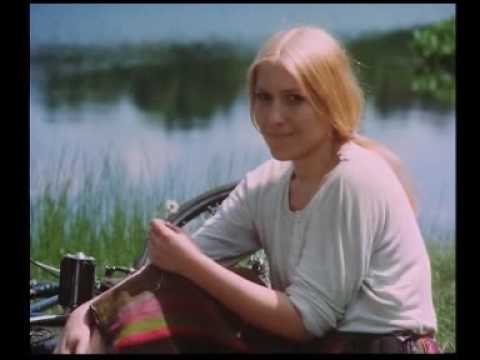
The aunt, Telimena (probably in her 30s) may not always be so flatteringly portrayed later in the poem as she is at first, but what stuck with me most strongly was the first scene in which she appears:
So she asked about new books, and how he rated
Their authors (she spoke in French), while his replies
Led to more questions touching on his views.
And then—well, then she turned to music, dance,
Art, sculpture too. Her knowledge was immense,
Whether of canvas, score, or printed word.
Her learning left Tadeusz stunned, and scared
That he’d end up exposed to ridicule;
He stammered like a pupil quizzed in school.
This is a work that has a place for an intelligent woman, in a way that by no means all 19th century literature does, even if, it’s later indicated, she might be a bit too much of a pretentious hipster and too modern.
I’m pretty sure no-one had ever told me before that Pan Tadeusz is humorous. It gives it whole layers of enjoyment I never expected. (What did I used to think it was? Probably something about a 60-year old man reminiscing about his life and travels.) This is the Romantic movement partly being itself, and partly laughing at itself. Perfect for my sensibilities. It’s epic poetry… but it also mentions things like swatting flies while preparing to cook; the epic form is sometimes mocked, sometimes used in earnest. It struck me that another classic Polish poet, Juliusz Słowacki, criticised it as 'piggish' for its low rural comedy and domesticity - this is the stuff for which I like it so much. Even calling it Pan Tadeusz after a character who isn't the centre of the action and who is neither hugely heroic nor anti-heroic, seems part of the semi-satire. Older characters and customs reflect Sarmatianism, essentially an earlier, institutionalised form of Romanticism particular to Poland-Lithuania, Hungary and some neighbouring countries. The foray happens basically because a young nobleman who’s been on the Grand Tour thinks ancient family feuds are really cool.
Pan Tadeusz was written in Polish, is seen as a Polish work, and several characters are described as ‘good Poles’ – but the action takes place in what is now Belarus, where Mickiewicz was born, and the narrative frequently hails Lithuania. This is the legacy of the Polish-Lithuanian Commonwealth, one of the greatest powers of early modern Europe (Russia’s incipient colonial expansion had not yet made it the looming great bear) but barely known to many Westerners who don’t read East European history or play historical strategy games. As Johnston relates in his introduction, its apparently progressive system of elected monarchs also led to its weakening and demise, and to the partition of Poland among neighbouring powers in the late 18th century. Pan Tadeusz is the story of Polish-speaking gentry, szlachta (some Polish by ancestry, some Lithuanian, many mixed) and their rivalry with local aristocrats – the former had some differences of status from English gentry – but it doesn’t relate what local Lithuanian-speaking peasantry (serfs) thought of all this. This mélange of nationalities spilling across borders doesn’t, again, have direct equivalents in the contemporary English speaking West, and it reflects the multicultural pre-Second World War Central and Eastern Europe, before many of those identifying as Poles, Germans etc were resettled within the current borders of those countries, and of course before the Jewish communities were destroyed. (Through the whole poem, there are 3 or 4 lines that read as antisemitic or negative stereotypes of Jews – in 2018, the notes’ description of the blood libel as a canard doesn’t look a strong enough word ... even 3 years ago these things seemed more of the past. But there are a lot more lines representing Jewishness positively, via the innkeeper Jankiel, who is shown as very popular and an all-round top bloke.)
Pan Tadeusz is a text haunted by a future its author could never have known. Look up character surnames online and there are famous people born long after Mickiewicz died, who must spring to mind for many modern Polish readers. Look up place names online and it’s massacre after hideous massacre, the repetition reinforcing horrific statistic that over 95% of Jews in Lithuania were killed, by Nazis and locals from 1941-44, to the point that I started wondering how on earth anyone descended from Lithuanian Jews made it – although of course, like Bob Dylan’s grandparents, most of their forebears would have left quite some time earlier.
This edition has good notes which stick to the directly relevant 18th-19th century history – Mickiewicz’s original notes, which he wrote because he was writing about an area and mostly-vanished customs unfamiliar even to many Polish readers of the 1830s, and more by Bill Johnston. (Johnston’s introduction is also great for historical context. One small point I’d like to respond to: he says that the only gratuitous glorification of anything Polish is of coffee; I think I noticed one more: frogs.)
It was because I was reading on desktop that I looked so much on Wikpedia and elsewhere, and took so long to read the book. (It is quite a short text, with a Kindle count of 3600.) I don’t mind the layout issues of PDF ARCs converted to Kindle when a book is in prose, but for poetry, I want to read the words on the right lines. Reading on desktop did mean, though, that I got a fuller cultural picture of references in the book when I looked things up online – which is what I wanted for such a momentous read in personal terms. It was also interesting to follow tangents such as photos of ethnographic folk museums, the disagreements between the pre-war Litvak and Galician Jewish communities and the Gefilte fish line, and the mostly-complimentary Chicago Polish stereotype, Grabowski and associated, less flattering, comedy sketches. If you don’t feel compelled to read all the history you will be fine with the endnotes in the book – only snag is they are not linked in the text, at least in the e-ARC.
If you are going to read Pan Tadeusz in English, you should read this translation, which deserves to become the definitive modern one. If you’ve read it previously in another version and didn’t like it much, but the work is important to you, re-read it in this one. I hope Johnston’s version ends up as a Penguin or Oxford Classic, because it bloody well should - though one of them bloody well should have done Pan Tadeusz a long time ago. (Random House’s buying up of Knausgård from Archipelago leads me to hope that this edition might get the distribution it deserves by a similar route.)
Sometimes it seems a shame that the best-known translation prizes, like the Booker International and the BTBA don’t accept re-translations. It's obvious why they don't, as a rule: a Pevear & Volokhonsky rendition of a popular Russian novel that’s already been translated fifteen times doesn’t need the publicity, but lesser-known classics may – and when a translation of one of those is superlatively good, as this one is, it deserves acclaim and attention.
This is a bit like when I finished War and Peace, except that then, there had been longer to get used to it: I still can’t quite believe I’ve actually read Pan Tadeusz. And I really can't believe that it was this enjoyable.
(read and reviewed September 2018; the review and comment thread on Goodreads.)
12 August 2018
The Long Take by Robin Robertson
Longlisted for the 2018 Booker Prize. A first for a verse novel?
I bloody love long narrative poems, and I wish there were a lot more modern novels in this form. Not sure why I find poetry faster to read - know it isn't the case for everyone. For me, it goes straight into the veins, and it omits the extraneous, leaving only the most vital impressions. Or maybe it's the presentation: shorter lines and more white space on the page make it visually easier to take in.
It was the form that made me keen to read this, but the US setting held little interest. If a prose novel about a demobbed Canadian serviceman adrift in post-WWII America had been longlisted for the Booker, I'd have been in no hurry to get round to it. And if The Long Take had been set anywhere other than North America, I could have seen myself giving it five stars.
I haven't read anything about Robin Robertson yet; it would be interesting to learn why a Scottish poet chose to set a long work there. I have a hunch that the protagonist, Walker, was one of those characters who appears to a writer from the subconscious: a British writer's use of Dad's Army names Walker and Pike for characters who bear little resemblance (other than Pike's youth) to their sitcom namesakes feels like the product of a dream.
The Scottishness of Nova Scotia, where Walker grew up, was a revelation, full of shielings and strathspeys and slaters. (The last of course being a better word than the standard English, reflecting the creatures' hard, flat dark-panelled appearance; 'woodlouse' has always sounded like it ought to mean another, leggier, creepy-crawly.) The place felt Scottish or British even without dialect words: at first in the nostalgic passages about nature, I thought Robertson was writing about Scotland, perhaps from a different viewpoint, maybe his own, and perhaps we would hear later in these sections about the writing process. (There turns out to be no such meta content.) He is at his most vividly poetic and metaphorical when writing about animals and nature - these are largely asides in this book, such as the spider that winches itself from the lampshade in Walker's apartment: were I to read more of his work, it would be nature poetry I'd look for first.
Thank you to this thread for a couple of insights. Firstly, putting me on the alert for elements of contemporary relevance; what jumped out at me, as if it had been highlighted, was the homelessness problem in San Francisco, Portland and Seattle, and characters' criticism of the government and media being more concerned with Russians it said Russians rather than Soviets) and McCarthyism than with the housing shortage. A modern feature of the narrative, when set against 1940s attitudes and writing, is that characters are never explicitly described by their race: there were once or twice names that might be Latin, or Native American, and characters who were explicitly stated to be black only once it came up in conversation, in both instances due to racists. (This approach seeks to transmit a sense of comradeship between men in the story as veterans and/or as homeless, regardless of colour, and to imply Walker's progressive outlook, in contrast with some of his contemporaries.) Secondly, a point which is a spoiler if you enjoy working out conundra while you read - but as I read a good chunk of The Long Take whilst I had a headache so bad it hurt even to put my head on a pillow, and could not have read anything very complex, it was simply useful:that Pike is probably more than one person. I would add that I think he only becomes so in the final chapter, 1953. As Walker's mental state deteriorates, Pike becomes a generalised identity he maps on to various antagonists.
The story sometimes felt nebulous, but the final chapter (about 1/3 of the book) pulled it together - and retrospectively it became increasingly obvious that this randomness and half-rootedness, interspersed with episodes of purposefulness, had always reflected Walker's state of mind, as trauma seeped in, even when intrusive memories of horrific army experiences were not at the forefront of his memories. I hadn't bonded with the book until that final third; what led me to was seeing the trajectory of how Walker worked with a group of disadvantaged people with whom he felt an affinity, only to later find his own situation deteriorating so that he gets closer and closer to becoming one of them; to being on the other side of the desk, object not subject. A revelation during that chapter also explains certain points earlier in the story.Though are we meant to be sure that Walker did those things - or to wonder if he imagined them in his traumatised state?
But The Long Take is not all psychological drama. It's immersed in the culture of its time. There is jazz. And it is a paean to US film noir of the late 1940s and 1950s, set alongside the messy real lives of some of the men who watched it in movie theaters, and witnessed it being filmed in the streets where they went about their daily lives. It is suffused with references to favourite scenes (the 'long take' is from Joseph H. Lewis' Gun Crazy aka Deadly is the Female), and characters are described as looking like actors of the period. (And at least one, from a 1958 film seems to denote a lapse of time once years stop being mentioned explicitly.) If you like these films this book will probably be rather amazing. I've hardly seen any of the films referenced, yet something is still added in the general understanding, as they conjure visuals for Walker's story in trenchcoat-clad black and white, and in the symbiosis between man and city, Walker disintegrating as 1950s LA becomes less human in scale, more corrupt and more corporate. (I could imagine just how much I'd love an equivalent prose-poem shot through with cinematic movements I know well, such as French New Wave, or British films of the 1960s and 70s. Or, for that matter, classic Ealing films being made on the other side of the Atlantic contemporaneously with these noirs.)
It is an impressive work in pulling together, as poetry and narrative, elements of this era that the public rarely regards together. The modern idealisation of the Greatest Generation, bulldog spirit and so forth disregards the extent to which the war was traumatic for many, and that not everyone could keep calm and carry on, no matter how much they wanted to. Noir and jazz, still seen as epitomes of cool were created against this backdrop. The death of Charlie Parker, born the same year as the protagonist, is starkly announced to make his and the reader's blood run cold. This is echoed (two years) later with the bombshell news "Bogart is dead", like another big bump downwards in Walker's trajectory: an end of an era and an icon of always keeping it together under pressure. In a very subtle way, using history, cinema and music, Robertson appears to be looking at the demands on men to keep up a façade, and how things may be when they can't. (The white men in the book are dealing with war trauma, the black men with that and racial violence.) But interpretation is optional here: this is a story so fully about itself and its setting (absolutely no sledgehammers here) that it also doesn't have to be anything else.
(read & reviewed August 2018; the review on Goodreads.)
I bloody love long narrative poems, and I wish there were a lot more modern novels in this form. Not sure why I find poetry faster to read - know it isn't the case for everyone. For me, it goes straight into the veins, and it omits the extraneous, leaving only the most vital impressions. Or maybe it's the presentation: shorter lines and more white space on the page make it visually easier to take in.
It was the form that made me keen to read this, but the US setting held little interest. If a prose novel about a demobbed Canadian serviceman adrift in post-WWII America had been longlisted for the Booker, I'd have been in no hurry to get round to it. And if The Long Take had been set anywhere other than North America, I could have seen myself giving it five stars.
I haven't read anything about Robin Robertson yet; it would be interesting to learn why a Scottish poet chose to set a long work there. I have a hunch that the protagonist, Walker, was one of those characters who appears to a writer from the subconscious: a British writer's use of Dad's Army names Walker and Pike for characters who bear little resemblance (other than Pike's youth) to their sitcom namesakes feels like the product of a dream.
The Scottishness of Nova Scotia, where Walker grew up, was a revelation, full of shielings and strathspeys and slaters. (The last of course being a better word than the standard English, reflecting the creatures' hard, flat dark-panelled appearance; 'woodlouse' has always sounded like it ought to mean another, leggier, creepy-crawly.) The place felt Scottish or British even without dialect words: at first in the nostalgic passages about nature, I thought Robertson was writing about Scotland, perhaps from a different viewpoint, maybe his own, and perhaps we would hear later in these sections about the writing process. (There turns out to be no such meta content.) He is at his most vividly poetic and metaphorical when writing about animals and nature - these are largely asides in this book, such as the spider that winches itself from the lampshade in Walker's apartment: were I to read more of his work, it would be nature poetry I'd look for first.
Thank you to this thread for a couple of insights. Firstly, putting me on the alert for elements of contemporary relevance; what jumped out at me, as if it had been highlighted, was the homelessness problem in San Francisco, Portland and Seattle, and characters' criticism of the government and media being more concerned with Russians it said Russians rather than Soviets) and McCarthyism than with the housing shortage. A modern feature of the narrative, when set against 1940s attitudes and writing, is that characters are never explicitly described by their race: there were once or twice names that might be Latin, or Native American, and characters who were explicitly stated to be black only once it came up in conversation, in both instances due to racists. (This approach seeks to transmit a sense of comradeship between men in the story as veterans and/or as homeless, regardless of colour, and to imply Walker's progressive outlook, in contrast with some of his contemporaries.) Secondly, a point which is a spoiler if you enjoy working out conundra while you read - but as I read a good chunk of The Long Take whilst I had a headache so bad it hurt even to put my head on a pillow, and could not have read anything very complex, it was simply useful:
The story sometimes felt nebulous, but the final chapter (about 1/3 of the book) pulled it together - and retrospectively it became increasingly obvious that this randomness and half-rootedness, interspersed with episodes of purposefulness, had always reflected Walker's state of mind, as trauma seeped in, even when intrusive memories of horrific army experiences were not at the forefront of his memories. I hadn't bonded with the book until that final third; what led me to was seeing the trajectory of how Walker worked with a group of disadvantaged people with whom he felt an affinity, only to later find his own situation deteriorating so that he gets closer and closer to becoming one of them; to being on the other side of the desk, object not subject. A revelation during that chapter also explains certain points earlier in the story.
But The Long Take is not all psychological drama. It's immersed in the culture of its time. There is jazz. And it is a paean to US film noir of the late 1940s and 1950s, set alongside the messy real lives of some of the men who watched it in movie theaters, and witnessed it being filmed in the streets where they went about their daily lives. It is suffused with references to favourite scenes (the 'long take' is from Joseph H. Lewis' Gun Crazy aka Deadly is the Female), and characters are described as looking like actors of the period. (And at least one, from a 1958 film seems to denote a lapse of time once years stop being mentioned explicitly.) If you like these films this book will probably be rather amazing. I've hardly seen any of the films referenced, yet something is still added in the general understanding, as they conjure visuals for Walker's story in trenchcoat-clad black and white, and in the symbiosis between man and city, Walker disintegrating as 1950s LA becomes less human in scale, more corrupt and more corporate. (I could imagine just how much I'd love an equivalent prose-poem shot through with cinematic movements I know well, such as French New Wave, or British films of the 1960s and 70s. Or, for that matter, classic Ealing films being made on the other side of the Atlantic contemporaneously with these noirs.)
It is an impressive work in pulling together, as poetry and narrative, elements of this era that the public rarely regards together. The modern idealisation of the Greatest Generation, bulldog spirit and so forth disregards the extent to which the war was traumatic for many, and that not everyone could keep calm and carry on, no matter how much they wanted to. Noir and jazz, still seen as epitomes of cool were created against this backdrop. The death of Charlie Parker, born the same year as the protagonist, is starkly announced to make his and the reader's blood run cold. This is echoed (two years) later with the bombshell news "Bogart is dead", like another big bump downwards in Walker's trajectory: an end of an era and an icon of always keeping it together under pressure. In a very subtle way, using history, cinema and music, Robertson appears to be looking at the demands on men to keep up a façade, and how things may be when they can't. (The white men in the book are dealing with war trauma, the black men with that and racial violence.) But interpretation is optional here: this is a story so fully about itself and its setting (absolutely no sledgehammers here) that it also doesn't have to be anything else.
(read & reviewed August 2018; the review on Goodreads.)
Subscribe to:
Posts (Atom)