⭐⭐⭐
I don't think I'd previously read Alison Weir, bestselling popular historian of the Tudors, and if I had, it was over 25 years ago. When I was younger, I was obsessed with 16th century England and also studied it formally. If I was going to read any more about the period these days, it would usually be something specialist. After seeing a positive post about this Christmas book from Roman Clodia, a longtime Amazon reviewer and Goodreads friend who is, I think, a literature academic, I thought it worth a look. Via Netgalley I received a free Advance Review Copy ebook from the publisher, Jonathan Cape / Vintage, an imprint of Penguin Random House.
----
I'd have loved this book as a Christmas present when I was growing up. (Even if there is more about Henry VIII's court and less about Elizabeth than I'd really have liked.) The combination of Tudors *and* lots of British Christmas-related historical customs and factoids would have seemed perfect. It's stuff I've gleaned over the years from many separate books, TV documentaries and articles, all in one place. At its best it's the sort of popular history that would work as text in an Usborne (or these days Dorling Kindersley) book.
It is mostly very cosy (if you are the sort of person who finds history cosy in the first place): plenty on Yule-log fires, evergreen decorations, communal revelry and the evolution of the Christmas pudding.
However, in some chapters, the info on royal customs and court etiquette may be excessively detailed for those without a particular interest. Unsurpisingly, given Alison Weir's specialism in pop-history of Henry VIII and his wives, there is a lot in the book about royalty, and rather less for those interested in the middlin' sort and the poor. For other readers, the quantities of meat and hunting in the food chapters may be somewhat unpleasant, and may find that their sentiments chime with one unnamed contemporary's phrase that "the beasts, fowl, and fish come to a general execution". (But, as I reminded myself it's probably still fewer creatures than go on the collective national table now, with twenty times as many people eating, even if 21st century Christmases do leave the likes of larks and wrens alone and usually base the main meal around one turkey per gathering.)
There is also considerably more than you might expect about the Jacobean. James I was enthusiastic about celebrating Christmas, an attitude which was welcome in England, unlike in Scotland, where celebrations were increasingly prohibited from the 1560s onwards and remained unpopular with the Kirk no matter what the King said. (See, for example, Hutton's Stations of the Sun for further details, because A Tudor Christmas does not have much on Scotland.) As Weir and Clarke say of one Jacobean broadside, "It may post-date the Tudor era, but little had changed between 1603 and 1625, and it certainly captures the essence of a Tudor Christmas."
The quantity of poems included in the book was a delightful surprise, and although my copy is only a Netgalley e-ARC, and this is a book which suits hardcopy / coffee-table browsing, I suspected when I read it in mid-December that I'd be looking back at the poems over the Christmas period. Most are by Robert Herrick (1591-1674) - I had no idea he wrote so many Christmas poems. There are a number of Shakespeare excerpts, although not the one which has long been my favourite Christmas verse of this era - even if the double entendre does sometimes get a little wearing - When icicles hang by the wall. (There are quite a few online recordings of it sung to Vaughn Williams' tune, but they are all frustratingly and absurdly operatic in style, very much at odds with its folky communal subject.) My dream book on Tudor Christmas would be a big fat social-history elaboration of what Christmas was like for the kind of workers described in that verse, probably by Ruth Goodman and Ronald Hutton - however I'm not entirely sure there's a whole book's worth of hard evidence to base it on.
I can't help thinking of this as a book suited to bright kids and teens, or to casual browsing for adults, as the scholarship could be a bit better (research can be top-notch regardless of writing style) and I see it as the sort of history which you start out with, and then gradually learn later that not everything was exactly as it says. I would say for bright pre-teens with advanced reading ages, as well as teenagers, but there are one or two passing references that conservative parents might mind - though not my own friends who have kids, or our parents 30-odd years ago who let us free range among the bookcases at home. It's the kind of book I'd have enjoyed looking through from about age 8 onwards - it has too few pictures to have been really interesting before that - and understanding more of it year on year as I re-opened it each Christmas.
There's a bit of repetition and sometimes the themed chapters means the book goes back and forth in history in ways that feel a tad disjointed - but I can't think of a better structure either, and you wouldn't notice if you didn't read the book quickly cover-to-cover. There are a handful of questionable assumptions about the origins of customs. There are, of course, no footnotes. And the bibliography could be better: some decent stuff, but also some a bit old, and a few too many other popular histories which themselves don't use footnotes (some fairly recent such as Ian Mortimer's), meaning that speculation may end up replicated as if it were fact.
There are times when a little elaboration would have added interest rather than complication:
"According to legend, when enemies met under mistletoe they had to lay down their arms and observe a truce until the next day" (Which legend, found where?)
"The Church was well aware of the pagan connection with evergreens, and in some countries such decorations were banned, but not in England" (Which countries?)
The apparent contradictions between midwinter as a spiritually dangerous time when ghosts walked, and a specially time specially protected by Jesus' birth could have been broken down better. (Although there is undeniable appeal to phrasings like this: "the veil between this world and the next was at its thinnest at the time of the winter solstice, the longest night of the year, and that spirits could walk the earth" showing part of the allure of the early modern period in being different enough from our own time to be fascinatingly different and alien, yet also with recognisable similarities in some customs and behaviour.)
In a book which has so much to say about minutiae of court etiquette, a few words could have been spared to explain that some surviving (later) Norse ideas include interpolations from Christianity, as this unsourced one presumably does: "Norse tradition had it that at Yule, the god Woden, the lord of magic and healing, came down to earth on his eight-legged horse called Sleipnir."
Or, closer to the Tudor period, that the enforcement, and effectiveness of enforcement, of prohibitions on various public sports and games was often limited.
The Green Man is a nebulous figure, with many interpretations based on a sort of mystical free-association; I'm not sure if this sort of thing has a place in a history book with no further info:
"the ancient legendary fertility figure of the Green Man, or ‘Ing’, who represents rebirth. The symbol of Ing is the boar, and in ancient times, a boar’s head was traditionally served on a bed of greenery on Midwinter Day."
However, there are also occasions when the authors debunk popular misconceptions, for example, Elizabeth I's order that everyone should eat goose at Christmas to celebrate the victory over the Spanish Armada. This was repeated, for example, by a Harrods manager speaking in an otherwise pretty good BBC documentary about Charles Dickens and Christmas that was repeated this year. "as the Armada was won in August, it is unlikely that Elizabeth ever gave such an order; she would have known that her poorer subjects could not have obeyed it, as goose was an expensive luxury."
There is plenty of fun material here as well, among the less well-known stuff, and it can easily be made multimedia, for want of a better word. Anyone who read A Tudor Christmas this year and also watched the BBC televised church service from Oldham on Christmas Day will have seen a revival of the child bishop tradition, albeit conducted in a more sensible for the 21st century, and more egalitarian, as it was a girl not a boy. There is a video of the est.1344 procession by the Worshipful Company of Butchers - not using a real boar's head in 2014, a stylised model one. If desired you can listen to music, such as William Byrd's Out of the Orient Crystal Skies, described by the authors as "one of the finest musical pieces of the English Renaissance". The writers anticipated endeavours to use the book interactively - they advise companionably at the beginning that recipes "may not appeal to a modern palate, some ingredients are not easy to come by, and quantities may be gargantuan!". Before considering trying them, it might help to look at bloggers' attempts at these historical and literary dishes, for example Perdita's warden [pear] pie from A Winter's Tale: one; two. (Neither is quite GBBO presentation standard but very interesting nonetheless.) Others try out old games, such as shove groat. And in the 21st century, the popularity of hoodies must make hoodman-blind easier than it had been at any time since the medieval: "people turned their hoods back to front, or pulled them forward over their eyes, then chased the other players until they caught one. That person became the next hoodman."
It was interesting from a personal perspective to find myself with more understanding and sympathy for Puritans than I used to have - especially compared with pre-university days when I read only popular histories like this, and Puritans were baddies in boring clothes. I've still regularly used 'puritan' as a perjorative in matters of prudery and language, but in material terms, for environmental and social equality reasons I am totally on board with disapproval of overindulgence, inessentials, the replacement of items that still work or are fixable, and so forth. On a felt level, I realised I found Puritans very relatable - their motivations are just different and their zeal for criticism and change encompassed some things which I consider good.
Such as, for example, the Twelve Days of Christmas, around which the book's chapters are rather delightfully structured. This gives space for discussion of customs which are passed over in other popular histories, including those for Holy Innocents on the 28th and the feast of Thomas a Becket on the 29th. Since childhood it has bothered me that the twelve days are no longer observed: I could never understand why a Catholic school which recognised Epiphany nevertheless started its winter/spring term before 7th January. (Whilst I had to concede that recognising the solstice would never be their thing.) And these days, modern green or left wing forms of material 'puritanism' take as evils overconsumption, overproduction and overwork, so a bit *more* holiday, not less, is good (provided it's not used for long-haul holidays and shopping till you drop) - in contrast to the early modern religious puritan who felt that people needed to work more. It would no doubt be a popular idea with quite a lot of people, like the participants at the end of another BBC programme shown in the last few days, the Victorian Bakers Christmas special. Unfortunately it's a luxury available largely to those who can arrange their annual leave thus and who also have the stamina to manage with less rest at other times of year, or to the better-off self employed in occupations that give scope for it. (It was nice to notice a couple of days after reading this book that George Monbiot had said on his Twitter page that he was staying offline until 7th January.) Although the length of observance in some parts of the country indicates that extended Christmas celebration co-existed alongside work. Not only did a few areas of England keep decorations up until Candlemas, "Some kept open house from Martinmas (11 November) to Candlemas (2 February), welcoming friends and visitors and mitigating the privations of the winter months for the poor who came to receive their charity."
This is an appealing book to browse and to have around at home, and is to be taken in very much the same way as many TV documentaries - not 100% correct, but often enough to be worthwhile, and an interesting and friendly presence. (Some Amazon reviews mention that the physical book is smaller than they expected, however.) If you want a more detailed and referenced take on the same subjects, have a look at Hutton's Stations of the Sun or The Rise and Fall of Merry England: The Ritual Year, 1400-1700.
(Read & reviewed December 2018. The review on Goodreads.)
Showing posts with label ARCs. Show all posts
Showing posts with label ARCs. Show all posts
26 December 2018

10 September 2018
Pan Tadeusz: The Last Foray in Lithuania by Adam Mickiewicz, tr. Bill Johnston
The new translation published in 2018 by Archipelago Books. I received a free Advance Review Copy ebook via Edelweiss.
Pan Tadeusz is the Polish classic, the ‘national epic’. In English, there isn’t a sole work with comparable stature and ubiquity.
Given my heritage, the way I'd felt about not having read Pan Tadeusz was much as if I hadn't read - or even really known the stories of - Pride and Prejudice, or Jane Eyre, or Oliver Twist as soon as I could.
But I’m also particular about translations: I didn’t want to read Tadeusz in an old translation with poor style. It was easy not even to try, given the disgraceful lack of Polish classics in UK bookshops and from major British publishers. Pre-internet, I didn’t even know of English translations, and I’ve certainly never seen one to browse in a shop or library, whereas I stumbled on the Oxford edition of the Finnish national epic The Kalevala in a bookshop round about 2002. The sing-song style of Kenneth Mackenzie’s 1964 translation - Amazon preview here, if you scroll past the introduction – was one I knew I could not enjoy, nevermind love, or recommend without apology. Long sequences of obvious line-end rhymes don’t sound good in contemporary English - worse than in some other languages. Mickiewicz’s hero and near-contemporary Byron may have used them in English, but a) twentieth-century translators aren’t Byron and b) I don’t really like the sound of them in Byron anyway.
The lack of a great new translation of Pan Tadeusz in the late 00s - 2010s had puzzled me, given the current enthusiasm for translated books in the English-speaking literary world, and the visibility of Poles in Britain (by the biggest foreign-born minority, and for some years before that, the second). It had been so long that I’d become resigned to never reading it my whole life, and just watching the Andrzej Wajda film instead. (I watched a few of his in the spring but - now, it seems, luckily - hadn’t got round to his Pan Tadeusz.)
So I don’t think I’ve ever been as delighted to see a book appear in my Goodreads feed as I was to sight this, Bill Johnston’s new translation of Pan Tadeusz, just over a week ago. Bill Johnston, who translated my favourite contemporary Polish book, Dukla by Andrzej Stasiuk, a thing of intoxicating atmosphere and exquisite descriptions. Thank you very much to Goodreads friend Lee Klein for posting about the advance review copy he’d received from Archipelago, and thereby alerting me to this translation's existence. I went straight over to Edelweiss, which I hadn’t been on for about 18 months, and was able to get an e-ARC there. Reading it has been accompanied by strange synergies: learning of a direct ancestor named Tadeusz whose lifetime overlapped the fictional one, and this morning finding the Windows Spotlight random lockscreen picture was of another, entirely different, ancestral area.
Once or twice, as I started the book, I felt foolish for not having read an earlier translation cover to cover, that I wouldn’t be writing a full-scale comparison in a review. But a quick look back at the beginning of the Mackenzie, and the Project-Gutenberg-age Noyes prose translation, made me glad - as first impressions have a stronger effect on me than they ought - that I was reading it for the first time in a version which I could love in the way that I love a few great English classics.
This is a seriously impressive feat of translation. (Johnston’s webpage indicates he’s been working on it since 2013.) I think I’ve only read two other volumes of translated poetry I found as good in themselves, Edna St Vincent Millay’s version of Baudelaire (in a class apart, and a reworking as much as a translation) and the [book:New Collected Poems|305941] of Tomas Transtromer, translated by Robin Fulton. I also loved Keith Bosley’s translation of the Kalevala – which I now hanker to re-read – but much of that was for the story and atmosphere, and I more often wondered how lines would have sounded in the original, than marvelled at the construction in English.
Mickiewicz wrote Pan Tadeusz in a characteristic Polish meter, thirteen-syllable alexandrines. Johnston has transposed it into the classic English iambic pentameter, and made wonderful use of enjambment, half-rhymes and similar devices that feel like real poetry which has stood the test of time and sound right to the contemporary reader. (The meter also augmented the quality of the multiple-wedding ending, by association with Shakespearean comedy.) The rhyming couplets do not weigh down the ends of lines as they would from a lesser pen. Johnston states in his introduction that this is also a line-by-line translation. As someone who has never been able to write so much as a decent limerick, I find that phenomenal. There is the occasional line or word that doesn’t quite work on more than a scansion level, but in such a long poem, that is only to be expected, and the great stuff by far outweighs the misfires.
I didn’t realise how little I knew (or maybe how much I’d forgotten) about Pan Tadeusz before I read it. Tadeusz himself is only nineteen. (He first appears in a wonderful scene of returning home after finishing university, one which in some respects could only have occurred so far in the past, and in a large country - he didn’t visit during his studies, nor hear much news from relatives - but which is also beautifully familiar in its evocation of how a place once known has changed, and seeing one’s old room repurposed.) He is present in many scenes, but is by no means at the centre of all the action - I can see why the poem has an alternative subtitle. It is contemporaneous with parts of War and Peace, and is another of the 19th century great works springing from the Napoleonic Wars – and of course the ominous Great Comet of 1811 is sighted:
Then hauling them north, toward the polar star.
All Lithuania, filled with dread untold,
Nightly would watch this spectacle unfold—
An evil sign, with other auguries:
Birds of ill omen gave portentous cries
And gathered in empty fields, bills sharpened, massed
As though expecting corpses for a feast.
Dogs, rooting obstinately in the earth,
Howled and howled shrilly, as if smelling death—
Betokening war or famine; foresters
Saw the Plague Maiden in the graveyard firs,
Head higher yet than where the treetops stand,
A bloodied scarf aflap in her left hand.
The portent is left hanging in the air, because, as Johnston explains in the introduction, the text largely conveys a sense of hope, by ending before battle, when the Napoleonic army might still help Poland-Lithuania free itself from the Russians. Even snapshots of historical defeat can sound victorious to the uninitiated:
Next comes Jasiński, handsome, young, unbending,
Alongside Korsak, his bosom companion, standing
On Praga’s ramparts on heaped Russian dead,
Hacking down more as Praga blazes red.
Old Maciej, one of my favourite characters, is more circumspect about the forthcoming battle, but is finally shifted aside for this opinion. Emotionally, the story’s ending feels happy, even if you know it’s not actually going to be later. It’s evident why Pan Tadeusz endured, and sustained Poles through partition and the Soviet bloc years.
A lot of the poem is made up of two types of scene. There's pastoral description, which I love - I’m one of the few people who would have liked Anna Karenina better if there were more of it – but the sheer quantity of scenery probably has a lot to do with the low rating of the book by Poles, for whom it is a permanent, national fixture on their equivalent of the A-level syllabus. And secondly, large-scale, largely drunken fighting. Most of the conflict is related in a detailed and exciting way which worked brilliantly for me as a fan of action films. I liked hearing about the characters (lots of the ‘retired badass’ trope, a favourite of mine) and their histories and weapons, and there was just the right number of them – enough to give a feeling of scale, but not so many it was confusing or that they were reduced to the sort of brief mentions that, IMO, made parts of the Iliad little more than a casualty list. A ‘foray’ here is a kind of armed raid by neighbours that took place to enforce a court decision in an area without police, and there seems to have been something of a raiding culture – although not as lawless as the Scots/English Border Reivers – which had declined through the later 18th century and which by the time Pan Tadeusz is set, had pretty much disappeared under Russian rule.
For those who love to absorb social history through fiction and poetry, especially this kind of rural setting found in Tolstoy, and as Johnston points out, Thomas Hardy (now I want to read more Hardy!), Pan Tadeusz is a feast. And boy are there feasts in this book...
Some readers may wish to be forewarned that there are hunting scenes; these occur in much the same way you’d find in Tolstoy, couched in descriptions of nature and landscape. The age of one of the female love interests may bother some English-speaking readers, although from the perspective of historical understanding, I found the way she was presented interesting. When Zosia first appeared, I read her as 16, 17 or 18 (and with her peasanty clothes and habit of using windows as doors, I imagined her looking like a slightly younger version of Malina in Wajda’s Brzezina). Throughout the story - if it hadn’t been for the one scene in which Zosia’s aunt mentions that she is 13 and now of age - I would have assumed that she was in her mid to late teens. She simply seems to be regarded by society in a way that, in an English novel of the same period, reflected a girl a few years older. (I have seen a few genealogical records of 15 year olds married in late 18th-19th century Poland, and this was a region in which the West European Marriage Pattern did not apply.)
The aunt, Telimena (probably in her 30s) may not always be so flatteringly portrayed later in the poem as she is at first, but what stuck with me most strongly was the first scene in which she appears:
So she asked about new books, and how he rated
Their authors (she spoke in French), while his replies
Led to more questions touching on his views.
And then—well, then she turned to music, dance,
Art, sculpture too. Her knowledge was immense,
Whether of canvas, score, or printed word.
Her learning left Tadeusz stunned, and scared
That he’d end up exposed to ridicule;
He stammered like a pupil quizzed in school.
This is a work that has a place for an intelligent woman, in a way that by no means all 19th century literature does, even if, it’s later indicated, she might be a bit too much of a pretentious hipster and too modern.She doesn’t meet a bad end, either, it’s a pragmatic one, even if she doesn’t remain on a pedestal.
I’m pretty sure no-one had ever told me before that Pan Tadeusz is humorous. It gives it whole layers of enjoyment I never expected. (What did I used to think it was? Probably something about a 60-year old man reminiscing about his life and travels.) This is the Romantic movement partly being itself, and partly laughing at itself. Perfect for my sensibilities. It’s epic poetry… but it also mentions things like swatting flies while preparing to cook; the epic form is sometimes mocked, sometimes used in earnest. It struck me that another classic Polish poet, Juliusz Słowacki, criticised it as 'piggish' for its low rural comedy and domesticity - this is the stuff for which I like it so much. Even calling it Pan Tadeusz after a character who isn't the centre of the action and who is neither hugely heroic nor anti-heroic, seems part of the semi-satire. Older characters and customs reflect Sarmatianism, essentially an earlier, institutionalised form of Romanticism particular to Poland-Lithuania, Hungary and some neighbouring countries. The foray happens basically because a young nobleman who’s been on the Grand Tour thinks ancient family feuds are really cool.
Pan Tadeusz was written in Polish, is seen as a Polish work, and several characters are described as ‘good Poles’ – but the action takes place in what is now Belarus, where Mickiewicz was born, and the narrative frequently hails Lithuania. This is the legacy of the Polish-Lithuanian Commonwealth, one of the greatest powers of early modern Europe (Russia’s incipient colonial expansion had not yet made it the looming great bear) but barely known to many Westerners who don’t read East European history or play historical strategy games. As Johnston relates in his introduction, its apparently progressive system of elected monarchs also led to its weakening and demise, and to the partition of Poland among neighbouring powers in the late 18th century. Pan Tadeusz is the story of Polish-speaking gentry, szlachta (some Polish by ancestry, some Lithuanian, many mixed) and their rivalry with local aristocrats – the former had some differences of status from English gentry – but it doesn’t relate what local Lithuanian-speaking peasantry (serfs) thought of all this. This mélange of nationalities spilling across borders doesn’t, again, have direct equivalents in the contemporary English speaking West, and it reflects the multicultural pre-Second World War Central and Eastern Europe, before many of those identifying as Poles, Germans etc were resettled within the current borders of those countries, and of course before the Jewish communities were destroyed. (Through the whole poem, there are 3 or 4 lines that read as antisemitic or negative stereotypes of Jews – in 2018, the notes’ description of the blood libel as a canard doesn’t look a strong enough word ... even 3 years ago these things seemed more of the past. But there are a lot more lines representing Jewishness positively, via the innkeeper Jankiel, who is shown as very popular and an all-round top bloke.)
Pan Tadeusz is a text haunted by a future its author could never have known. Look up character surnames online and there are famous people born long after Mickiewicz died, who must spring to mind for many modern Polish readers. Look up place names online and it’s massacre after hideous massacre, the repetition reinforcing horrific statistic that over 95% of Jews in Lithuania were killed, by Nazis and locals from 1941-44, to the point that I started wondering how on earth anyone descended from Lithuanian Jews made it – although of course, like Bob Dylan’s grandparents, most of their forebears would have left quite some time earlier.
This edition has good notes which stick to the directly relevant 18th-19th century history – Mickiewicz’s original notes, which he wrote because he was writing about an area and mostly-vanished customs unfamiliar even to many Polish readers of the 1830s, and more by Bill Johnston. (Johnston’s introduction is also great for historical context. One small point I’d like to respond to: he says that the only gratuitous glorification of anything Polish is of coffee; I think I noticed one more: frogs.)
It was because I was reading on desktop that I looked so much on Wikpedia and elsewhere, and took so long to read the book. (It is quite a short text, with a Kindle count of 3600.) I don’t mind the layout issues of PDF ARCs converted to Kindle when a book is in prose, but for poetry, I want to read the words on the right lines. Reading on desktop did mean, though, that I got a fuller cultural picture of references in the book when I looked things up online – which is what I wanted for such a momentous read in personal terms. It was also interesting to follow tangents such as photos of ethnographic folk museums, the disagreements between the pre-war Litvak and Galician Jewish communities and the Gefilte fish line, and the mostly-complimentary Chicago Polish stereotype, Grabowski and associated, less flattering, comedy sketches. If you don’t feel compelled to read all the history you will be fine with the endnotes in the book – only snag is they are not linked in the text, at least in the e-ARC.
If you are going to read Pan Tadeusz in English, you should read this translation, which deserves to become the definitive modern one. If you’ve read it previously in another version and didn’t like it much, but the work is important to you, re-read it in this one. I hope Johnston’s version ends up as a Penguin or Oxford Classic, because it bloody well should - though one of them bloody well should have done Pan Tadeusz a long time ago. (Random House’s buying up of Knausgård from Archipelago leads me to hope that this edition might get the distribution it deserves by a similar route.)
Sometimes it seems a shame that the best-known translation prizes, like the Booker International and the BTBA don’t accept re-translations. It's obvious why they don't, as a rule: a Pevear & Volokhonsky rendition of a popular Russian novel that’s already been translated fifteen times doesn’t need the publicity, but lesser-known classics may – and when a translation of one of those is superlatively good, as this one is, it deserves acclaim and attention.
This is a bit like when I finished War and Peace, except that then, there had been longer to get used to it: I still can’t quite believe I’ve actually read Pan Tadeusz. And I really can't believe that it was this enjoyable.
(read and reviewed September 2018; the review and comment thread on Goodreads.)
Pan Tadeusz is the Polish classic, the ‘national epic’. In English, there isn’t a sole work with comparable stature and ubiquity.
Given my heritage, the way I'd felt about not having read Pan Tadeusz was much as if I hadn't read - or even really known the stories of - Pride and Prejudice, or Jane Eyre, or Oliver Twist as soon as I could.
But I’m also particular about translations: I didn’t want to read Tadeusz in an old translation with poor style. It was easy not even to try, given the disgraceful lack of Polish classics in UK bookshops and from major British publishers. Pre-internet, I didn’t even know of English translations, and I’ve certainly never seen one to browse in a shop or library, whereas I stumbled on the Oxford edition of the Finnish national epic The Kalevala in a bookshop round about 2002. The sing-song style of Kenneth Mackenzie’s 1964 translation - Amazon preview here, if you scroll past the introduction – was one I knew I could not enjoy, nevermind love, or recommend without apology. Long sequences of obvious line-end rhymes don’t sound good in contemporary English - worse than in some other languages. Mickiewicz’s hero and near-contemporary Byron may have used them in English, but a) twentieth-century translators aren’t Byron and b) I don’t really like the sound of them in Byron anyway.
The lack of a great new translation of Pan Tadeusz in the late 00s - 2010s had puzzled me, given the current enthusiasm for translated books in the English-speaking literary world, and the visibility of Poles in Britain (by the biggest foreign-born minority, and for some years before that, the second). It had been so long that I’d become resigned to never reading it my whole life, and just watching the Andrzej Wajda film instead. (I watched a few of his in the spring but - now, it seems, luckily - hadn’t got round to his Pan Tadeusz.)
So I don’t think I’ve ever been as delighted to see a book appear in my Goodreads feed as I was to sight this, Bill Johnston’s new translation of Pan Tadeusz, just over a week ago. Bill Johnston, who translated my favourite contemporary Polish book, Dukla by Andrzej Stasiuk, a thing of intoxicating atmosphere and exquisite descriptions. Thank you very much to Goodreads friend Lee Klein for posting about the advance review copy he’d received from Archipelago, and thereby alerting me to this translation's existence. I went straight over to Edelweiss, which I hadn’t been on for about 18 months, and was able to get an e-ARC there. Reading it has been accompanied by strange synergies: learning of a direct ancestor named Tadeusz whose lifetime overlapped the fictional one, and this morning finding the Windows Spotlight random lockscreen picture was of another, entirely different, ancestral area.
Once or twice, as I started the book, I felt foolish for not having read an earlier translation cover to cover, that I wouldn’t be writing a full-scale comparison in a review. But a quick look back at the beginning of the Mackenzie, and the Project-Gutenberg-age Noyes prose translation, made me glad - as first impressions have a stronger effect on me than they ought - that I was reading it for the first time in a version which I could love in the way that I love a few great English classics.
This is a seriously impressive feat of translation. (Johnston’s webpage indicates he’s been working on it since 2013.) I think I’ve only read two other volumes of translated poetry I found as good in themselves, Edna St Vincent Millay’s version of Baudelaire (in a class apart, and a reworking as much as a translation) and the [book:New Collected Poems|305941] of Tomas Transtromer, translated by Robin Fulton. I also loved Keith Bosley’s translation of the Kalevala – which I now hanker to re-read – but much of that was for the story and atmosphere, and I more often wondered how lines would have sounded in the original, than marvelled at the construction in English.
Mickiewicz wrote Pan Tadeusz in a characteristic Polish meter, thirteen-syllable alexandrines. Johnston has transposed it into the classic English iambic pentameter, and made wonderful use of enjambment, half-rhymes and similar devices that feel like real poetry which has stood the test of time and sound right to the contemporary reader. (The meter also augmented the quality of the multiple-wedding ending, by association with Shakespearean comedy.) The rhyming couplets do not weigh down the ends of lines as they would from a lesser pen. Johnston states in his introduction that this is also a line-by-line translation. As someone who has never been able to write so much as a decent limerick, I find that phenomenal. There is the occasional line or word that doesn’t quite work on more than a scansion level, but in such a long poem, that is only to be expected, and the great stuff by far outweighs the misfires.
I didn’t realise how little I knew (or maybe how much I’d forgotten) about Pan Tadeusz before I read it. Tadeusz himself is only nineteen. (He first appears in a wonderful scene of returning home after finishing university, one which in some respects could only have occurred so far in the past, and in a large country - he didn’t visit during his studies, nor hear much news from relatives - but which is also beautifully familiar in its evocation of how a place once known has changed, and seeing one’s old room repurposed.) He is present in many scenes, but is by no means at the centre of all the action - I can see why the poem has an alternative subtitle. It is contemporaneous with parts of War and Peace, and is another of the 19th century great works springing from the Napoleonic Wars – and of course the ominous Great Comet of 1811 is sighted:
Then hauling them north, toward the polar star.
All Lithuania, filled with dread untold,
Nightly would watch this spectacle unfold—
An evil sign, with other auguries:
Birds of ill omen gave portentous cries
And gathered in empty fields, bills sharpened, massed
As though expecting corpses for a feast.
Dogs, rooting obstinately in the earth,
Howled and howled shrilly, as if smelling death—
Betokening war or famine; foresters
Saw the Plague Maiden in the graveyard firs,
Head higher yet than where the treetops stand,
A bloodied scarf aflap in her left hand.
The portent is left hanging in the air, because, as Johnston explains in the introduction, the text largely conveys a sense of hope, by ending before battle, when the Napoleonic army might still help Poland-Lithuania free itself from the Russians. Even snapshots of historical defeat can sound victorious to the uninitiated:
Next comes Jasiński, handsome, young, unbending,
Alongside Korsak, his bosom companion, standing
On Praga’s ramparts on heaped Russian dead,
Hacking down more as Praga blazes red.
Old Maciej, one of my favourite characters, is more circumspect about the forthcoming battle, but is finally shifted aside for this opinion. Emotionally, the story’s ending feels happy, even if you know it’s not actually going to be later. It’s evident why Pan Tadeusz endured, and sustained Poles through partition and the Soviet bloc years.
A lot of the poem is made up of two types of scene. There's pastoral description, which I love - I’m one of the few people who would have liked Anna Karenina better if there were more of it – but the sheer quantity of scenery probably has a lot to do with the low rating of the book by Poles, for whom it is a permanent, national fixture on their equivalent of the A-level syllabus. And secondly, large-scale, largely drunken fighting. Most of the conflict is related in a detailed and exciting way which worked brilliantly for me as a fan of action films. I liked hearing about the characters (lots of the ‘retired badass’ trope, a favourite of mine) and their histories and weapons, and there was just the right number of them – enough to give a feeling of scale, but not so many it was confusing or that they were reduced to the sort of brief mentions that, IMO, made parts of the Iliad little more than a casualty list. A ‘foray’ here is a kind of armed raid by neighbours that took place to enforce a court decision in an area without police, and there seems to have been something of a raiding culture – although not as lawless as the Scots/English Border Reivers – which had declined through the later 18th century and which by the time Pan Tadeusz is set, had pretty much disappeared under Russian rule.
For those who love to absorb social history through fiction and poetry, especially this kind of rural setting found in Tolstoy, and as Johnston points out, Thomas Hardy (now I want to read more Hardy!), Pan Tadeusz is a feast. And boy are there feasts in this book...
Some readers may wish to be forewarned that there are hunting scenes; these occur in much the same way you’d find in Tolstoy, couched in descriptions of nature and landscape. The age of one of the female love interests may bother some English-speaking readers, although from the perspective of historical understanding, I found the way she was presented interesting. When Zosia first appeared, I read her as 16, 17 or 18 (and with her peasanty clothes and habit of using windows as doors, I imagined her looking like a slightly younger version of Malina in Wajda’s Brzezina). Throughout the story - if it hadn’t been for the one scene in which Zosia’s aunt mentions that she is 13 and now of age - I would have assumed that she was in her mid to late teens. She simply seems to be regarded by society in a way that, in an English novel of the same period, reflected a girl a few years older. (I have seen a few genealogical records of 15 year olds married in late 18th-19th century Poland, and this was a region in which the West European Marriage Pattern did not apply.)
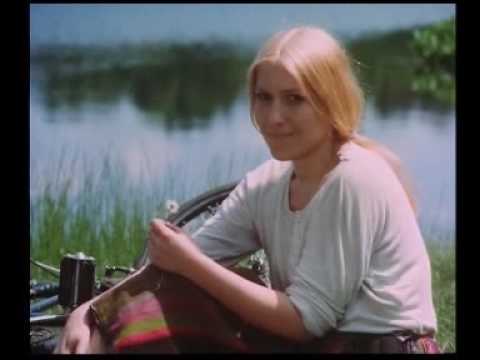
The aunt, Telimena (probably in her 30s) may not always be so flatteringly portrayed later in the poem as she is at first, but what stuck with me most strongly was the first scene in which she appears:
So she asked about new books, and how he rated
Their authors (she spoke in French), while his replies
Led to more questions touching on his views.
And then—well, then she turned to music, dance,
Art, sculpture too. Her knowledge was immense,
Whether of canvas, score, or printed word.
Her learning left Tadeusz stunned, and scared
That he’d end up exposed to ridicule;
He stammered like a pupil quizzed in school.
This is a work that has a place for an intelligent woman, in a way that by no means all 19th century literature does, even if, it’s later indicated, she might be a bit too much of a pretentious hipster and too modern.
I’m pretty sure no-one had ever told me before that Pan Tadeusz is humorous. It gives it whole layers of enjoyment I never expected. (What did I used to think it was? Probably something about a 60-year old man reminiscing about his life and travels.) This is the Romantic movement partly being itself, and partly laughing at itself. Perfect for my sensibilities. It’s epic poetry… but it also mentions things like swatting flies while preparing to cook; the epic form is sometimes mocked, sometimes used in earnest. It struck me that another classic Polish poet, Juliusz Słowacki, criticised it as 'piggish' for its low rural comedy and domesticity - this is the stuff for which I like it so much. Even calling it Pan Tadeusz after a character who isn't the centre of the action and who is neither hugely heroic nor anti-heroic, seems part of the semi-satire. Older characters and customs reflect Sarmatianism, essentially an earlier, institutionalised form of Romanticism particular to Poland-Lithuania, Hungary and some neighbouring countries. The foray happens basically because a young nobleman who’s been on the Grand Tour thinks ancient family feuds are really cool.
Pan Tadeusz was written in Polish, is seen as a Polish work, and several characters are described as ‘good Poles’ – but the action takes place in what is now Belarus, where Mickiewicz was born, and the narrative frequently hails Lithuania. This is the legacy of the Polish-Lithuanian Commonwealth, one of the greatest powers of early modern Europe (Russia’s incipient colonial expansion had not yet made it the looming great bear) but barely known to many Westerners who don’t read East European history or play historical strategy games. As Johnston relates in his introduction, its apparently progressive system of elected monarchs also led to its weakening and demise, and to the partition of Poland among neighbouring powers in the late 18th century. Pan Tadeusz is the story of Polish-speaking gentry, szlachta (some Polish by ancestry, some Lithuanian, many mixed) and their rivalry with local aristocrats – the former had some differences of status from English gentry – but it doesn’t relate what local Lithuanian-speaking peasantry (serfs) thought of all this. This mélange of nationalities spilling across borders doesn’t, again, have direct equivalents in the contemporary English speaking West, and it reflects the multicultural pre-Second World War Central and Eastern Europe, before many of those identifying as Poles, Germans etc were resettled within the current borders of those countries, and of course before the Jewish communities were destroyed. (Through the whole poem, there are 3 or 4 lines that read as antisemitic or negative stereotypes of Jews – in 2018, the notes’ description of the blood libel as a canard doesn’t look a strong enough word ... even 3 years ago these things seemed more of the past. But there are a lot more lines representing Jewishness positively, via the innkeeper Jankiel, who is shown as very popular and an all-round top bloke.)
Pan Tadeusz is a text haunted by a future its author could never have known. Look up character surnames online and there are famous people born long after Mickiewicz died, who must spring to mind for many modern Polish readers. Look up place names online and it’s massacre after hideous massacre, the repetition reinforcing horrific statistic that over 95% of Jews in Lithuania were killed, by Nazis and locals from 1941-44, to the point that I started wondering how on earth anyone descended from Lithuanian Jews made it – although of course, like Bob Dylan’s grandparents, most of their forebears would have left quite some time earlier.
This edition has good notes which stick to the directly relevant 18th-19th century history – Mickiewicz’s original notes, which he wrote because he was writing about an area and mostly-vanished customs unfamiliar even to many Polish readers of the 1830s, and more by Bill Johnston. (Johnston’s introduction is also great for historical context. One small point I’d like to respond to: he says that the only gratuitous glorification of anything Polish is of coffee; I think I noticed one more: frogs.)
It was because I was reading on desktop that I looked so much on Wikpedia and elsewhere, and took so long to read the book. (It is quite a short text, with a Kindle count of 3600.) I don’t mind the layout issues of PDF ARCs converted to Kindle when a book is in prose, but for poetry, I want to read the words on the right lines. Reading on desktop did mean, though, that I got a fuller cultural picture of references in the book when I looked things up online – which is what I wanted for such a momentous read in personal terms. It was also interesting to follow tangents such as photos of ethnographic folk museums, the disagreements between the pre-war Litvak and Galician Jewish communities and the Gefilte fish line, and the mostly-complimentary Chicago Polish stereotype, Grabowski and associated, less flattering, comedy sketches. If you don’t feel compelled to read all the history you will be fine with the endnotes in the book – only snag is they are not linked in the text, at least in the e-ARC.
If you are going to read Pan Tadeusz in English, you should read this translation, which deserves to become the definitive modern one. If you’ve read it previously in another version and didn’t like it much, but the work is important to you, re-read it in this one. I hope Johnston’s version ends up as a Penguin or Oxford Classic, because it bloody well should - though one of them bloody well should have done Pan Tadeusz a long time ago. (Random House’s buying up of Knausgård from Archipelago leads me to hope that this edition might get the distribution it deserves by a similar route.)
Sometimes it seems a shame that the best-known translation prizes, like the Booker International and the BTBA don’t accept re-translations. It's obvious why they don't, as a rule: a Pevear & Volokhonsky rendition of a popular Russian novel that’s already been translated fifteen times doesn’t need the publicity, but lesser-known classics may – and when a translation of one of those is superlatively good, as this one is, it deserves acclaim and attention.
This is a bit like when I finished War and Peace, except that then, there had been longer to get used to it: I still can’t quite believe I’ve actually read Pan Tadeusz. And I really can't believe that it was this enjoyable.
(read and reviewed September 2018; the review and comment thread on Goodreads.)
18 August 2018
Elefant by Martin Suter, tr. Jamie Bulloch
New in English in 2018, in translation from Swiss German, this light speculative fiction adventure - about a genetically engineered miniature pink elephant and the homeless man who stumbles on him - may appeal to fans of Jonas Jonasson and Frederik Backman. I received a free Advance Review Copy ebook from Netgalley and the publisher, Fourth Estate, an imprint of HarperCollins UK.
[3.5] A light read narrated in a tone similar to The Hundred Year Old Man and A Man Called Ove. The first protagonist on the scene, Schoch, a middle-aged alcoholic homeless on the streets of Zurich, is from the same curmudgeonly stable of characters, who, in their real life incarnations, might not be so likeable - but are made sympathetic, and sometimes endearingly comic, by that children's-book-for-adults authorial voice.
As is typical with novels like these, Elefant takes the reader on a caper through various locations, situations and occupations many people have hardly ever thought about - although here several of them have to do with elephants and/or genetic engineering. (I don't think I've read such detail about the collection of semen from domesticated animals for artificial insemination since James Herriot books - but here the tone isn't laugh-out-loud awkwardness; now, it's decades later and a different species. A matter-of-fact clinical tone subtly communicates a sense of it and other artificial reproduction procedures as demeaning and tragic for the animals.) Seriousness is generally offset soon enough, though, by likeable or picaresque characters, or the outright endearing. (I've had to watch videos of baby elephants to try and see some of the cutest behaviours described - I particularly like this one.) And there are bumbling chases and stakeouts that wouldn't be out of place in a 1970s British farce. Perhaps the cosiest, most escapist aspect of the novel is in the first two thirds, where several chapters evoke the joy of living alone in a big comfortable house with a sociable pet, and reading a lot. These are scenes to revel in and to curl up in. A nice detail was that we don't get lovely descriptions of snow scenes in winter - I wondered where they were in December chapters, as I'd been looking forward to them - but using that old friend of the Eng Lit student, pathetic fallacy, 'unnatural' out-of-season blizzards, and the longed-for Christmas-card scenery, arrive in late May.
There are underlying values in the book which to some, probably seem so normal as not to be noticeable, especially to Continental Western Europeans in late middle age and older. (The author is 70, and Elefant was first published last year.) Some of these will, and some won't, go down well with others... Refugees are basically good and should be helped, especially if they are nice people and share the values of your country (the just-post-Second World War generation taking this as more of a given than many younger centrists and conservatives); genetic engineering feels wrong and unnatural on a gut level and could have worrying repercussions; there's something satisfying about formerly well-off people who fell on hard times getting restored to their (rightful?) station; and China is supplanting America as a certain kind of antagonist: a big unethical corporate threat that's increasingly over here (also makes a work more saleable to Americans...). Very EU values, especially if considering the EU as neoliberal - although it's actually a Swiss-German novel. The prevalence of wealth in the culture - especially later in the book - is very Swiss, and especially very Zurich, as I understand from my Goodreads friend Warwick, who lives there. Homelessness is apparently not visible as it is in UK cities. With the range of centres and soup kitchens available to Schoch and his comrades through the day, it's perhaps evident why. It's a level of service that suggests Swiss cities may be among the easier places in the world to be street homeless, better at any rate than contemporary Britain, especially as this provision is combined with a basic benefit rate of 986 CHF per month for a homeless person, equivalent at current exchange rates to slightly more than 10 weeks' worth of UK Jobseeker's Allowance (although Suter doesn't give details of the criteria).
Homelessness, alongside genetic engineering and elephant behaviour, are subjects on which Suter has done his research, including with people who have first-hand knowledge, as the acknowledgements explain. It's a shame that a few clangers, mostly, but not all, on other topics, remain in this edition. It doesn't tally with a vet's scientific knowledge that his biggest fear about genetic engineering would be infectious diseases that targeted specific human racial groups. Did that really get past the geneticists who read the manuscript? Or was that included later or despite them? How are all these vets moving into exotics practice from other specialties with such ease? Is it less of a big deal in some countries than in the UK? Did no-one at all try to correct a character's saying that not eating meat helped save the ozone layer?? (Rather that reduce carbon emissions or climate change.) Someone with opinions on animals as strong as hers these days seems likely to be vegan, not only vegetarian - but that would have meant that Suter wouldn't have had the opportunity to write about so many traditional Swiss dishes containing cheese. Why does an intelligent Burmese man who's been living in Switzerland for about 20 years still have such poor English? (The answer does seem too likely to be stereotyping.) And why would he name an elephant in Hindi when he talks to the animals in Burmese?
For me, these points didn't impinge too much on the narrative as a whole - Elefant is decent light / comfort reading and frequently made me smile - and I don't, in any case, expect popular fiction to be flawless. (It's an unexpected surprise if it doesn't have any errors, stereotypes or plot-holes.) I keep wavering between rounding down to 3 stars (which wouldn't reflect how much I enjoyed stretches of the book, on a scale with my other ratings) and 4 stars (which I feel a bit guilty about, because of the stereotyping of Kaung, and the way the wheels of the plot are oiled by the 'goodies' turning out to have connections and lots of money. Although the latter, especially from a UK/US perspective, also just reflects hard facts of life in which private charity is becoming increasingly important as state provision declines - having the authorities sort everything out, as happens in plotlines of some Nordic works, seems ever more distant and utopian.)
The novel also left me impressed with the versatility of translator Jamie Bulloch - the other of his translations I've read was the tense German modern classic [book:The Mussel Feast|16138043], which has a markedly different style. It was great reading a translation into British English, as so many UK publishers commission or reprint American ones these days.
Elefant won't appeal to everyone: it hasn't got a lot to offer to readers who only go for the highly literary or experimental, and others may think its political underpinnings leave something to be desired. But, although whimsical, it thankfully isn't as cheesy as the current UK cover's tagline suggests ("true friends come in all shapes and sizes"); and if you like the Jonasson type of caper novel for an occasional break , or just because, it may be worth a look.
(read and reviewed August 2018; the review and comment thread on Goodreads.
[3.5] A light read narrated in a tone similar to The Hundred Year Old Man and A Man Called Ove. The first protagonist on the scene, Schoch, a middle-aged alcoholic homeless on the streets of Zurich, is from the same curmudgeonly stable of characters, who, in their real life incarnations, might not be so likeable - but are made sympathetic, and sometimes endearingly comic, by that children's-book-for-adults authorial voice.
As is typical with novels like these, Elefant takes the reader on a caper through various locations, situations and occupations many people have hardly ever thought about - although here several of them have to do with elephants and/or genetic engineering. (I don't think I've read such detail about the collection of semen from domesticated animals for artificial insemination since James Herriot books - but here the tone isn't laugh-out-loud awkwardness; now, it's decades later and a different species. A matter-of-fact clinical tone subtly communicates a sense of it and other artificial reproduction procedures as demeaning and tragic for the animals.) Seriousness is generally offset soon enough, though, by likeable or picaresque characters, or the outright endearing. (I've had to watch videos of baby elephants to try and see some of the cutest behaviours described - I particularly like this one.) And there are bumbling chases and stakeouts that wouldn't be out of place in a 1970s British farce. Perhaps the cosiest, most escapist aspect of the novel is in the first two thirds, where several chapters evoke the joy of living alone in a big comfortable house with a sociable pet, and reading a lot. These are scenes to revel in and to curl up in. A nice detail was that we don't get lovely descriptions of snow scenes in winter - I wondered where they were in December chapters, as I'd been looking forward to them - but using that old friend of the Eng Lit student, pathetic fallacy, 'unnatural' out-of-season blizzards, and the longed-for Christmas-card scenery, arrive in late May.
There are underlying values in the book which to some, probably seem so normal as not to be noticeable, especially to Continental Western Europeans in late middle age and older. (The author is 70, and Elefant was first published last year.) Some of these will, and some won't, go down well with others... Refugees are basically good and should be helped, especially if they are nice people and share the values of your country (the just-post-Second World War generation taking this as more of a given than many younger centrists and conservatives); genetic engineering feels wrong and unnatural on a gut level and could have worrying repercussions; there's something satisfying about formerly well-off people who fell on hard times getting restored to their (rightful?) station; and China is supplanting America as a certain kind of antagonist: a big unethical corporate threat that's increasingly over here (also makes a work more saleable to Americans...). Very EU values, especially if considering the EU as neoliberal - although it's actually a Swiss-German novel. The prevalence of wealth in the culture - especially later in the book - is very Swiss, and especially very Zurich, as I understand from my Goodreads friend Warwick, who lives there. Homelessness is apparently not visible as it is in UK cities. With the range of centres and soup kitchens available to Schoch and his comrades through the day, it's perhaps evident why. It's a level of service that suggests Swiss cities may be among the easier places in the world to be street homeless, better at any rate than contemporary Britain, especially as this provision is combined with a basic benefit rate of 986 CHF per month for a homeless person, equivalent at current exchange rates to slightly more than 10 weeks' worth of UK Jobseeker's Allowance (although Suter doesn't give details of the criteria).
Homelessness, alongside genetic engineering and elephant behaviour, are subjects on which Suter has done his research, including with people who have first-hand knowledge, as the acknowledgements explain. It's a shame that a few clangers, mostly, but not all, on other topics, remain in this edition. It doesn't tally with a vet's scientific knowledge that his biggest fear about genetic engineering would be infectious diseases that targeted specific human racial groups. Did that really get past the geneticists who read the manuscript? Or was that included later or despite them? How are all these vets moving into exotics practice from other specialties with such ease? Is it less of a big deal in some countries than in the UK? Did no-one at all try to correct a character's saying that not eating meat helped save the ozone layer?? (Rather that reduce carbon emissions or climate change.) Someone with opinions on animals as strong as hers these days seems likely to be vegan, not only vegetarian - but that would have meant that Suter wouldn't have had the opportunity to write about so many traditional Swiss dishes containing cheese. Why does an intelligent Burmese man who's been living in Switzerland for about 20 years still have such poor English? (The answer does seem too likely to be stereotyping.) And why would he name an elephant in Hindi when he talks to the animals in Burmese?
For me, these points didn't impinge too much on the narrative as a whole - Elefant is decent light / comfort reading and frequently made me smile - and I don't, in any case, expect popular fiction to be flawless. (It's an unexpected surprise if it doesn't have any errors, stereotypes or plot-holes.) I keep wavering between rounding down to 3 stars (which wouldn't reflect how much I enjoyed stretches of the book, on a scale with my other ratings) and 4 stars (which I feel a bit guilty about, because of the stereotyping of Kaung, and the way the wheels of the plot are oiled by the 'goodies' turning out to have connections and lots of money. Although the latter, especially from a UK/US perspective, also just reflects hard facts of life in which private charity is becoming increasingly important as state provision declines - having the authorities sort everything out, as happens in plotlines of some Nordic works, seems ever more distant and utopian.)
The novel also left me impressed with the versatility of translator Jamie Bulloch - the other of his translations I've read was the tense German modern classic [book:The Mussel Feast|16138043], which has a markedly different style. It was great reading a translation into British English, as so many UK publishers commission or reprint American ones these days.
Elefant won't appeal to everyone: it hasn't got a lot to offer to readers who only go for the highly literary or experimental, and others may think its political underpinnings leave something to be desired. But, although whimsical, it thankfully isn't as cheesy as the current UK cover's tagline suggests ("true friends come in all shapes and sizes"); and if you like the Jonasson type of caper novel for an occasional break , or just because, it may be worth a look.
(read and reviewed August 2018; the review and comment thread on Goodreads.
Subscribe to:
Posts (Atom)